

Products and services

“Ten years of getting my ass kicked, just trying to hold on with white knuckles.”
That is how Bob Baker, a property developer in Massachusetts, described the decade after the 2008 housing market collapse. During the boom, Bob felt like he “couldn’t miss.” Then the market crashed, leaving him “holding the bag” on unfinished projects and properties worth much less. His marriage ended, and he struggled to pay subcontractors and keep up with the mortgages.
When I met Bob, he was in wage-earner bankruptcy, also known as Chapter 13. He was trying to keep his family home long enough for his youngest son to finish high school and leave for college. Bankruptcy temporarily stopped the foreclosure. Eventually, Bob lost the house.
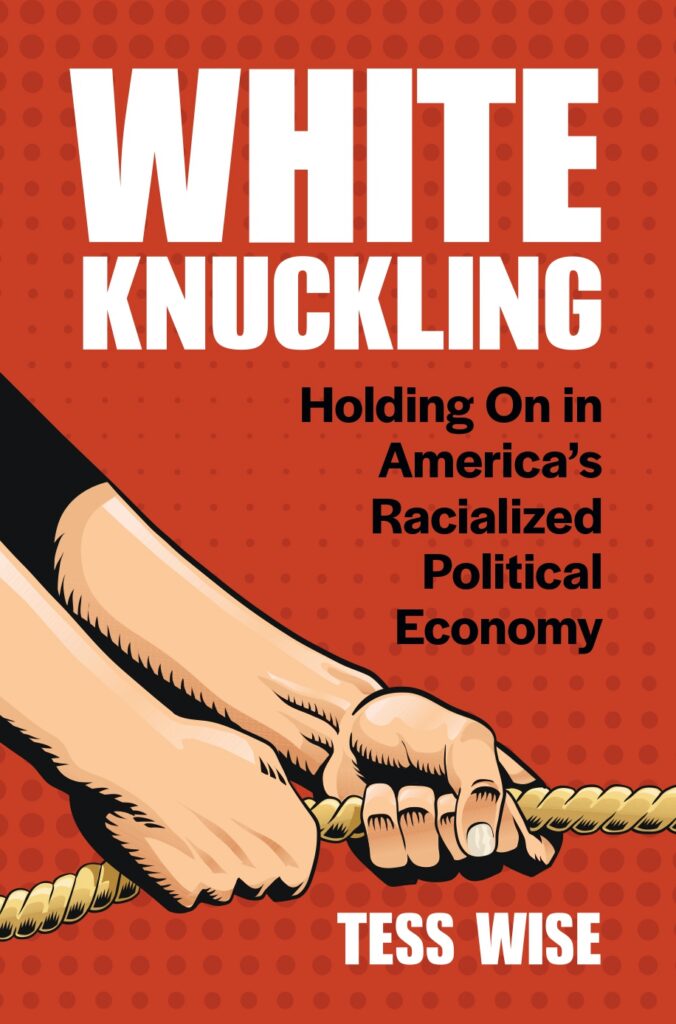
His phrase “holding on with white knuckles” gave my book, White Knuckling, its title. But something else Bob said stuck with me too: “Nobody owes you anything. The world owes you absolutely nothing.”
There is a puzzle here. Bob might believe that the world owes him nothing, but bankruptcy is a form of welfare.
That probably sounds strange. We think of welfare as a government check, food assistance, or subsidized housing. Bankruptcy looks different: courts, lawyers, creditors, contracts and years of repayment.
Yet bankruptcy is a government-created system of economic relief. Chapter 13 can stop a home foreclosure or car repossession, give families time to catch up, and discharge some debts. Instead of taxing and redistributing, the government requires creditors to absorb losses, some of which are deductible for tax purposes. In most years, the economic transfer through personal bankruptcy is larger than the cost of “welfare programs” like SNAP or TANF.
Bankruptcy is part of the American social safety net. It just rarely feels that way.
None of the people I interviewed for White Knuckling spontaneously described bankruptcy as welfare or government assistance. Chapter 13 was usually understood as taking responsibility: repay what you can, keep working, cut back, and hold on.
That matters because the capacity to hold on is not distributed equally. White middle-class homeowners are especially well positioned to use Chapter 13 to protect property. Black filers are disproportionately routed into Chapter 13 bankruptcy but are substantially more likely to have their cases dismissed without receiving a discharge. The same institution can provide meaningful protection while reproducing racial inequality.
I use white-knuckling to describe both the practices of holding on and the meanings people attach to them. Working more, borrowing, cutting expenses, leaning on family, and filing for bankruptcy can become evidence that one is responsible and deserving.
The struggle is real. But so are the unequal resources that make prolonged struggle possible. If wage-earner bankruptcy feels like hard work, while food assistance looks like something the government simply gave somebody else, it becomes easier to see one’s own survival as responsibility and others’ as dependency.
The final chapter of White Knuckling asks what happens if we understand debt differently. People take on debt for ordinary human needs: housing, healthcare, education, transportation, food, or caring for others. We could organize more of those needs through collective provision, public institutions, and mutual aid.
Bob, for example, had skills a community could use: construction, home repair, and business knowledge. What if receiving help meant drawing on a community he was also giving back to, rather than accepting a handout?
White-knuckling tells us to grip harder. I want us to loosen that grip.
Bob told me, “Nobody owes you anything.” White Knuckling ends by asking readers to consider the opposite possibility: what if we owe each other everything?

Tess Wise is an Assistant Professor in the Department of Politics and International Affairs at Wake Forest University. She studies the effect of credit, debt, and racial capitalism...
View profile >Keep up with the latest from Cambridge University Press on our social media accounts.



Latest Comments
Have your say!