
Products and services

“There may be a causality. Our very strength invites challenge. Challenge incites conflict. And conflict breeds catastrophe.” -Vision, in Captain America: Civil War
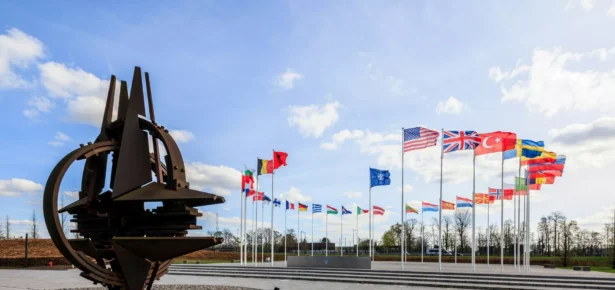
Who your friends are shapes who your enemies are and vice versa. NATO bears this out well. NATO is a relational web of security assistance that was necessary to defend against and deter aggression from the Soviet Union and the Eastern Bloc. It has recently grown by two members (Sweden and Finland) as a response to Russia’s invasion of Ukraine.
At the same time, the formation and initial growth of NATO spurred Soviet investments in the Warsaw Pact during the Cold War, and NATO’s post-Cold War expansions provided pretext for Russian aggression against Georgia and Ukraine, as well as Russia’s consolidation of ties with China, Iran and North Korea. The evolution of NATO reveals how webs of amity and enmity coevolve.
As Mixed Blessings: International Relationships of Assistance and Conflict explores, to well explain the potential for a given conflict to escalate and the barriers to conflict resolution, it is important to consider the conflict parties’ embeddedness in webs of support and threat. Establishing ties of security assistance is often necessary to deter and defend against hostile adversaries, but those ties of security assistance can also attract hostility from adversaries that are threatened by them. In particular, ties of security assistance from strong states with poorly aligned interests are associated with more interstate conflict, more intrastate conflict, and reduced propensity for negotiation in intrastate conflict.
Perhaps the Avengers in the Marvel Cinematic Universe (MCU) provide another angle to see this. Wondering why Earth keeps attracting intergalactic threats, the character Vision gives us a hypothesis, which serves as the epigraph above. In essence, Vision posits that the formation of the group known as the Avengers is threatening to would-be mega villains, and that has made them (and Earth) a target. The web of amity among the Avengers helps explain the enmity they face. It is striking, moreover, to consider how the formation and growth of the Avengers can be explained as responses to emerging intergalactic threats. Thanos’ pursuit of the infinity stones – and his alliances with proxies such as Loki and Ronan – is the prevailing wind that brings the Avengers – from different realms and corners of the galaxy – together. The web of enmity surrounding the Avengers explains their cooperation.
So, should alliances among states (and among superheroes) be avoided? Would states like the US and its European allies have been better off without ties of security assistance? No, of course not. (And we presume that Earth in the MCU would not have been better off without the Avengers.) NATO was a key barrier to Soviet domination and remains a barrier to Russian and Chinese domination in Eurasia. Without NATO, it is easy to imagine the trampling of liberal democracy in Europe. That being said, the US would do well to invest only in sustainable security ties with states that have congruent interests. Making strange bedfellows with incongruent states typically is fraught with intragroup tensions that are exploited by adversarial blocs. Indeed, a key lesson in Mixed Blessings is that opportunistic relationships with states that are not core to US security – such as Cold-War era relationships with South Vietnam, El Salvador and South Africa – will invite challenge, conflict and catastrophe.
Image source: https://www.nato.int/en/multimedia/multimedia/photos/general/nato-headquarters
Image credit: NATO
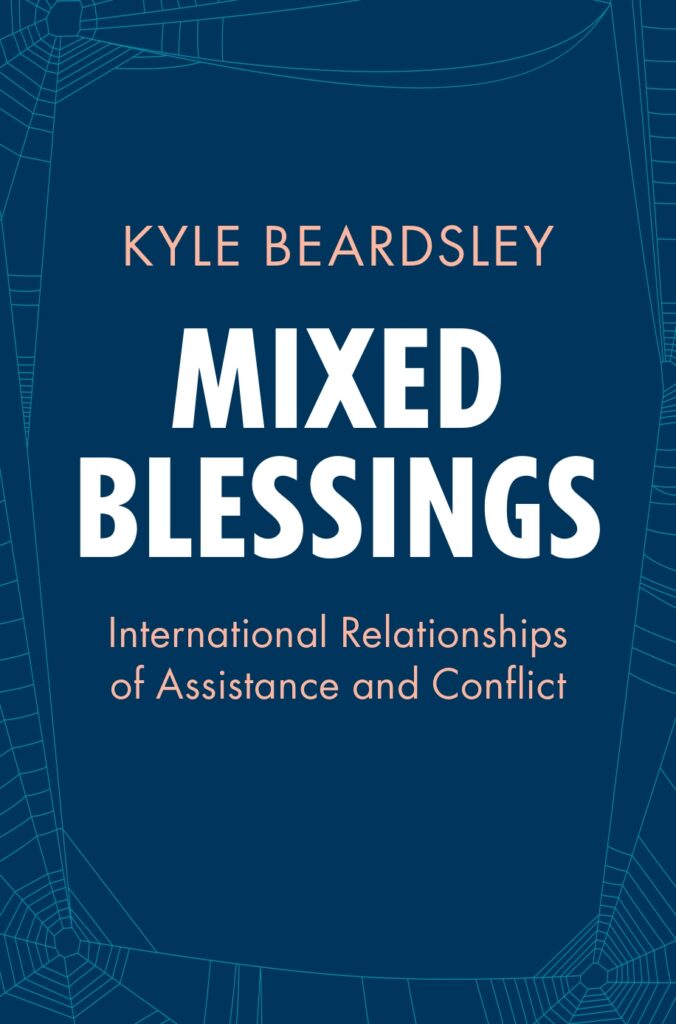

Kyle Beardsley is Professor of Political Science and Public Policy at Duke University. He is an award-winning author of over forty peer-reviewed articles. His books include The Med...
View profile >Keep up with the latest from Cambridge University Press on our social media accounts.



Latest Comments
Have your say!