

Products and services


Can money buy happiness? What is the value of things? How do people measure that value, whether we are speaking of consumer products, health, activities, or time?
Free markets have a simple answer: willingness to pay (WTP). The value of a cell phone, a pencil, or a puppy is people’s WTP to pay for it. In general, WTP is indeed a reasonable measure of the value, in terms of happiness or well-being, of obtaining goods. Importantly, respect for WTP also shows respect for people’s autonomy. It does not force people to buy things that they do not think are worth their while. In deciding what regulations to issue, many government officials are inclined to value the benefits of things (including safety and health) by using WTP as well.
But there is a serious problem: Many of us “miswant.” We want some things that do not help us much, and we do not want some things that would make our lives go better. In many settings, people’s choices appear not to make them happier, even when different choices would do so. Predicted welfare, or expected welfare at the time of decision, may be very different from experienced welfare, or welfare as life is actually lived.
One reason might be a simple lack of information; people might not know the facts. We might not know that a new car will do not do us much good. We might not know that if we take a short vacation, our year will be a lot better. As a result, WTP can go wrong. We might monetize badly, not because we cannot translate the effects of things into monetary equivalents, but because we cannot project the effects of things. That is the problem of miswanting.
There is another problem: People show behavioral biases. We are biased in the particular sense that our judgments can go systematically wrong, and in predictable ways. Some of the time, we are like a bathroom scale that always shows people as heavier than they are, or like an archer who always misses the target to the right.
For example:
In all of these cases, we might overvalue or undervalue goods. We might monetize wrongly. Biases, problems, and challenges of these kinds can get us into a world of trouble. They can lead us to buy products that do us no good, and not to buy products that would make everything better. They can lead us to make foolish investments. They can lead us to run unreasonable risks—and to refuse to run reasonable risks. They can make us susceptible to manipulation. They can shorten our lives. They can make us miserable.
These are serious problems. When they arise, monetization goes wrong, and WTP loses much of its underlying justification. People’s choices do not actually make their lives better. If government, or anyone else, can be confident that people are not willing to pay for goods from which they would greatly benefit, perhaps government should abandon WTP.
There is a related concern, and in some ways it is the deepest of all.
Our preferences, and our very desires, may have adapted to existing opportunities, including deprivation. In a searing passage, Tocqueville writes, “Shall I call it a blessing of God, or a last malediction of his anger, this disposition of the soul that makes men insensible to extreme misery and often gives them a sort of depraved taste for the cause of their afflictions?” Perhaps people show a low WTP for cleaner air, leading to health improvements, simply because they have adjusted to dirty air, leading to health risks. Perhaps people’s WTP reflects an effort to reduce cognitive dissonance through the conclusion that risks are lower than they actually are. It is not a lot of fun to think that you face serious dangers, and some people undoubtedly develop an unduly optimistic account of their actual situation.
In some contexts, the idea of miswanting raises serious problems for WTP and for unambivalent enthusiasm for freedom of choice. If the basis for use of WTP is welfare, there is a real difficulty, because use of WTP may be imperfectly connected with promoting people’s welfare. And if so, we need to abandon WTP – and to focus directly on what would improve people’s lives. Governments of the world should unite in embracing that endeavor.
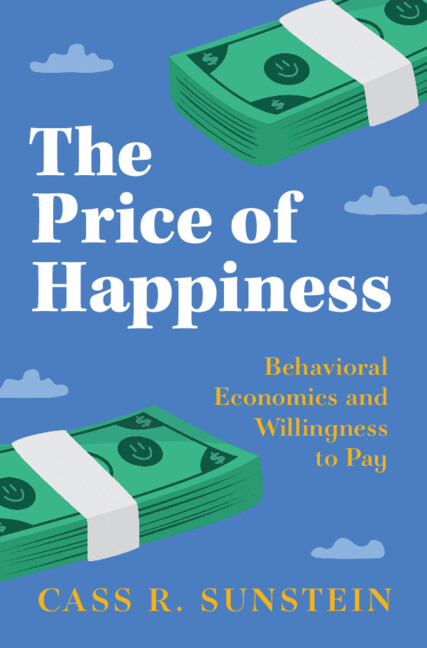
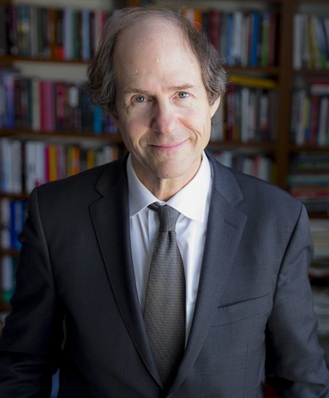
Cass R. Sunstein is the Robert Walmsley University Professor at Harvard. He is the founder and director of the Program on Behavioral Economics and Public Policy at Harvard Law Scho...
View profile >Keep up with the latest from Cambridge University Press on our social media accounts.




Latest Comments
Have your say!