

Products and services


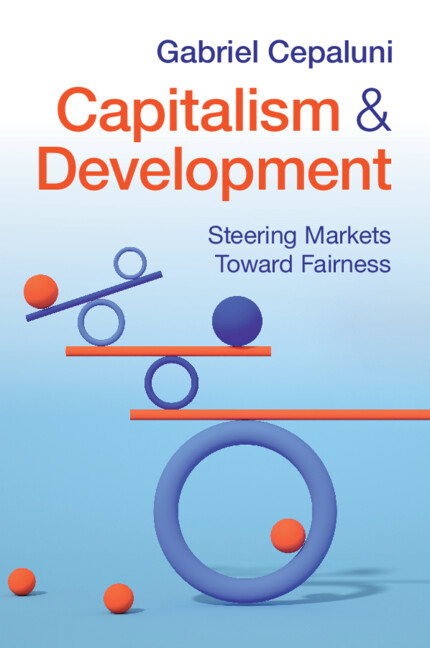
We live through a strange paradox. Liberal democracy and the market economy produced the greatest expansion of prosperity in history — yet faith in both is fraying at once, pressed by authoritarianism, populism, and a sense that the economy works only for those at the top. The question behind Capitalism and Development: Steering Markets Toward Fairness is whether there is a genuine alternative to today’s populism — one that reforms capitalism and democracy so their gains reach most people, not a fortunate few.
My answer is unfashionably hopeful: capitalism and democracy remain the best foundations for progress. The problem is not the engine but the steering. Left alone, markets concentrate wealth and corrode the very institutions that legitimize them. The task is not to abandon capitalism, nor to drift toward state control, but to build institutions that make markets fairer to more people.
I should be candid about where I start. My instincts lean libertarian: I trust markets to reward effort and drive prosperity. But voters in a democracy will never fully embrace libertarianism — nor should we expect them to. Citizens want security and a share of the gains as much as growth, and no system that ignores that survives a free election. The real task is to balance the efficiency markets provide with the redistribution citizens will always demand.
I call this Fair Market Institutionalism. It rejects a false choice. The loudest debate in development pits free markets against the state — deregulate everything, or plan everything. Both sides misread the evidence. Prosperous, stable societies have the right institutions: rule of law that protects contracts and liberties, regulation that curbs monopoly and corruption, safeguards that stop wealth from buying power, and public investment in education and innovation.
The book keeps Latin America in view — a region that spent a century lurching between liberalization and state intervention, too often paying for both with stagnation. But the lessons are not regional; I draw on East Asia, North America, and Africa, because the question is universal: some nations escape the growth trap while others stay locked inside it.
Underneath it all is a single conviction: opportunity is the heart of democracy. The abundance capitalism generates is real — but abundance in a few hands is not a society that works. What makes a market economy legitimate is whether ordinary people can expect to share in it: to start a business, get an education, and rise on effort rather than inheritance. When that expectation holds, people tolerate inequality because the door is open; when it collapses, they turn to populists who promise to burn it all down.
This book is a call to action — not to tear down democracy or markets, but to reform them into something adaptive, just, and capable of widening opportunity far more than they do today. The engine still runs. The question is who gets to ride.

Gabriel Cepaluni is an associate professor of political science at São Paulo State University in Brazil. He holds a Ph.D. in political science from São Paulo State Universi...
View profile >Keep up with the latest from Cambridge University Press on our social media accounts.




Latest Comments
Have your say!