

Products and services

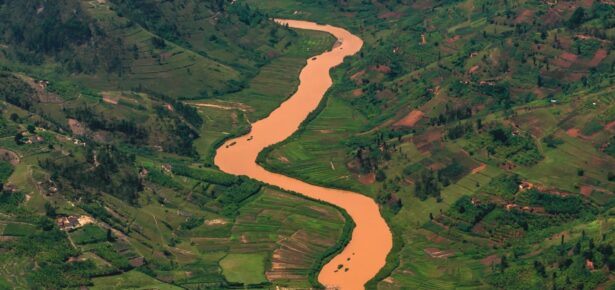
Amid all the changes that have taken place since countries in Asia, Africa and Latin America became independent in the 1960s/1970s, a stark reality has persisted: very few of those newly independent countries have ‘caught up’ or achieved structural transformation. This has entrenched a lasting gap in living standards between rich and less industrialised parts of the world. While few African countries have actually succeeded in achieving structural transformation, some countries have received praise for their remarkably rapid growth trajectories. One of those countries is Rwanda – a country that has been among the fastest growing on the continent over the last two decades. Rwanda has also achieved this growth through prioritising services above manufacturing in a sharp break from previous successful late developers.
Traditionally, catch-up development has been characterised by countries achieving industrialisation through the heavy involvement of the state. In the 21st century, some the most rapidly growing sectors globally have been services sectors. This is true also in African countries where – though experiences have varied – services growth have outpaced manufacturing the past two decades. Yet, in our collective understandings of what impedes present-day structural transformation (despite the resurgent study of industrial policy), we rarely centre the actual experiences of countries that are adopting development strategies in a global economy, dominated by services.
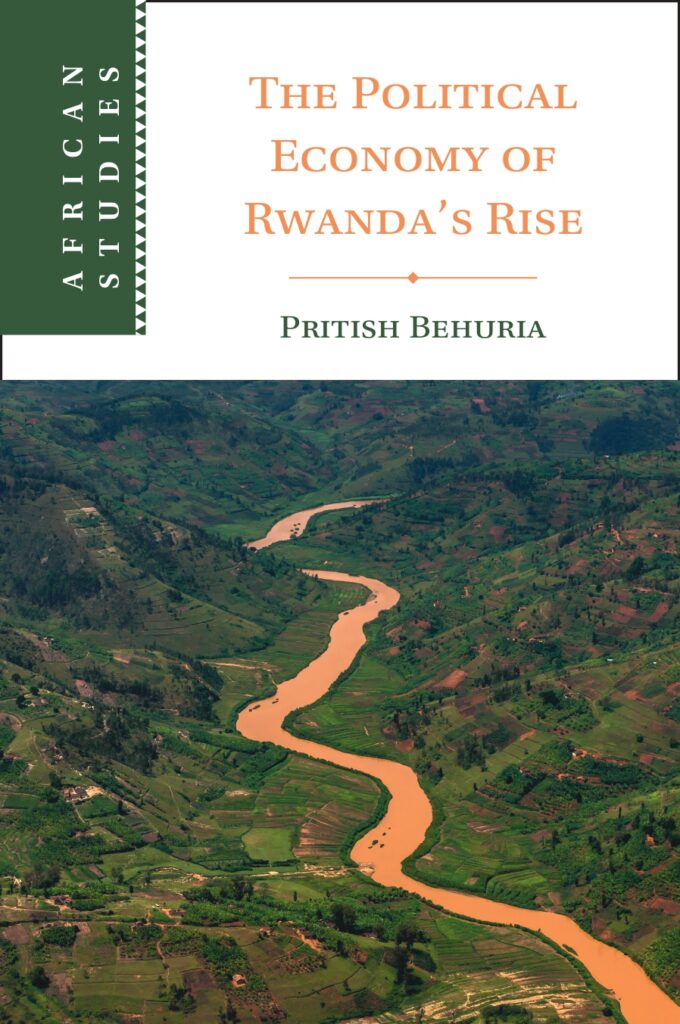
The Political Economy of Rwanda’s Rise examines Rwanda’s tumultuous and contested rise in the global economy, revealing how contemporary services growth exacerbates external dependencies while containing domestic vulnerabilities. It is based on fieldwork in Rwanda since 2011 and over 580 interviews with key stakeholders. Since services has been a central contributor to growth across Africa and Rwanda is an example of a ‘successful’ country that has prioritised services-first development strategies most explicitly, the book provides key contributions to our understanding of the contemporary challenges associated with late development.
As with many other experiences across the African continent, the ruling Rwandan Patriotic Front (RPF), which assumed power in 1994, has failed to develop effective relationships with domestic firms. The book shows that elite vulnerability has taken the form of marginalising domestic capitalists, which has been reflected in the government’s choice to increasingly rely on government-affiliated firms and foreign investors to lead in strategic investments. This is also mirrored in Rwanda’s macro-political settlement, which highlights increased centralisation of control around the President and the containment of senior RPF figures while also developing new loyal coalitions that align with its focus on services sectors. The book makes these arguments by carefully detailing the evolution of the political economy of finance, agriculture, industry, mining and services sectors.
Rwanda is rarely far away from the news. A striking feature of the RPF’s success has been its increasing influence across the continent, as well as its partnerships with the world’s leading politicians, philanthropists and business leaders. Unlike its predecessors, the RPF has not just diversified its economy but also diversified its economic and diplomatic partnerships. Yet the RPF’s focus on diversification as a pathway to self-reliance has come at the cost of increased centralisation domestically and a failure to support the emergence of domestic capitalists. The book argues that this characteristic remains a key vulnerability shaping Rwanda’s future. Though politicians, scholars and business leaders are quick to call for other countries to mimic Rwanda’s ‘model’ of economic development, that model remains poorly understood. That makes this book an urgent read for anyone hoping to understand the contradictions, vulnerabilities and challenges associated with achieving late development under contemporary globalisation.

Pritish Behuria is Reader in Politics, Governance and Development at The University of Manchester's Global Development Institute. His work examines the political economy of late de...
View profile >Keep up with the latest from Cambridge University Press on our social media accounts.



Latest Comments
Have your say!