

Products and services

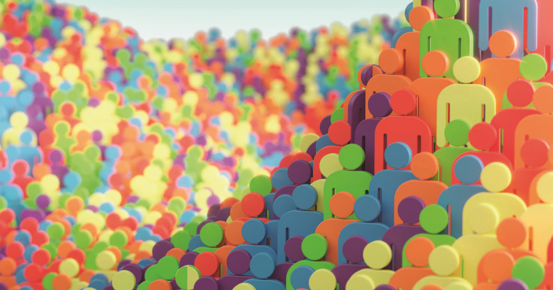
If change is necessary and beneficial, why is it sometimes so slow, and fiercely resisted? When and how do people, groups, and movements bring about system change? These are the ideas we explore in our recent book from Cambridge University Press, The Psychology of System Change and Resistance to Change.
Change is actively created and contested
We argue that resistance to change is not simply due to stubbornness, irrationality, or perceived threats. From the perspective of social psychologists, change and resistance are predictable human responses to our groups’ social positions. These positions reflect and shape our identities, ideologies, and social norms. When environments change, human systems change, and this dynamic is both initiated and resisted by group members.
Multiple choices, at multiple levels
The actions of people and groups co-create the challenges we face, such as climate change, war, and inequality. Our economic and political choices shape and reflect our social identities, ideologies, and norms – our social rules or standards for behaviour, like environmentalism, conservatism, or nationalism.
Our responses to our challenges in turn are also chosen from a repertoire of strategies ranging from acceptance through to denial and resistance. People may choose innovation, consciousness-raising, and collective action that seeks to create a better world – or seek privilege and domination with exclusion, discrimination, and violence.
Groups intersect
People often think about only 1 or 2 groups at a time – how the USA is changing, for example, or how British people and Europeans are changing in relation to each other. Yet the process of human system change is far more complex than this understanding. Multiple groups simultaneously interact with each other and are changing and resisting change across time, place, and social context. We can underline two key aspects of this.
First, there are ‘intersectionalities’ between groups: the meaning and experience of being on one group, such as workplace, culture, or country, changes based on being in other groups, for example based on political party, gender, or age. This unacknowledged diversity is one reason that people often aren’t on the same page about what is going on for any group and whether change is needed.
At the same time, individuals and groups are experiencing continuity and stability in some ways, and change and dizzying complexity in others. As we move through the world one day at a time, our country is changing socially, our environment is changing physically, we are growing older, what it means to be a man or a woman is changing, what it means to have our faith or atheism is changing, and so on. This means that the reality leaders and groups are experiencing today as we make plans for change or for resistance is often not the reality that we are going to experience next month and next year as our plans are implemented.
Bringing this together, and understanding that people and groups have multiple identities, which are changing in place, social spaces, and time, we can now understand both the difficulty of intentionally engineering social and system change and its frequent volatility and cyclic nature. It is hard to change an organisation or a society because one group’s identities and norms cannot change without ripple effects. As our plans for change play out, the ripple effects for the intersecting groups, identities, and norms galvanise resistance and create unintended consequences, sometimes energising further change or going beyond our original intentions.
Powerful new concepts — whether political ideals such as liberty, equality, and fraternity, or scientific ideas such as evolution — do not stay confined in their original settings. They spread outward, interacting with existing identities, relationships, and norms, and often generating new conflict and resistance, as well as unexpected transformation.
Change evolves across place and time
Change and resistance emerge locally — in particular places and social spaces — and then move through the social networks of individuals and groups across time. Historical shifts such as the expansion of voting rights or the abolition of slavery illustrate how ideas and practices diffuse unevenly, encountering resistance or becoming institutionalised in different places at different times.
This movement underlines that groups are always internally initiating and resisting change, and environments are also continually changing. Resistance is often temporary, as feedback loops between group identities, norms, and changing social or physical environments begin to reinforce new patterns of belief and action, or work against them.
Multiple identities and norms co-evolve
We can learn how to think about social change from how scholars in complexity and systems science theorise change in other contexts, such as biological and economic systems. Stable systems generally have balancing feedback loops, and so we should ask, what feedback loops support our democratic societies, or our reliance on fossil fuels? As new technologies create disruptive change we need to ask, how people and groups are making space and time for new ways of knowing, being, and doing?
We can also learn how to think about social change from psychologists who study how humans subjectively experience this rich complexity or make decisions moment by moment. Economic, political, and religious norms change though the day-to-day choices of individuals, and also through our long term processes as we create culture and institutions, write and read histories, and change the physical world with our industries and infrastructures.
Thinking about system change therefore requires attention to patterns across time and space: historical and social cycles, political oscillations, migration patterns, and the specific social contexts in which identities and norms are negotiated. Change becomes possible when narratives, identities, and material conditions align in ways that create ripeness for transformation — or delay it.
What do we need to know as advocates or leaders?
In a nutshell, the elements in social relationships – humans and groups – create systems that are more than the sum of their parts. The identities, group relationships, norms, and ideologies of societies at one moment in time are already changing and resisting change across time and place. An attempt by any one leader or group to change a system is like pulling just one string in a dense weave that anchors and connects people and groups to each other and their environment, creating a tangled knot of conflict and resistance. Initiatives that appear to be technically sound will fail if they ignore group and intergroup aspects of human work and social living.
In contrast, we argue in our book, readers can become more effective influencers and change agents through appreciating these key insights of intergroup psychology and systems science. By identifying feedback loops that stabilise or escalate change, they can better anticipate resistance and recognise moments of opportunity. They can look for the lumpiness of change: its uneven spread and the bottlenecks of resistance or funnels of energy as change moves through networks of people and groups at different points of time and in different places and social spaces. And by grounding their approach to system change in both psychological understanding and complexity science, leaders and scholars can engage in the current world in ways that are more impactful.
If you’d like to know more, we invite you to explore The Psychology of System Change and Resistance to Change and to ask your library to order a copy. The book offers a psychologically informed account of why social change is so difficult and how it can be approached more effectively by bringing people with us through the process.
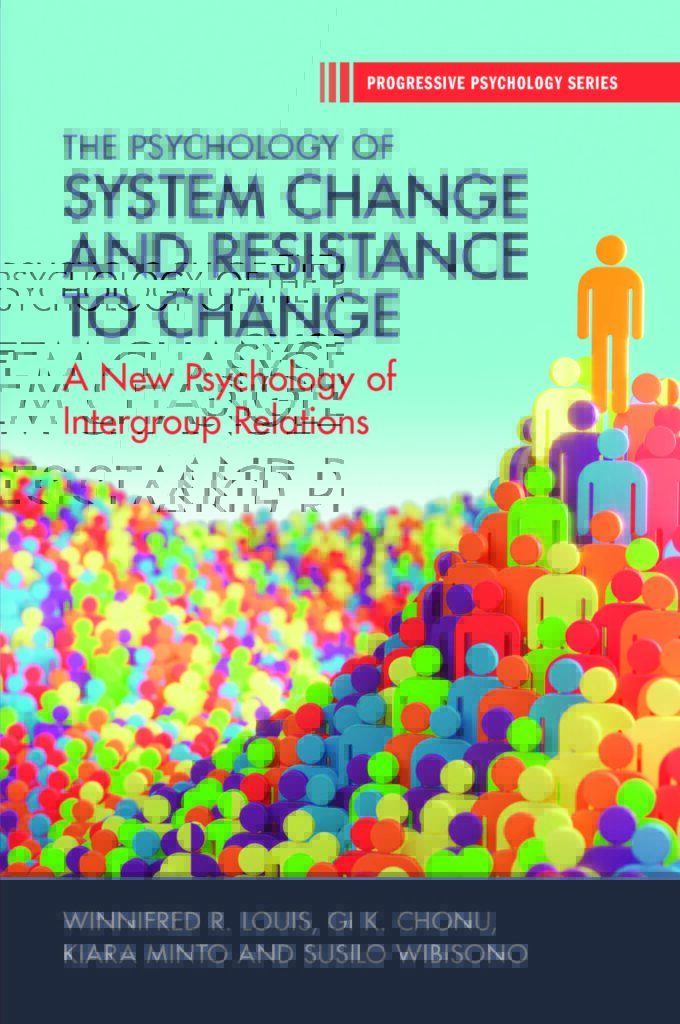
Title: The Psychology of System Change and Resistance to Change
ISBN: 9781009603935
Authors: Dr Winnifred R. Louis, Dr Gi K. Chonu, Dr Kiara Minto and Dr Susilo Wibisono

Susilo Wibisono is a post-doctoral researcher in the Social Change Lab at the University of Queensland. He has published research on the relationship of religious identity and coll...
View profile >Kiara Minto is a research fellow at the University of Queensland, Poche Centre for Indigenous Health. Her published research focuses on responses to child sexual abuse and partner ...
View profile >Gi K. Chonu is a senior advisor, a researcher, and a lecturer in psychology at James Cook University, Singapore. She completed a PhD in social psychology at the University of Queen...
View profile >Winnifred R. Louis is Professor of Psychology at the University of Queensland. Her research examines how social change occurs and how identity and norms influence decision-making. ...
View profile >Keep up with the latest from Cambridge University Press on our social media accounts.



Latest Comments
Have your say!