

Products and services

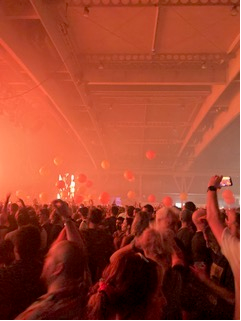
Though associated with nighttime dance parties and clubs, electronic dance music has saturated many aspects of contemporary culture. We hear it in adverts and shops. Even some restaurants employ a DJ to play dance music, although people are seated to eat and are unlikely to get up for a boogie. According to Google’s Ngram viewer, the term ‘electronic dance music’ has been used historically since the 1980s and gained popularity during the 1990s as an umbrella term for dance genres such as house music, techno, trance, gabber, hardcore rave, jungle/drum and bass, and UK garage, each in some rhizomic manner indebted to 1970s disco music and mixed on the way with other influences, from reggae to rock and much in between. Then, just after the year 2000, as forms of electronic dance music and associated venues, festivals and internet sites proliferated around the world, the term rapidly took on its own momentum both in the English language and globally, including in Chinese and Spanish. Not surprisingly, both journalistic and academic publications on the subject have appeared from the mid-1990s onwards, while open access journal Dancecult has dedicated itself since 2009 to the study of electronic dance music cultures. Along the way, electronic dance music seems to have become a catch-all for a range of disparate forms of dance music, held together by their electronic sonic palette and shared histories of genre cross-fertilisation across localities.
Close to 2010, there was an American music industry effort to reimagine rave cultures for marketing purposes. The aim was to remove negative connotations generated during earlier moral panics around the intensity of rave dance parties that solidly focussed on electronic dance music. They used the abbreviation e.d.m. to promote dance festivals with a pop-flavoured form of electronic dance music, which has since become known as ‘edm’. As this subgenre became popular amongst American teenagers, some confusion emerged with those for whom electronic dance music had long been understood as an umbrella term.
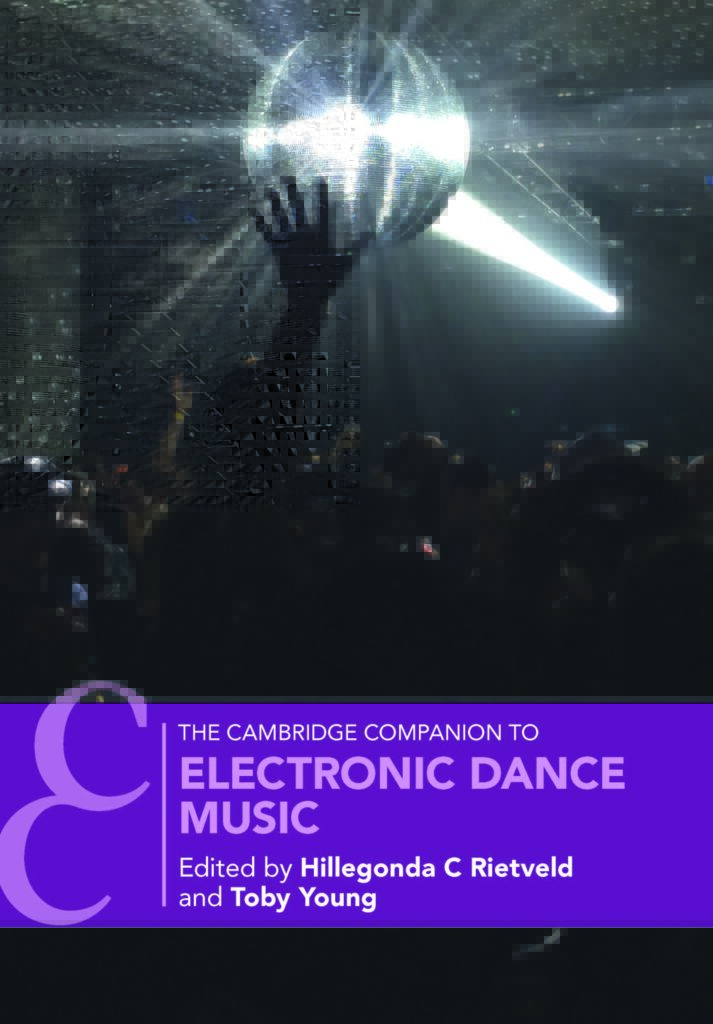
The dual meaning of edm is where Toby Young and I, as editors, found ourselves when we started to compile our Cambridge Companion to Electronic Dance Music. Our decision was to offer a broad set of perspectives that cross disciplines and geographical places, with the understanding that there is no stable point of origin, nor a single cultural meaning to electronic dance music. We thereby wanted to avoid encyclopaedic narratives that repeat the marketing myths of individual careers. Instead, our Cambridge Companion offers a broad scope on the subject, from raves, sound systems and club design to issues in production techniques and DJing. In doing so, the collection presents a spread of local positions, not only from the US, UK, and Germany (as per usual) but also from countries like Italy, China, and Angola, as well as approaches that address identity politics in the studio and on the dancefloor. In all, an enticing compilation for you to want to find out more. – Hillegonda C Rietveld

Hillegonda C. Rietveld is Professor Emerita at London South Bank University. She has published extensively on electronic dance music cultures, including the monograph This is Our H...
View profile >Toby Young is Professor of Composition at Guildhall School of Music and Drama, and Research Lead in Digital Performance. He is Music Supervisor for leading immersive theatre compan...
View profile >Keep up with the latest from Cambridge University Press on our social media accounts.



Latest Comments
Have your say!