

Products and services


At the turn of the century, Charles Kingson, a respected academic, tax practitioner, and government official, observed that in the old days people sold you clothes face to face in downtown department stores; you bought heavy records for your phonograph and watched shows at their appointed time on network television. Companies delivered the wealth of the nation—steel, coal, timber—by rail or truck. In the financial sector, banks loaned money and investment banks sold stock and bonds. If you wanted to communicate, you picked up the telephone or wrote a letter. The world on which we based our tax rules and—more important—our tax thinking—is largely gone.
Kingson was right. The way people live, work, and save is changing rapidly, but our tax system was built for an earlier era when people lived in one place, worked in one place, and belonged to one political community for most or all of their lives. Today, people relocate and their lives and livelihood, their families, their jobs; their wealth and economic activity effortless transcend national borders. Yet taxes on individuals — the most important source of revenue for almost every country—still rely on old assumptions about residence, nationality, and community that globalization has rendered outdated or even meaningless.
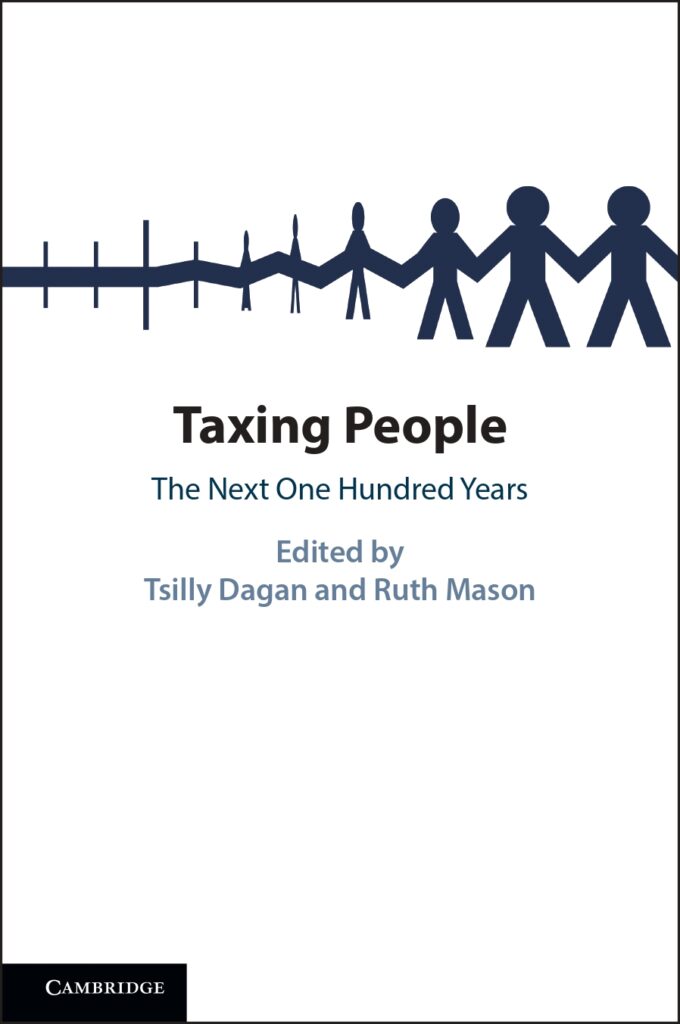
On the occasion of the hundredth anniversary of the writing of the first model tax treaty—we met at Oxford for a conference the results of which are presented in this new book: on Taxing People: The Next 100 Years. Globalization complicates taxation. It generates unprecedented mobility of people, resources and economic activity. The digital revolution and the merging of social and cultural communities across national borders removed barriers and allowed people and businesses greater flexibility in operating major aspects of their operation across national borders.
Alongside these changes in technology and daily life, we have seen major changes in tax policy and governance: the rise of interstate tax competition, the development of new institutions, and the expansion of some actors’ influence alongside the diminishment of others’. These developments have had major effects not only on the power of states to tax, but also on the legitimacy of taxation, raising concerns for justice at the national and international levels.
The chapters of this book reconsider individual’s taxation looking forward to the next 100 years: They reconceive the goals of taxation and the role of international taxation and consider the potential roles of governments and international institutions in designing a tax system that puts people at its core.
Chapter by chapter, prominent tax academics explore urgent questions regarding how belonging, work, and investment impact and should impact taxation. Among the questions the book asks are: Who owes taxes where? Should the obligation to pay taxes depend on citizenship? Residence? Source? Something else? How should tax systems adapt to aging populations, gig and remote work, new forms of belonging and migration, and the aftermath of colonialism? What is the right timeline for taxation? A year? A lifetime?
International institutions coordinate tax rules across countries, but they face criticism for failing to represent the interests of poorer regions or for relying on frameworks that reflect colonialism. Some of the chapters of this book imagine new forms of tax governance built from the bottom up, empowering citizens within states, as well as regions or groups historically left out of international tax policymaking. Others look to more radical experiments, such as allowing taxpayers to allocate part of their tax payments directly to other jurisdictions — a kind of democratic crowdfunding for global redistribution. The authors evaluate modern modes of cooperation from theoretical, practical, and historical perspectives.
Meanwhile, social transformations impose new demands on tax systems. Remote work blurs boundaries between home and workplace. Aging populations and lengthening lifespans strain welfare systems. Care work—often unpaid or underpaid—creates gender and wealth inequalities that current tax systems fail to address.
The world where a person worked in their sole nationality state for a single employer for their entire career are done and unlikely to return. Our new world is increasingly borderless, not only in terms of human mobility, but also in terms of economic, political, and moral allegiance. People are living longer and forging more numerous and varied bonds with multiple states. These changes are profound and likely enduring, and they have implications for how societies fund public goods and redistribution. If taxation is to remain legitimate, effective, and fair, it needs to address the way people live now and be flexible enough to adapt to the ways people and their states will operate in the future. To prepare for the second century of taxing people, this book invites us to rethink the fundamentals.

Ruth Mason is the Edwin S. Cohen Distinguished Professor of Law and Taxation at the University of Virginia Law School. She is an expert on US and EU state taxation whose work has i...
View profile >Tsilly Dagan is Professor of Taxation Law at the University of Oxford and a Fellow of Worcester College . Her main fields of research and teaching are tax law and policy (both dome...
View profile >Keep up with the latest from Cambridge University Press on our social media accounts.



Latest Comments
Have your say!