

Products and services

When we think about politics today, we tend to think about speeches, soundbites, social media posts, or rolling news. Books can seem almost incidental: slow, old-fashioned, and increasingly marginal. And yet political books continue to be written, published, reviewed, displayed, debated, and argued over in Britain. Why?
One answer is obvious enough: some people still read them. But that is only part of the story. Political books matter not just because of what they say, but because of what they do – even when they are skimmed, half-read, or not read at all.
In modern Britain, writing has long been central to political life. Politicians, activists, intellectuals, and campaigners have written memoirs, pamphlets, novels, manifestos, diaries, poems, and polemics in order to justify themselves, persuade others, and shape how politics itself is understood. These forms (or genres) are not neutral containers for ideas. They come with expectations about authority, sincerity, expertise, and legitimacy. A diary invites intimacy; a manifesto appeals for commitment; a memoir promises revelation. Choosing one form rather than another is already a political act.
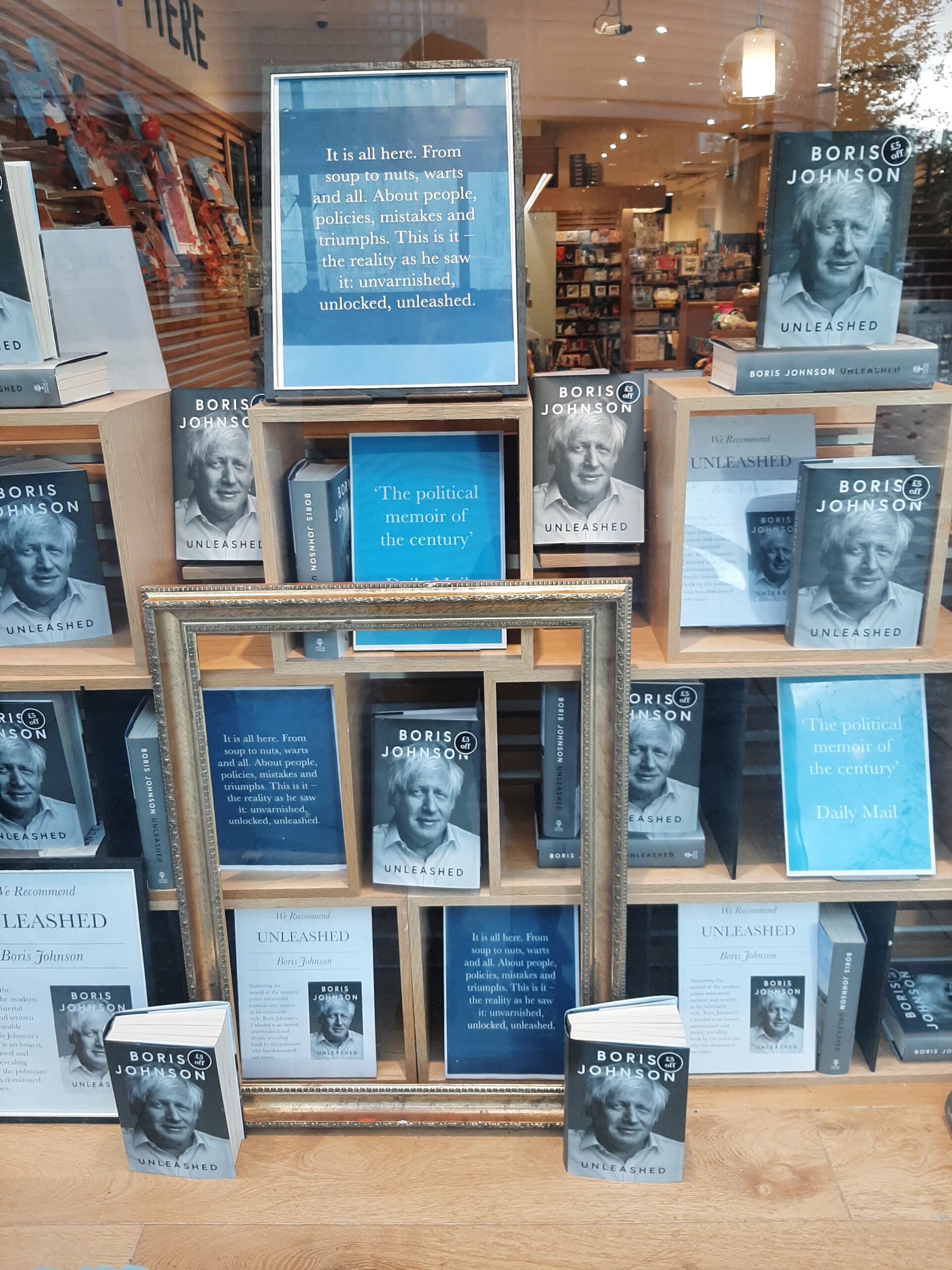
Political books also operate as material objects. They sit on shelves, appear in shop windows, get piled high at party conference bookstalls, or end up remaindered in discount stores. They are photographed, quoted from, reviewed, attacked, and defended. A book launch or a serialisation can reset reputations and revive careers. A memoir can reframe a political failure as a misunderstood achievement. A biography can rescue a forgotten figure or quietly reinforce the idea that politics is driven by a small, familiar cast of characters.
Crucially, political books are developed and circulate through networks. They are shaped by editors, publishers, reviewers, journalists, booksellers, and readers – and by the expectations of those audiences. A book’s influence may depend less on how many people read it cover to cover than on how it is talked about: which passages are quoted, which ‘revelations’ are highlighted, and which interpretations take hold. In that sense, reviews, interviews, blurbs, and headlines are not marginal extras. They are part of the political work the book performs.
Looking at political writing through this wider lens also changes how we think about who gets to do politics. Westminster memoirs and biographies have tended to dominate publishing, reinforcing a narrow, elite view of political life. But political writing has always existed far beyond Parliament: in radical pamphlets, community newsletters, feminist and anti-racist periodicals, punk fanzines, and grassroots publishing projects. These forms created political communities, tested ideas, and made claims to voice and authenticity that formal politics often denied.
None of this means that political books are all-powerful, or that they determine political outcomes. But it does mean that they are deeply embedded in the way modern British politics works. They help define what counts as political experience, whose stories are told, and how authority is claimed.
So the next time a political book appears it is worth asking not just what it says, but what it is trying to do. And that advice applies whether you read the book – or not.

Gary Love is Professor of British History and Culture at Norwegian University of Science and Technology. His work focuses on the history of British political ideologies and traditi...
View profile >Richard Toye is Professor of Modern History at the University of Exeter. He is a specialist in the history of rhetoric and is the author of numerous articles and books, including R...
View profile >Keep up with the latest from Cambridge University Press on our social media accounts.


Latest Comments
Have your say!