
Products and services


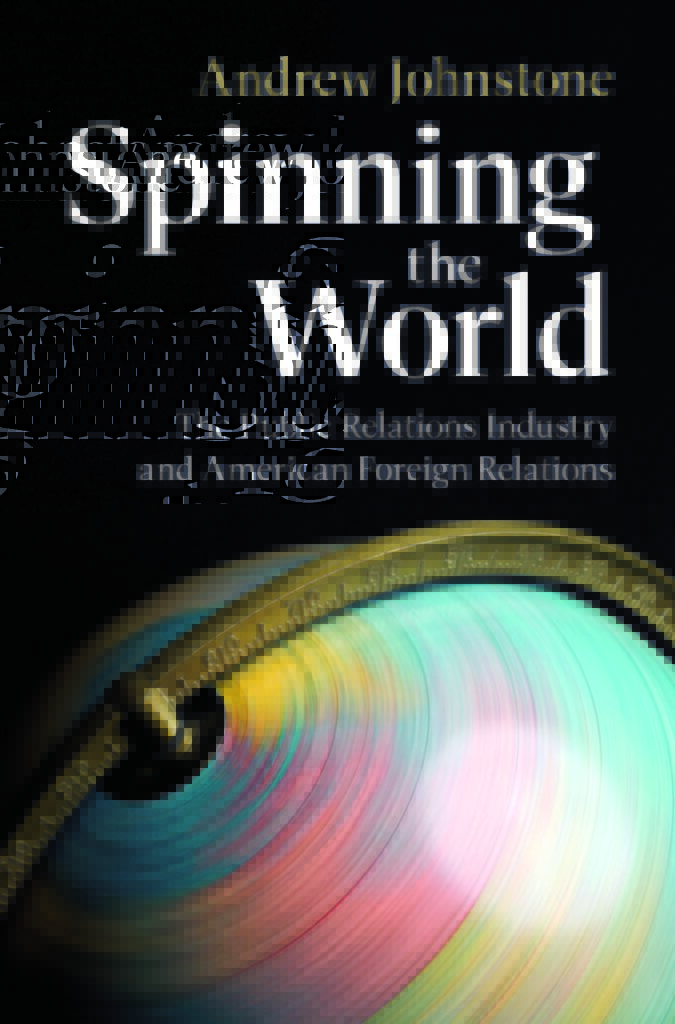
In 2019, Paul Manafort was sentenced to 73 months in jail for failing to register as with the United States Justice Department an agent of pro-Russian Ukrainian leader Viktor Yanukovych. The story became headline news, given Manafort’s role in Donald Trump’s 2016 election campaign, and the subsequent investigation by Special Counsel Robert Mueller into potential Russian influence into that election. At the heart of the story was a question about the role of Americans such as Manafort promoting foreign interests in the United States. While legislation did exist forcing such agents to register with the Justice Department – the Foreign Agents Registration Act – it did nothing to limit the actions of those seeking to do “public relations” for countries (or businesses, or issues) that might not be perceived as in the interests of the United States. Indeed, there was, and is, nothing to stop public relations firms making money promoting causes that might be seen as un-American. This recent example is just one way that public relations and American’s foreign relations have crossed paths in the last century, and those connections are at the heart of Spinning the World: The Public Relations Industry and American Foreign Relations.
The origins of Spinning the World can actually be found in my previous book, rather than in any more contemporary example. My last book, Against Immediate Evil, also examined non-state actors: citizens’ organizations on the eve of World War II who sought to aid Britain or even take the United States into war prior to the Japanese attack on Pearl Harbor. I found that the most well-known of these organizations, the Committee to Defend America by Aiding the Allies, was supported in numerous ways – organization, staffing, strategy, fundraising – by a public relations company, the John Price Jones Corporation. This led me to see if the most prominent non-interventionist organization of the time, the America First Committee, also relied upon a public relations firm. Although it did not, it was not for lack of trying, as no one would take on America First as a client. Instead, the committee received unofficial assistance from a conservative PR leader, James Selvage. These connections made me wonder just how much PR companies intersected with and influenced American foreign relations through the twentieth century. The answer – a lot – led to this book.
The growth of the public relations industry and of the United States as a world power ran in parallel through the twentieth century. Spinning the World traces the growth of both PR and American power through an examination of the propaganda efforts of World War I, concerns with Russian and German power in the interwar period, public debates over U.S. entry into World War II and the shape of the postwar world, the growth of American state propaganda in the Cold War, the work of American businesses overseas, and nation branding efforts to sell foreign countries in the United States. In doing so, it reveals three main forms of connection between PR firms and foreign relations: links to domestic citizens’ groups, connections to private businesses (domestic and foreign), and connections to governments (both in Washington and overseas). Foreign connections – to both governments and businesses – proved the most controversial, leading to Congressional investigations questioning the role of PR in the 1930s and 1960s (and later, to Manafort).
These connections are revealed through the actions of PR leaders who were instrumental in developing the industry. Key figures in the book include PR pioneers Ivy Lee, Edward Bernays, Arthur Page, John Price Jones, John Hill, and Harold Oram. By the end of the twentieth century PR was part of large multinational corporations often under the umbrella label of “communications”. But the early industry leaders started the profession of public relations with small firms that saw themselves as distinct from advertising or political lobbying. Their papers show that they saw their role not as simple slogan writers or as links to Washington, but more broadly as manipulators of public opinion and (often openly) as propagandists.
As this group suggests, while the practice of public relations can be understood in a number of ways, I chose to focus on PR as a profession. This corporate focus was in part necessary to narrow the scope of the book, as I could have included all manner of things as “public relations,” from presidential speeches, to State department activity, to public diplomacy, which could have made the book an unwieldy mess. But for me, the most interesting aspect of PR involvement in American foreign relations was the potential clash between the public interest and private interests. American citizens believe that foreign policy decisions are made with their best interests at heart. They may disagree with those decisions, but if so, they can move to hold the political leaders accountable and remove them from office. In contrast, the role of PR in foreign relations is hidden. PR firms seek to move foreign policy in certain directions, yet they are for the most part unaccountable. This is despite the fact that at times they found themselves selling issues of war and peace. Spinning the World reveals the largely invisible hand of PR in foreign relations.

Andrew Johnstone is Associate Professor of History at the University of Leicester. He is the author and editor of five books, including Against Immediate Evil and US Presidential E...
View profile >Keep up with the latest from Cambridge University Press on our social media accounts.



Latest Comments
Have your say!