

Products and services

Vladimir Putin’s full-scale invasion of Ukraine in February 2022 shocked many in the West. So did Hamas’s surprise attack on southern Israel in October 2023 and Israel’s response of massive violence and ethnic cleansing. For all the talk in policy circles about a “rules-based order,” most academic observers, liberals as well as realists, were caught off guard. Liberal internationalists have long been slow to acknowledge the return of hard geopolitics, while realists, convinced that states act rationally in pursuit of material interests, struggled to explain why Russia or Hamas would choose such costly confrontations.
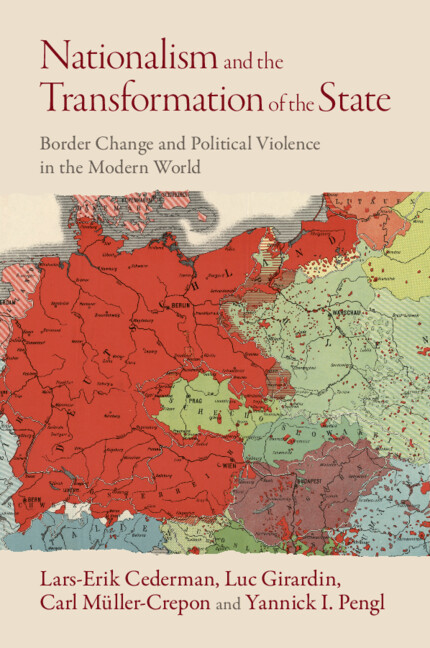
In our book, Nationalism and the Transformation of the State, we argue that the key to understanding today’s conflicts lies not in rational responses to security threats, but in nationalism: nationalist ideas erode borders, redraw maps, and set states and ethnic groups on a collision course. With the liberal international order weakened in the early 21st century, the world is drifting back toward what has been the historical norm since the French Revolution: nationalist geopolitics.
This perspective demands a rethink of how scholars approach nationalism. Many treat territory as either an afterthought or an unchanging given. Yet, geography sits at the heart of nationalist politics. The standard model in which ethnic identities melt and shift inside the state’s fixed container like in a “lava lamp” dramatically understates nationalism’s disruptive power. In the real world, politicized ethnicity behaves less like melted wax and more like real lava: it can warp, crack, or even explode the lamp.
We also challenge the modernist assumption that nationalism is purely a product of the modern era. Today’s conflicts often draw on mythic pasts to justify present-day expansionism, with Putin’s fixation on medieval Rus’ being only the latest destructive example.
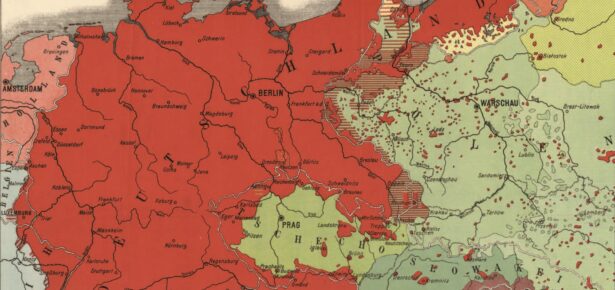
To test these arguments, our book brings systematic geographic data from historical maps into a field that all too often relies on loosely assembled case studies. Going beyond Charles Tilly’s famous theory that “war made the state,” we show how the spread of spread of nationalism across and beyond Europe since the early 19th century created a world in which border stability often depends on the alignment between political authority and ethnic identity. Ethnically fragmented states tended to fracture; states whose dominant groups had kin abroad tended to expand. Wherever state and nation failed to match, conflict within or between states followed.
The logic of nationalism is, unfortunately, still very much alive and kicking. Nationalists who lament the loss of bygone “golden ages” or promise to make their countries “great again” are rarely just indulging nostalgia. They are mobilizing political grievances around perceived violations of the nationality principle. Our analysis of Europe’s historical railroad expansion further shows that modernizing ethnic peripheries often backfired, sparking separatist resistance instead of integrating them more durably into the state.
Some might conclude that the remedy lies in “right-sizing” states by drawing borders that match ethnic geography. This sounds tidy only in theory. Because ethnic groups rarely live in completely separate areas, partition usually creates new winners and losers, and the losers rarely remain quiet. Our latest research suggests that while partition can sometimes reduce ethnic domination, it more often triggers fresh grievances and instability. Far safer, in most cases, is to share power within existing borders rather than redraw them.
If we want to manage ethnic conflicts more wisely and maybe even prevent future ones, we need to understand the nationalist geopolitics that are shaping the 21st century. Our hope is that this book will help policymakers and analysts see today’s crises not as aberrations, but as part of a broader historical pattern that we must understand to escape from it.

Lars-Erik Cederman is Professor of International Conflict Research at ETH Zürich: He is the author of Emergent Actors in World Politics (1997), co-author of Inequality, Grievances...
View profile >Luc Girardin is a project leader at ETH Zürich and CTO at Macrofocus. He is a trained computer and data scientist with a foot in the social sciences. He co-created the Ethnic Powe...
View profile >Carl Müller-Crepon is an Assistant Professor at the London School of Economics and Political Science and received his Ph.D. from ETH Zürich in 2019. Published across leading jour...
View profile >Keep up with the latest from Cambridge University Press on our social media accounts.



Latest Comments
Have your say!