

Products and services

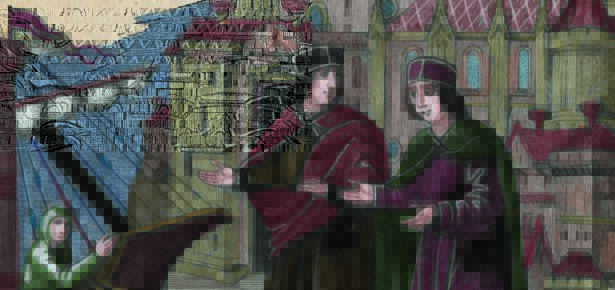
On Friday 9 June 1458, a pirate ship swerved and fired on two Bristolian trading boats as they passed the coast of Malta, on their return from the Levant. I found the event transcribed in a legal document. I could see the inky vessels with their lost signatures, the Katherine Sturmy and the Marie, trapped in the footnotes of an unwritten narrative. The ships of the Bristol merchant, Robert Sturmy, contained over £18,000 worth of Syrian and Mediterranean goods: nearly £11.6 million in contemporary terms. This event, its protagonists and their cargo belong to a history of cultural encounter, failure and desire.
The attacking ships were captained by the notorious pirate Giuliano Gattilusio. The survivors who returned to England described how they were ‘horribly and grievously without pity and compassion murdred, slayne, drowned and cast into the see’. The chase lasted three days, before the pirates captured the ships, dropped the survivors off in Malta and sailed to Libya.
I find myself unable to resist my fantasies as I read these historical records. I can see Robert bleeding on the beach, his shirt ripped, as John, his partner, tries to lift him – I can see the doctors and priests running towards them as Robert presses his lips to the other man’s wet shirt and tastes the salt on his tongue – John crying as Robert, his captain, begins to lose consciousness. Snap out of it, I think. This is not a movie.Or is it? The medievalist Carlo Ginzburg asked rhetorically: ‘Without cinema, without the close-up,’ would the critic ‘have been able to speak of microhistory?’
On 11 June 1458, Sturmy died, leaving a widow in Bristol, Ellen (née Talbot). Sturmy’s business partner, John Heyton, survived and made his way home with the remaining crew. When he arrived in England, Heyton brought a case before King Henry VI, seeking compensation for the value of the lost goods, plus an additional £10,000 damages. The pirate Gattilusio was out of reach in Libya. Instead, the Genoese residents of London and Southampton were rounded up on royal command, imprisoned and put on trial.
As evidence for the prosecution, Heyton submitted an inventory of their lost cargo: sweet wines, spices, precious jewels, silks, the mineral alum. These commodities had once travelled from the Crusader settlements but were now traded in the markets of the Mamluk Empire. Medieval Christian consumers clung to these commodities like relics.
In my new book,I have recollected Sturmy’s lost cargo for the first time since Gattilusio’s attack. Following the missing merchandise led me on a trail of real and fantasised objects. I found traces in dream visions, recipe books, church treasuries, parliamentary bills, excavated silks and tapestries. These fragments defamiliarize England as an unstable, shifting place, seen through the eyes of tailors, translators, prisoners, doctors, mystics, cooks, silk-women, alchemists, poets, priests and lovers. This is a story of the boats which sailed to the British Isles, and the deep and contradictory desires which they encountered on arrival. These goods transformed medieval English medicine, cuisine, industry, immigration legislation and religion, in ways which continue to resonate today.
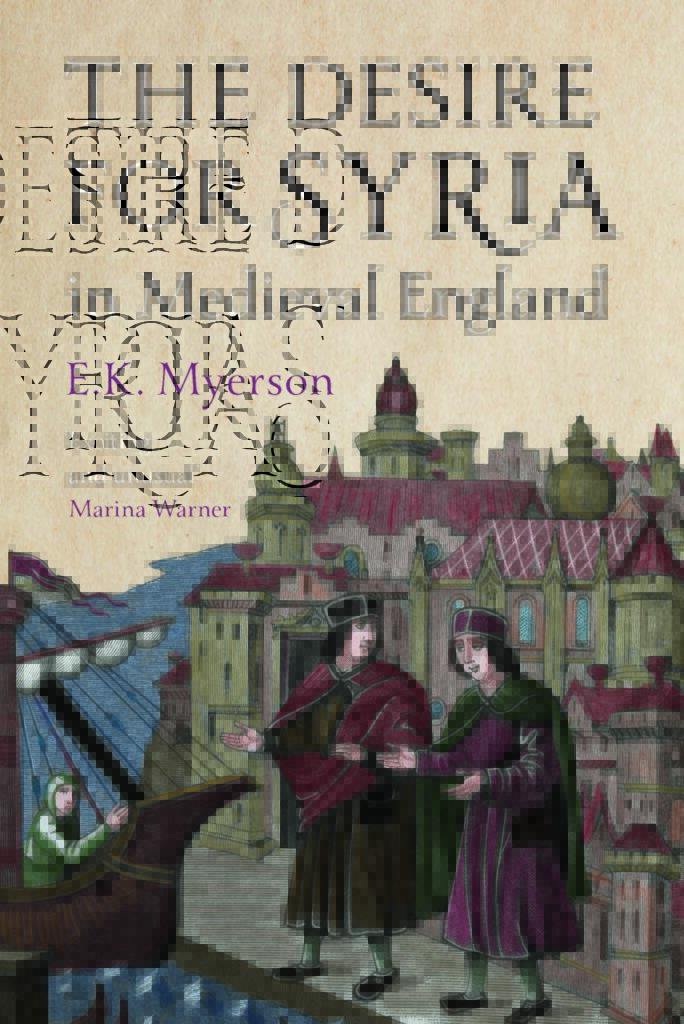

E. K. Myerson is an artist, writer, and curator, currently studying at the Royal College of Art. Their academic and creative writing has appeared in publications including GLQ, The...
View profile >Keep up with the latest from Cambridge University Press on our social media accounts.


Latest Comments
Have your say!