

Products and services

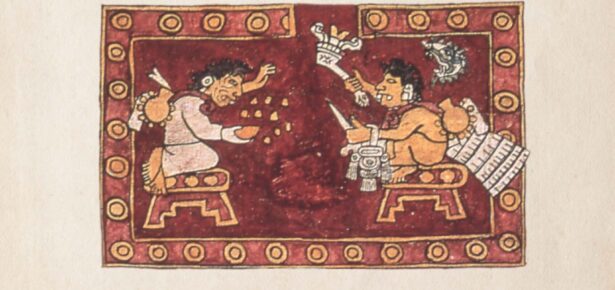
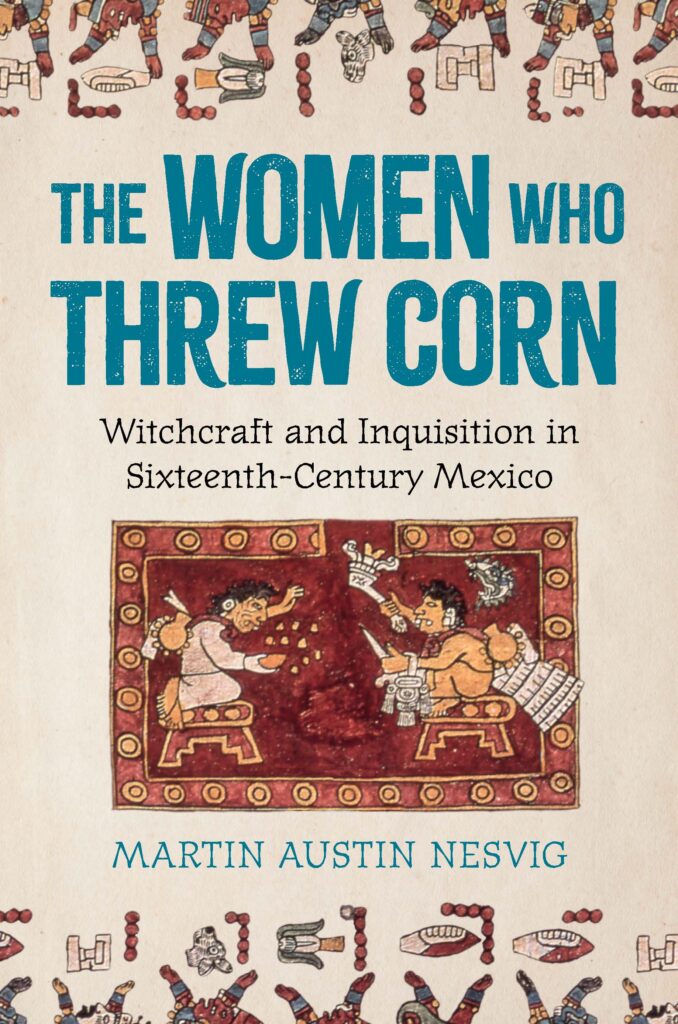
How many witches did the Spanish Inquisition burn in Mexico? My name is Martin Nesvig and my new book The Women Who Threw Corn: Witchcraft and Inquisition in Sixteenth-Century Mexico discusses witchcraft in Mexico.
The answer to the question above is: ZERO. There were no mass witch panics in Mexico. Rather, witchcraft was a kind of cultural syncretism combining magic, medicine, folk healing, popular religion, and, yes, sometimes the devil.
I’m here to talk a little bit about my new book. Feel free to look me up here or contact me at mnesvig@miami.edu. I also have a Reddit “Ask Me Anything” about the book and witches, here.
Anyway…you know those images of women burning alive on bonfires? Of course you do! You don’t even need anyone to tell you. Everyone knows that back in the olden days superstitious people went collectively insane and then rushed to accuse women of being witches. Then they killed them. Well, sort of. In the material I study—primarily Mexico but also Spain—there were few witch crazes. In Spain, yes, there were two such panics, both in Basque lands, one in 1526 and the other in 1609-1611. In fact, if I asked you to imagine the “witches’ sabbath” you might imagine a goat or Satan-goat presiding over this event. Like this famous 1798 painting by Goya.

Francisco Goya, El aquelarre (1797-1798)
Francisco Goya, Public domain, via Wikimedia Commons
Goya titled this work “The Aquelarre,” which was a Spanish neologism that came from the Basque word akerra, goat, and larre, meadow. But it’s mostly fictional—an invention of the mind of Spanish inquisitors who misunderstood Basque folk religion and culture—after all, goats were common in northern Spain.
My new book tries to make sense of what happens when a few cultural things converge. First, Spaniards, famously led by Hernando Cortés, invaded Mexico in 1519. Shortly thereafter, Spanish Catholic authorities showed up and beginning in 1527 multiple versions of the Dreaded Spanish Inquisition became operative. Likewise, Spanish peoples, as well as ethnic North Africans, Canarians, Basques, and enslaved Senegambian soon formed a small ethnic minority in Mexico in the period my book studies, 1520s-1560s.
What happens when popular Spanish ideas about magic and witchcraft, the Spanish Inquisition, and Native magic and medical traditions collide? The longer answers lie in my new book. The shorter answers are that these non-Native women quickly adopted multiple forms of Native magic, medicine, folk healing, and language. But the version they adopted was hybrid. The resulting cultural forms were neither strictly Spanish nor Native.
What did the Inquisition think about this? In the period I discuss, the inquisition questioned and sometimes punished women accused of witchcraft. Punishment was racially driven—Africans and women of mixed ethnicity or darker skin (such as so-called moriscas, or women of some North African heritage) were punished severely, while Spanish women, especially those of higher status, got a free pass. Some things never change.
What kinds of witchcraft does my book discuss? There are a lot of crazy things going on. Most of these cases – primarily inquisitional investigations – have never been discussed. Recent ethnohistory has focused on Native responses to Spanish imperial domination of Mexico. The book offers the other side of this equation of cultural evolution by telling the stories of how non-Native women adapted to their predominantly Native Mesoamerican culture. These women were Spanish, Canarian, North African, Senegambian, and mulata. Living in a multiethnic world, the women adapted magic, sorcery, folk healing, midwifery, and language by incorporating Nahuatl language, Native healing practices of the tiçitl, divination with corn hurling, tlaolchayahua, and consuming hallucinogenic cactus, peyote. Over the course of the five decades, non-Native sorceresses came to be more Mexican than European or African. This book sheds light on a period poorly that is understood and infrequently discussed, offering a first step in evaluating the reverse ethnohistorical processes of non-Native acculturation to Native custom, religion, and cosmology.
Why is this book only about women? Good question! The quick answer is that this book is Book One of a planned trilogy of books about Spanish acculturation to Native society, magic, and ritual in colonial Mexico (primarily the 16th century but also, in Book Three, some 17th century). The next book in the series is The Xolotl Rite: Or, How Spanish Men Were Nahuatlized in Sixteenth-Century Mexico. As a companion to The Women Who Threw Corn, this next book focuses on men. Turns out they did stuff like lead cults to Mesoamerican gods, like the dog-like trickster god, Xolotl. I’m in the process of completing this book and hope to see it in print in 2027. Here you can see a representation of Xolotl, who, apparently was quite popular even after Spanish missionaries tried to eradicate Native religion:
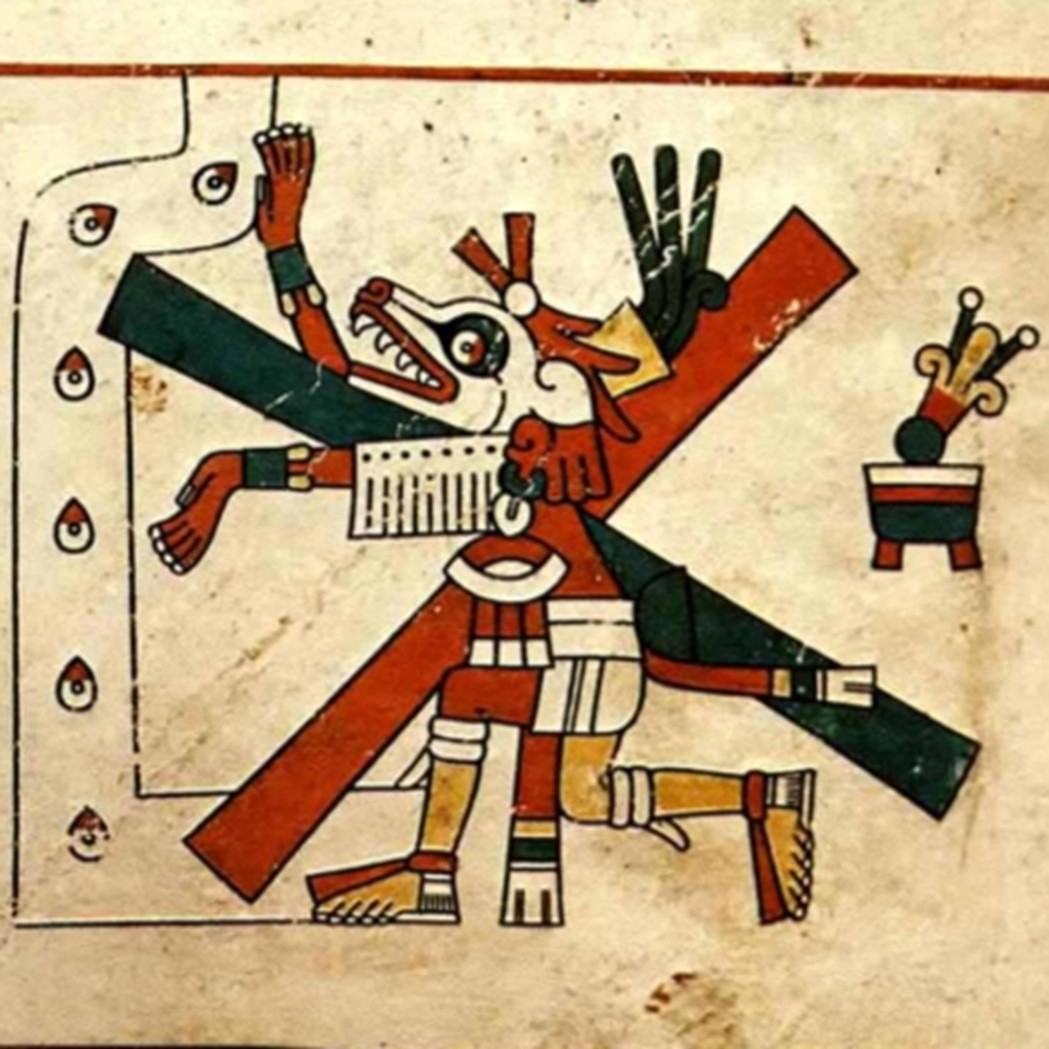
Codex Fejéváry-Mayer, 15th century
Public domain, image via Wikimedia Commons

Martin Austin Nesvig is Professor of History at the University of Miami, and a fellow of the John Simon Guggenheim Foundation. He is the author of five books including Ideology and...
View profile >Keep up with the latest from Cambridge University Press on our social media accounts.


Latest Comments
Have your say!