

Products and services

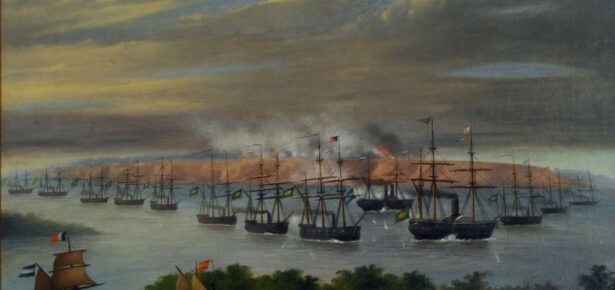
Capable states that enforce the rule of law, secure property rights, and provide public goods are prerequisites for development, but where do they originate? Last year’s Nobel Prize in Economics was awarded to scholars who argued for the role of colonial institutions. Opportune as the reckoning with colonialism might be, it has diverted our attention from another, now perhaps timelier factor: war.
A tacit consensus across the social sciences and humanities sees capable states as emerging historically from war and its demands. Wars compelled rulers to build armies, extract tribute, and suppress revolts. This necessitated new bureaucracies and forced sovereigns to break local orders ruled by strongmen to impose a rational-legal political order. As wars became more destructive, states expanded their functions with them. Unlike the colonialism story, this theory explains the formation of states in Europe, and works both before and after colonialism, but does it explain other regions as well?
Bringing War Back In revisits and revitalizes this influential theory connecting the origin of the state to warfare by showing how this worked in Latin America. The result is an enhanced interpretation of bellicist theory that focuses on war outcomes as the key to understand worldwide variation in state capacity and development.
The importance of Latin America
Latin America has long been the poster child for an approach that suggests war did not form states outside Europe because in other regions wars were infrequent, mild, and financed by foreign loans and duties. But what if even those infrequent wars can explain the variation in state capacity in the region? Latin America is a vital test case; if the theory holds there, it could hold anywhere!
In Bringing War Back In, I show how state capacity in Latin America developed during the 19th century, when international wars were fought, and stalled in the 20th century, in the absence of such conflicts. Moreover, I demonstrate that over the long term, state capacity grew in the winners—like Argentina, Chile, Costa Rica, and Uruguay—and declined in the losers—Bolivia, Nicaragua, Paraguay, or Peru. These countries were neighbours, similarly endowed, and in the case of Paraguay and Peru, had arguably stronger states in the mid 19th century. Wars that happened right thereafter are the only factor that can explain the reversal of fortunes and its precise timing.
Getting “Bellicist Theory” right
Why was this pattern overlooked? Largely because distorted, strawman versions of bellicist theory shaped views of the region. One common misreading claims that wars built state capacity in Europe by eliminating weaker states, a process irrelevant to Latin America where states rarely disappear and their numbers have instead grown. Given such misinterpretations, it is unsurprising that scholars dismissed bellicist theory.
Developed over a century ago by scholars like Otto Hintze and Max Weber, the classical version of bellicist theory says nothing about state death and out-selection. In contrast, it argues that state capacity grows during mobilization and continues to strengthen in victorious states, as victory legitimizes wartime coalitions and policies. In contrast, losers see these coalitions and policies delegitimized, leading to long-term state weakening, even when they survive. These effects, especially from prolonged wars, can last for decades. This version of the theory had not been tested in Latin America—until now—and it holds true!
War triggered the extraction-coercion cycle
Could Latin American wars be financed through foreign loans and customs duties? Testing these assumptions is crucial, as half of the combating states in 19th-century Latin American conflicts were in concurrent default on sovereign debt or faced naval blockades, indicating potential difficulties in financing war through tariffs and loans.
To assess this, one can look at militarized interstate disputes (MIDs)—episodes involving the use or threat of violence short of war that would trigger mobilization. In the first analysis of this kind, I find MIDs either had no impact or negatively impacted the collection of foreign duties, average tariff levels, and the likelihood of acquiring foreign loans—meaning states did not resort to them easily to finance war deficits. In contrast, a 20% average currency depreciation in those contexts indicates the transfer of these costs to the local population, resulting in coups and civil wars becoming two to three times more likely during wartime.
This means that unable to resort to foreign finance, states had at time to resort to domestic taxation (extraction) and had the need to repress rebellions (coercion) caused by these policies. The coercion-extraction cycle was triggered in Latin America, but did war outcomes lead to divergent state capacity trends too?
War outcomes determined post-war trajectories
Unlike in European history, where systematic comparisons between winers and losers are complicated by the dissolution and reformation of states, Latin America offers a unique case in which national boundaries remained largely stable, and all combating states survived during the late nineteenth century. This, together with the element of contingency in warfare—so famously highlighted by Clausewitz—and the fact that countries were experienced parallel development trends before these wars, help me credibly estimate the long-term effects of war outcomes on state-building.
My empirical findings focus on two key indicators of state capacity: railroad expansion and per capita revenue. Losing a war led to a marked reduction in both, with effects persisting for more than two decades. Pre-war trends suggest that these countries were on similar trajectories before conflict, ruling out preexisting differences as the explanation for post-war divergence. Similarly, results don’t change when considering confounders like economic growth or exports. These findings confirm the argument of classical bellicist theorists: war outcomes exert a durable and incremental influence on state capacity, shaping the institutional development of nations for generations.
For a comprehensive discussion of the statistical models, robustness checks, and additional findings, see my full article in the American Journal of Political Science and its accompanying appendix.
Looking at the mechanisms case by case and under the magnifying glass
These new findings allow us to re-interpret history to an important extent. The reason why Argentina diverged in development from neighboring Paraguay, sometimes attributed to its colonial institutions, immigration, or the genius of a generation, was the shock of the Paraguayan War, which strengthened the military that pacified the country, allowing for the immigrants and investments that explain its takeoff after 1870.
All case studies in the book point consistently in the same direction. I include all conflicts that meet three key criteria: they result in at least 5,000 casualties, persist for a minimum of two years, and lead to the destruction of at least half of the losing side’s military forces. The historical account I provide for each of these wars boasts new primary evidence from carefully selected sources—e.g., diplomats providing neutral reports about military events and state buildups—confirming the theorized mechanisms in every single case.
I also strengthen my counterfactual analysis using statistical techniques. For example, I apply the synthetic control method, to show how a counterfactual Paraguay unaffected by defeat would have had over 250 additional miles of railroad and collected three times as much revenue than the actual, defeated Paraguay, two decades after the war ended.
A superior theory for Latin America and beyond
The historical analysis presented in this book demonstrates that the explanatory framework I propose offers a compelling account of state development in Latin America that puts a prevailing emphasis on colonial institutions into question. This is because variation does not happen in colonial times, or when external economic shocks hit the region, but precisely in the aftermath of these wars, and affecting similarly endowed countries—both institutionally and resource-wise—in very different ways.
Paraguay, for example, was a peripheral colony that had, by the mid-19th century, established robust institutions and was on a clear upward trajectory—only to be devastated by war in the 1860s. Argentina, too, illustrates the central role of warfare in state formation. For much of its early history, the country was mired in perennial civil conflict, but its victory over Paraguay proved decisive, legitimizing its armed forces, enabling the federalization of Buenos Aires, and creating the conditions necessary to enforce a liberal constitution that underpinned its subsequent economic growth.
Chapter by chapter, this book will convince you that the theory works with every other country: Bolivia, Brazil, Chile, Costa Rica, Mexico, Nicaragua, Peru, are also treated extensively. Even the so-called “exceptional” cases of Costa Rica and Uruguay—often referred to as the “Switzerlands” of Latin America—align with the predictions of this theory, in a reading of history that tracks their exceptionalism to the experiences of the Filibuster War and the Great Siege of Montevideo.
Finally, this theory is not limited to Latin America. The effort to bring war back has sparked a revitalized debate which so far seems to show it applies worldwide since 1816 and could explain previously hidden dynamics of modern European state formation.
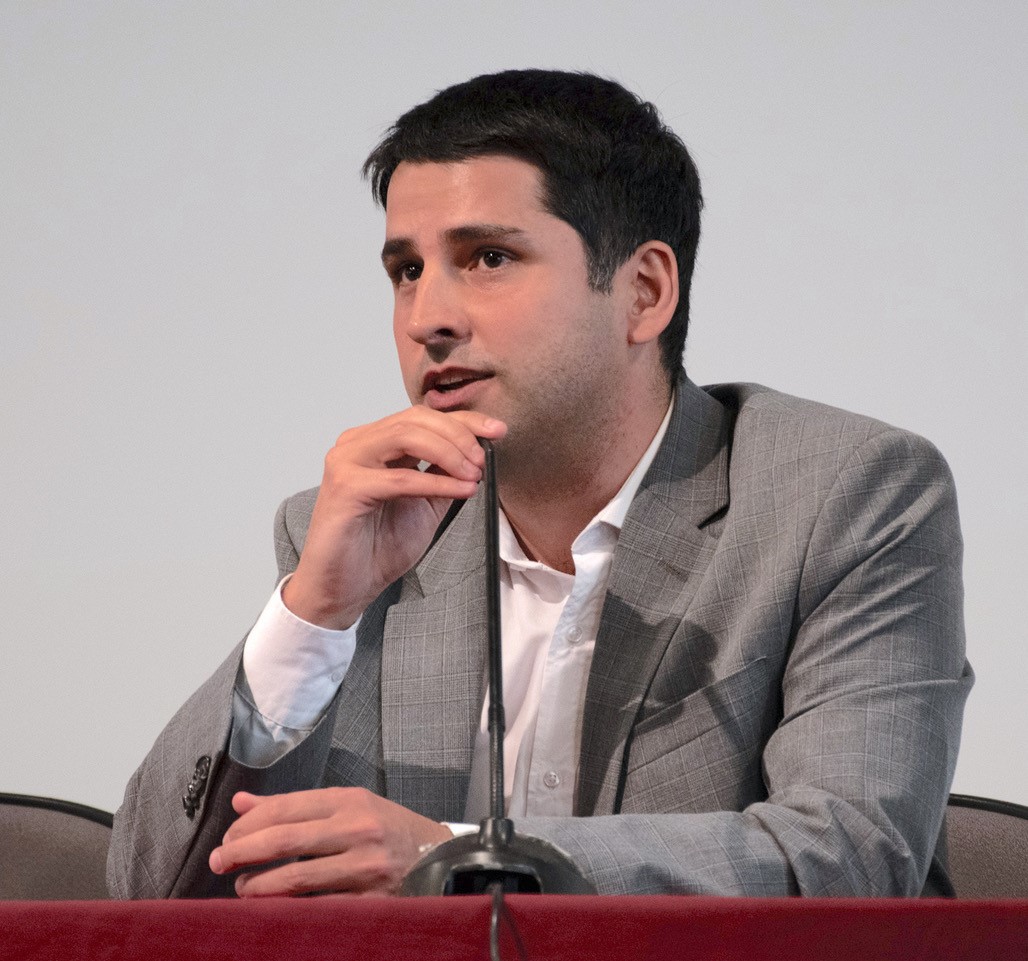
Luis L. Schenoni is Lecturer (Assistant Professor) and Director of the Security Studies Programme at the Department of Political Science, University College London. His work on war...
View profile >Keep up with the latest from Cambridge University Press on our social media accounts.



Latest Comments
Have your say!