

Products and services


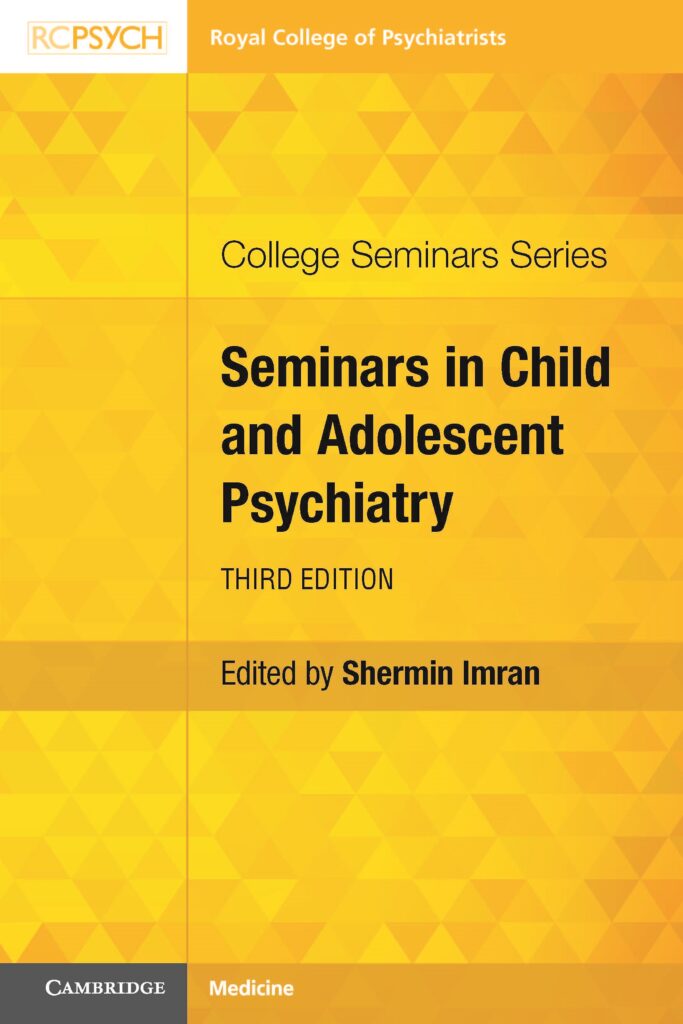
Third edition of Seminars in Child and Adolescent Psychiatry is a major revision which was long overdue given that the second edition was published 20 years ago. That was around the same time I started working as a child and adolescent psychiatrist in the NHS. As the editor my motivation for the revision of this historical series arose from my own experience of training and working as a child and adolescent psychiatrist in the NHS. During this time period the demand on specialist services has risen substantially and all of us have had to struggle with a global pandemic, most likely both professionally and personally, as I know I did.
Embarking on this project, I spent a good bit of time thinking about what the revision should look like and what range of clinical and nonclinical knowledge and skills I have observed to be integral to effective service delivery as a clinician, trainer and medical manager over the last two decades in NHS. Reflections with fellow clinical and academic colleagues and trainees helped to pull together the blueprint reflecting the evolution of child and adolescent mental health services (CAMHS) and aligning with the required competencies within the curriculum for training psychiatrists in UK.
Over the years I have enjoyed wonderful opportunities to work with a host of experienced and wise CAMHS colleagues in my job as a clinician, with research and academic colleagues and with the Royal College of Psychiatrist, Child and Adolescent Faculty and the NHS England commissioners and advisors. This included a variety of collaborative work in training, recruitment and workforce development in psychiatry, developing new service standards and pathways in addition to working with the research agenda in CAMHS. I was fortunate to be able to borrow the time and expertise of a range of these experts for this revision.
The very first chapter of this book appropriately titled “Children’s mental health services in Context” sets the scene by focussing on the statutory and policy framework within which CAMHS services are developed and helps to understand some of the challenges and constraints faced by clinicians and service users, including by unprecedented events like a Covid pandemic. This should equip those training and working in this field with the much needed context and organisational knowledge, often neglected during the training years.
People may think of child psychiatry at best starting with young children in primary school experiencing a range of emotional and behavioural difficulties needing CAMHS help and support, the book expands this horizon in a chapter dedicated to infant mental health, outlining excellent work being done by our colleagues starting from the perinatal period, demystifying and explaining the key principles and skills child psychiatrists can bring to bear on positive outcomes for children. This theme is strengthened further in dedicated chapters on risk factors for child psychopathology and themes involved in mental health prevention, a cornerstone of UK Government’s current ten year plan for NHS.
Complex presentations encountered, for example, in the clinics as well as liaison psychiatry setting in general hospitals, are tackled head on by excellent chapters by experts in the field on Bodily Distress and Dissociative Disorders (commonly known as medically unexplained symptoms or functional disorders) as well as new approaches in liaison psychiatry in CAMHS, moving towards Psychological medicine model in collaboration with multidisciplinary professionals. The book also equips clinicians with the recent revisions in major classification systems developed in UK and US and used in CAMHS services across the globe with the help of experts in the field.
Mental health conditions like mood and psychotic disorders are encountered commonly in clinical practice and dedicated chapters review not only the latest advances in assessment, management and predictors of outcome but extend their review to consider the impact of environmental change for the mental health of our young people. Experts in the field share their concern about the risk of not effectively treating young people in a timely fashion for serious and high risk conditions like severe depression due to a tendency in academic literature and media to underreport the positive effects and overreport the risks of medication treatment. They expand the argument by sharing the risks and explaining how to monitor and mitigate these effectively.
I suspect I am not different from many of my readers when I worry about the impact of the digital world within which our young people are growing up. For a clinician, as it is for a parent and carer, it has become imperative to understand and embrace this in their day to day work. My colleagues lend an expert hand by setting out the skills required whilst reflecting on the risks and benefits of the digital world. The theme is carried through multiple chapters analysing the digital developments and their pros and cons in CAMHS. One of my personal favourites is the excellent chapter on eating disorders also bringing us up to date with the latest terminology prevalent in the digital landscape relating eating disorders, experiences of our young people and caveats of managing young people faced with these challenges.
Debate on meeting needs of transgender youth effectively and safely within the context of extant and expanding evidence base has been at the heart of public discourse recently, especially in UK, leading to a national review of Gender Diversity services by Professor Hilary Cass. A dedicated chapter reviews the unique stressors faced by this population and presents a comprehensive overview of mental health problems, models of care and challenges and opportunities for clinicians in this field.
Increasing demands on CAMHS in managing crisis care, whilst an essential component of the service, may run the risk of reducing time for delivering good quality planned therapeutic care which often needs time and resource to effectively engage and adapt to young people’s needs including for those may be neurodivergent. Experienced colleagues working in psychological services within CAMHS argue the case for protecting and developing this resource whilst providing a thorough overview of the experience of attachment and trauma in young people and the full range of psychological approaches including the third wave concepts of metacognition, acceptance, mindfulness and compassion.
The diverse nature of practice in CAMHS is reflected well in this revision through a wide range of chapters by multiple authors, for example, what a good assessment looks like in CAMHS to working with young people with neurodevelopmental and intellectual difficulties, those struggling with self-harm, substance misuse and those who may be managed within the forensic pathway in CAMHS. Legal framework used in mental health is set out in another chapter, with which clinicians need to be well versed.
Notwithstanding the challenges in this field, after reading the completed revision it seems to me CAMHS has much more to offer. With it’s appropriate share of funding also enabling ongoing research, innovation and growth, informed by best evidence and practice (some of which is already being championed by colleagues) I think the sky is the limit, perhaps not unlike a growing child!

Dr Shermin Imran has worked in young people's specialised and forensic mental health services for over a decade and a half as a consultant, trainer and a service lead, in the North...
View profile >Keep up with the latest from Cambridge University Press on our social media accounts.



Latest Comments
Have your say!