

Products and services

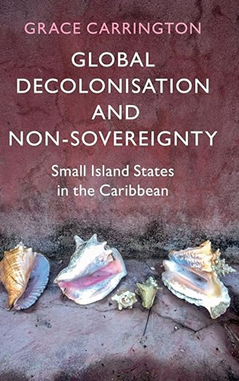
In today’s world of nation states, conventional narratives present decolonisation as an inevitable transition from empire to national independence. However, this does not fully acknowledge the complex, ongoing nature of decolonisation. What about those colonies that did not become independent? And what about the people who resisted colonial rule, even as their countries remained politically tied to old empires? In my new book, Global Decolonisation and Non-Sovereignty: Small Island States in the Caribbean, I explore these forgotten stories of anticolonial struggle in non-independent states, including the Cayman Islands, the Virgin Islands, Martinique and Guadeloupe.
Positive Action in the Virgin Islands: Noel Lloyd vs Neocolonialism
On 6 April 1968, two days after Martin Luther King’s assassination, Noel Lloyd led a one-man protest around the capital of the British Virgin Islands (BVI). Marching in memory of Dr King, Lloyd also sought to challenge a neocolonial development scheme that threatened to undermine land ownership rights for Black BVIslanders. The plan involved controversial British businessman Ken Bates, then chairman of Oldham Athletic and later owner of Chelsea and Leeds United football clubs.
Lloyd’s lone protest lit a spark. It grew into an island-wide campaign known as the Positive Action Movement. The movement was so effective that it forced the British Government to pay $5.8 million to settle the dispute (about $50 million today). While the movement was not explicitly nationalist, it directly confronted colonial and neocolonial interference in the BVI. Some of its leaders supported independence, and their allies in the nearby US Virgin Islands even brought the issue to the United Nations. Still, despite the movement’s achievements and Lloyd’s enduring vision, these events have gained little historical attention.
The Price of Protest: How France Silenced Guadeloupe’s Independence Movement
That same year, nineteen activists were put on trial before the French Court of State Security for the crime of calling for Guadeloupean independence. Openly advocating independence in overseas departments (DOMs) like Guadeloupe had been outlawed by France in the wake of the Algerian War and increased nationalist activity in the DOMs.
During the trial, which lasted from 19 February to 1 March 1968, renowned intellectuals Aimé Césaire and Jean-Paul Sartre spoke in support of the activists. Nonetheless, six men, including Pierre Sainton, the leader of Guadeloupe’s first independence movement (GONG), received prison sentences for the ‘dangerous threat’ they posed to the French Republic. The trial marked a turning point, leading to the disintegration of the burgeoning nationalist movement in Guadeloupe amid a broader campaign of repression by the French state.
Rethinking Decolonisation: Why Non-Sovereign Territories Matter
Since 1968, both the BVI and Guadeloupe have remained constitutionally tied to their former colonial powers – Britain and France. They never became independent states. As a result, the anti-colonial movements that emerged in these territories are often left out of mainstream decolonisation histories. Most narratives continue to focus on countries that did achieve independence, while places that did not are treated as paradoxes, remnants of the days of empire, rather than meaningful parts of the broader story.
However, activists, politicians and intellectuals in territories like Guadeloupe and the BVI, saw themselves as part of the global movement for self-determination in the twentieth century.
My book Global Decolonisation and Non-Sovereignty argues that our current understanding of global decolonisation is incomplete. To truly grasp the scope and complexity of decolonisation, we need to move beyond a narrow focus on formal independence. Instead, we should think of decolonisation as an ongoing process, one that involves challenging and dismantling colonial power structures and legacies that persist, even today. It is neither an inevitable nor a linear process, but one which can ebb and flow as the colonial grip is weakened and sometimes restrengthened, often in new forms.
In the twenty-first century, more than forty non-sovereign states remain. This phenomenon is particularly apparent in the Caribbean region, where there are actually more non-independent territories than independent nation states. These places are not marginal or irrelevant. A large proportion of the world’s capital is stored in or passes through offshore financial centres in non-sovereign states like the Cayman Islands.
By looking more closely at non-independent states, we see how terms like ‘independence’, ‘sovereignty’, and ‘dependence’ are not fixed categories. They are relative and contingent, shaped by context and contested over time.
Importantly, anticolonial thinkers and activists, like Noel Lloyd and the members of GONG, were arguing for a range of political futures and formations, including federations, regional projects and international groupings that went beyond the nation state. National independence was not a foregone conclusion.
Acknowledging these forgotten protest movements challenges us to refine our historical lens and reconsider the unfinished nature of decolonisation. This allows for a much clearer picture of how European empires fragmented and their ongoing legacies today.
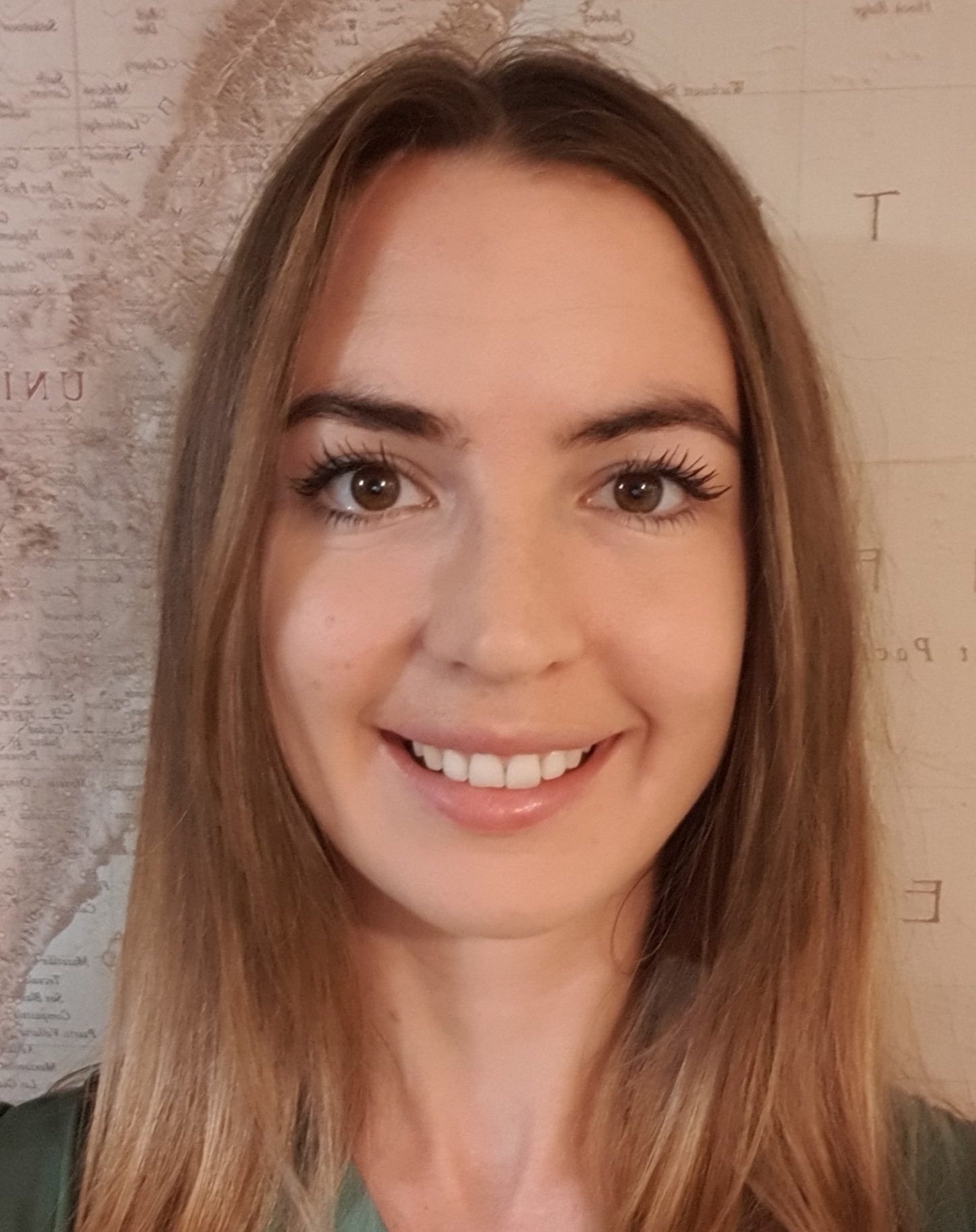
Grace Carrington is a Research Fellow at the University College London Institute of the Americas. She is currently part of an interdisciplinary research team working on the AHRC-fu...
View profile >Keep up with the latest from Cambridge University Press on our social media accounts.


Latest Comments
Have your say!