

Products and services

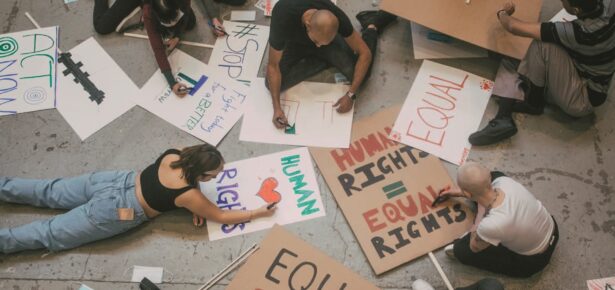
Millions young people across the world grow up every day with some variation of violence affecting their lives. Millions more—sometimes the very same young people—may participate in that violence, even as many of their peers are also counteracting it and building a more peaceful world.
Young people’s relationship to peace and violence is often talked about with simple labels: combatants, perpetrators, victims, activists. But of course, the realities are more complex, and young people are not just passive blobs shaped by their circumstances.
Grounded in the work of Urie Bronfenbrenner, developmental science has provided great guides for thinking about interconnected influences of everything from one’s DNA to relationships with peers to community contexts to media and social media to historical events and changes. Bronfenbrenner conceptualized these complex dynamics as an ecosystem, in which the relationships, elements, and various layers all work together to structure the individual life and experiences of a young person. Margaret Beale Spencer extended Bronfenbrenner’s ideas to push further in considering phenomenology; specifically, the proactive role that young people have in defining these systems and reshaping the ways that such forces influence their lives and trajectories. These theories have proved valuable for thinking about the array of ways that young people are impacted by violence and peace, while also contributing to both.
Less attention, however, has been paid to how youth actually think about violence and peace, and particularly what those terms mean to them. Yet, this cognition is a core foundation for how they interpret the various elements of their ecosystems and then make decisions and act.
In everyday social contexts, people broadly share conceptualizations of violence and peace. This is especially true for direct physical aggression, such as homicide, or emotional states of calm. In academia, we often refer to more specific terminology and frameworks that help us in comparing across concepts, disciplines, and theoretical perspectives. Johan Galtung’s often cited definition, for example, divides both into three areas—direct, cultural, and structural—and differentiates negative peace (the absence of each form of violence) from a positive one (the construction of conditions that prevent violence). In both academia and everyday life, however, there is no inherent definition for these words. They are semantic constructions imbued with meaning through socialization and collective meaning making.
Psychological theory provides us with help in navigating this challenge as well. The social psychologist Serge Moscovici’s social representations theory outlines how our thinking about social objects (including ideas like peace and violence) result from collective processes in which we play an active role. Our personal understanding then guides our interpretations and actions. In other words, ideas develop meaning for us through a bidirectional, iterative process of engagement with others, media, stories, and more, and we draw on these meanings to navigate the world. For example, I think about war through lenses informed by my parents, media exposure, cultural context, etc., and then I make judgements and vote about my country becoming involved in a “war” based on these frameworks.
Returning to young people and their relationships to peace and violence, how do we make sense of all of this?
My forthcoming book, Making Meaning of Justice and Peace: A Developmental Lens to Restorative Justice and Peace Education, addresses this question by integrating Spencer’s phenomenological perspective on ecosystems with social representations. I call the framework conceptualized peace to highlight the role of cognition and center prosocial developmental processes. Conceptualized peace draws on social representations to assert that peace and violence do not hold uniform definitions across individuals. Their meanings are the results of subjective and social engagement, but do drive our psychosocial and behavioral engagement in the world. Ecological systems and its phenomenological extension demonstrate that young people interpret the complex, dynamic, and interrelated systems in which they are embedded, and develop coping responses to navigate the challenges and supports they experience. The result of the meaning they make and how they cope are emerging identities.
Conceptualized peace brings these two theories together to give us a way to think about the movement from meaning to developmental outcomes—engagement in peacebuilding, violence, peace-promoting activities, prosocial activism, injustice, etc.—for young people. It highlights that as researchers, as educators, as community members, and as scientists concerned with the future of peace and violence, we must attend to young people’s thinking and identity construction, and understand these processes as rooted in their own interpretations of peace and related concepts.
Amid all the complexity conceptualized peace tries to encapsulate, the implication is relatively simple and easy to apply: create spaces for youth voices to be heard and centered, for their thinking about peace and violence to be amplified, and for giving them a role in (re)defining what a sustainable, equitable peace entails.

Dr. Velez is an Assistant Professor and Coordinator of the Educational Policy and Foundations Program at Maquette University. His books have earned prestigious awards, including th...
View profile >Keep up with the latest from Cambridge University Press on our social media accounts.



Latest Comments
Have your say!