Products and services

Grant Heiken, the author of Dangerous Neighbors, discusses the recent eruption of Mt. Ontake.
Roland Paulsen, the author of Empty Labor breaks down the idleness that happens in our workdays and how our "empty labor" (hours spent on Facebook, socializing with coworkers, and writing emails when we're meant to be working) can be reduced.
Author Richard Dutton explores Ben Jonson's work and finds evidence that connects him to the Gunpowder Plot of 1605.
James Seaton, the author of Literary Criticism from Plato to Postmodernism, discusses the iconic essay "The Ambiguity of Henry James" and how it reshaped the way we think about his literary works.
In this week's excerpt, Vyvyan Evans questions the very foundation of studying language in The Language Myth, arguing that language is not the instinct from birth we've previously thought it to be.
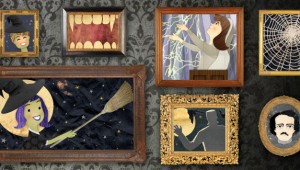
To wrap up our spooky holiday series on the scholarly side of some Halloween favorites, Andrew McCann, the author of Popular Literature, Authorship, and the Occult in Late Victorian Britain, shares his insights on writing about the occult in the 19th century.
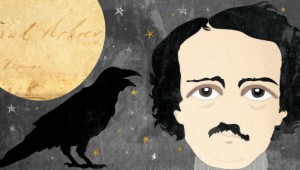
Kevin J. Hayes, the editor of The Cambridge Companion to Edgar Allan Poe and Edgar Allan Poe in Context, offers some recommended reading for Halloween—and all year round.
Bernard Rosenthal, the editor of Records of the Salem-Witch Hunt, sheds light on America's most famous witch trials and the legacy of fascination that has become impossible to escape.
There's always an element of shock or surprise when we discover an unexpected visiting spider, but what about when it's one that can jump?
Arachnophobes: look away now...
The vampire and its gothic roots have been part of our Halloween celebrations for centuries. But where do those associations come from, and how have they been rewritten today? Gail Turley Houston, the author of From Dickens to Dracula delves in.
David Collins, editor of The Cambridge History of Magic and Witchcraft in the West, examines Jacob Cornelisz's classic painting "Saul and the Witch of Endor" to illustrate what magic and witchcraft have come to mean in the Western world.
Michael D. Bailey, a contributor to The Cambridge History of Magic and Witchcraft in the West, explores the legacy of witchcraft in the West through its role in medieval European jokes.
Keep up with the latest from Cambridge University Press on our social media accounts.