
Products and services

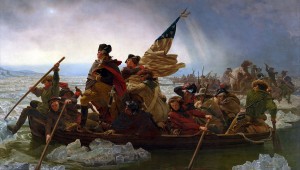
As part of our Independence Day series, we're offering an excerpt from Radicals in America on how the Fourth of July poses a radical duality present throughout revolutionary movements in American history.
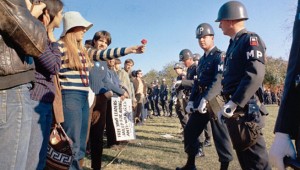
It's July, and with Independence Day right around the corner, we're dedicating a week of posts to the latest scholarship on American history, liberation, and revolution. To kick things off, William Rorabaugh offers an excerpt from his latest book, American Hippies.
From the moment I first saw the enigmatic Scottish carved stone balls, I was intrigued. Although many purposes had been suggested for their purpose during the Neolithic, none had included the possibility...
Ronald Batchelor, author of A Reference Grammar of Spanish, explores the grammatical differences between English and Spanish.
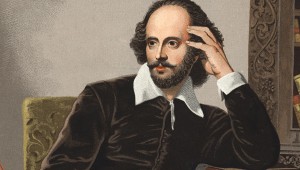
Simon Palfrey, the author of Shakespeare’s Possible Worlds, offers up a new model for appreciating Shakespeare's world--both the world he creates and the real one his writing reflects.
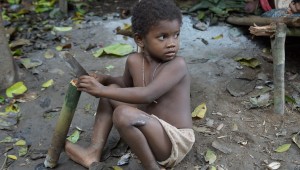
How often do we discourage our children from handling dangerous objects--things like matches and knives? Are we protecting them, or failing to let them learn valuable lessons about the world we live in? David F. Lancy, the author of The Anthropology of Childhood, breaks down these questions from an anthropological stance.
Valentin Bellassen, author of Accounting for Carbon: Monitoring, Reporting and Verifying Emissions in the Climate Economy (2015), explores the requirements for the MRV of countries’ emissions and considers how this can be successfully extended to cover emerging and developing countries.
Yellowlees Douglas, author of The Reader's Brain: How Neuroscience Can Make You a Better Writer (2015), explores how the teaching of writing is leaving some people ill-prepared for the workplace.
Early on in Hesiod’s Works and Days, the first didactic poem of Classical antiquity, we find in succession two versions of human history. The first is a retelling of the havoc resulting for mankind from...
Simon Palfrey, the author of Shakespeare’s Possible Worlds, breaks down the barriers of Shakespeare's complicated play world and the language holding it together.
This month marks the 50th anniversary of the galley exhibition Works in Black and White, a key moment in the Black Arts Movement of the tumultuous 1960s. Julie Buckner Armstrong, the editor of The Cambridge Companion to American Civil Rights Literature, explores the role of art and literature in the fight for civil rights and the transformative power of language.
In February 2014 we were approached and asked if we would prepare a new edition of J.C. Holt’s landmark book on Magna Carta, first published to accompany the seven hundred and fiftieth anniversary of...
Keep up with the latest from Cambridge University Press on our social media accounts.