Products and services

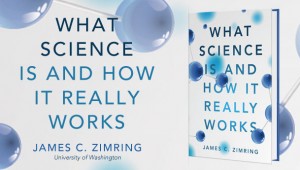
James Zimring discusses the struggle of how to evaluate the claims of science in a world that demands an ever more rigorous consideration of how much confidence to put in such claims. Each of us is taught what science claims to be the case, but to what extent are we taught the basis for such claims – the strengths and pitfalls of science itself?
Today, as new theories of post-sovereignty and new world order emerge, China has been considered a stronghold of Westphalian sovereignty and, as an emerging global power, issues of sovereignty continue to preoccupy its mind. Author, Maria Adele Carrai explores more below.
Like many other countries, Britain faces a desperate housing crisis. The disaster at Grenfell Tower, rising rough sleeping and homelessness, a dismal private rental market, despair among millennials...
In the mid 17th century, Varenius, the founder of modern geography, wrote that of all the natural phenomena, none had perplexed scientists more than the tides: the connection to the Moon was as empirically...
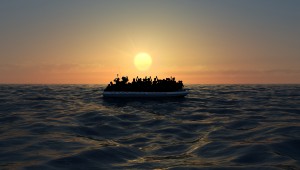
Controversies surrounding the treatment of vulnerable migrants top the news almost daily. Cambridge Author, Moritz Baumgärtel, explores more below.
Lately, climate change has been unmistakably present in the public sphere…Yet, conversations about climate change have remained stuck. Lately, climate change has been unmistakably present in the...
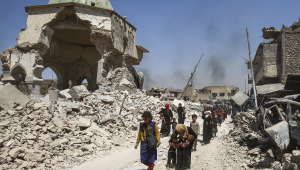
In May, the U.S. Department of Defense released a report—its most thorough yet—purporting to account for all the civilian casualties of U.S. military activities in 2018: 120 deaths and 65 injuries...
In the ten years since I wrote the first edition of A Textbook of Cultural Economics, the cultural sector – the arts, heritage and cultural industries, jointly known as the creative industries – has...
Adjudicative bodies applying international law usually operate in blissful obscurity. Although their decisions are of global significance because they, for example, define state territorial boundaries,...
English speakers are always in the driver’s seat. They use phrases like I am bored, I am cold, I feel like doing something, I like something or someone, etc. In contrast, the Slavs (Russians, Poles,...
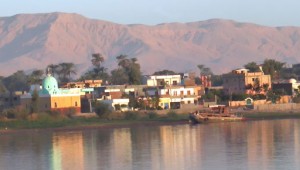
When Herodotus visited Egypt in the fifth millennium BC, he noted how Egypt was the gift of the Nile, since the fertile black muds that arrived with the annual flood were the foundation of Egyptian agriculture....
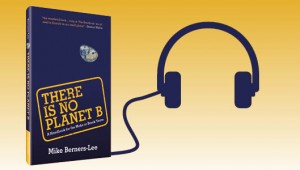
Author Mike Berners-Lee gives us an insight into what it’s like to record an audiobook version of his book “There Is No Planet B“ “ When I write, I am thinking of myself talking, which...
Keep up with the latest from Cambridge University Press on our social media accounts.