We only have one universe. On the face of it, the existence of life, complexity, and structure in our universe seems to be lucky or to call out for explanation. When we look more closely, the physical causes of these important phenomena appear to be balanced on a knife-edge. Fine-Tuning in the Physical Universe formulates these questions and explores the answers in the context of many sub-disciplines of physics.
Read MoreAndri M. Gretarsson author of "A First Course in Laboratory Optics" considers that in order to bridge the gap between demonstrating theory and testing theory, a change of emphasis in undergraduate laboratories is required.
Read MoreThe original post can be found at www.principia.blog Everyone knows that The Principia was based on the inspiration that struck Newton when the apple struck his head, as you can see from the cartoon above. The thought that passed through his head was as follows: “Clearly the earth attracts the apple in the same way that it attracts […]
Read MoreThe ultracold atomic physics has now emerged as an interdisciplinary research area between AMO physics and condensed matter physics. Author Hui Zhai discusses the discipline in his new book “Ultracold Atomic Physics”.
Read MoreDavid Merritt, author of PROSE Award winning book "A Philosophical Approach to MOND: Assessing the Milgromian Research Program in Cosmology” discusses the competing theories of MOND and LCDM ‘Suppose that the dark-matter detection experiments continue to fail. How can we hope to ever decide between the two competing theories?’
Read MoreIn my recently published textbook, Numerical Methods in Physics with Python, I opt against the use of black boxes. Instead, I show students how to mathematically derive numerical techniques, how to implement them in the popular programming language Python, as well as how to use them to study problems that show up in physics.
Read MoreSimon Friederich, author of Multiverse Theories: A Philosophical Perspective discusses the “multiverse” idea. What the idea entails and whether it can truly be tested.
Read MoreWhy would anyone write a new edition of a book that is still selling after many years? The explanations of the basic theory in the first edition are still valid, and the methods are still the ones that are most widely used. However I still felt an update was required. Richard M. Martin, author ofElectronic Structure Basic Theory and Practical Methods. Second Edition gives his personal reasons for updating the original edition (2004)
Read MoreWe only have one universe. On the face of it, the existence of life, complexity, and structure in our universe seems to be lucky or to call out for explanation. When we look more closely, the physical causes of these important phenomena appear to be balanced on a knife-edge. Fine-Tuning in the Physical Universe formulates these questions and explores the answers in the context of many sub-disciplines of physics.
Read MoreAndri M. Gretarsson author of "A First Course in Laboratory Optics" considers that in order to bridge the gap between demonstrating theory and testing theory, a change of emphasis in undergraduate laboratories is required.
Read MoreThe original post can be found at www.principia.blog Everyone knows that The Principia was based on the inspiration that struck Newton when the apple struck his head, as you can see from the cartoon above. The thought that passed through his head was as follows: “Clearly the earth attracts the apple in the same way that it attracts […]
Read MoreThe ultracold atomic physics has now emerged as an interdisciplinary research area between AMO physics and condensed matter physics. Author Hui Zhai discusses the discipline in his new book “Ultracold Atomic Physics”.
Read MoreDavid Merritt, author of PROSE Award winning book "A Philosophical Approach to MOND: Assessing the Milgromian Research Program in Cosmology” discusses the competing theories of MOND and LCDM ‘Suppose that the dark-matter detection experiments continue to fail. How can we hope to ever decide between the two competing theories?’
Read MoreIn my recently published textbook, Numerical Methods in Physics with Python, I opt against the use of black boxes. Instead, I show students how to mathematically derive numerical techniques, how to implement them in the popular programming language Python, as well as how to use them to study problems that show up in physics.
Read MoreSimon Friederich, author of Multiverse Theories: A Philosophical Perspective discusses the “multiverse” idea. What the idea entails and whether it can truly be tested.
Read MoreWhy would anyone write a new edition of a book that is still selling after many years? The explanations of the basic theory in the first edition are still valid, and the methods are still the ones that are most widely used. However I still felt an update was required. Richard M. Martin, author ofElectronic Structure Basic Theory and Practical Methods. Second Edition gives his personal reasons for updating the original edition (2004)
Read MoreKeep up with the latest from Cambridge University Press on our social media accounts.
Göteborgs Universitet, Sweden
Ministero dell’ Istruzione e del Merito, Bari, Italy
Linnaeus University
Nara Medical University
The University of Tokyo
Copenhagen University
Cornell University, New York
Saint Mary\'s University, Nova Scotia
University of Lincoln
Rutgers University, New Jersey
Pennsylvania State University
Jácome (Jay) Armas Editor of Conversations on Quantum Gravity
Joseph Braat co-author of Imaging Optics, 2019
Richard M. Martin author of Electronic Structure

David Merritt author of A Philosophical Approach to MOND
Simon Friederich, author of Multiverse Theories: A Philosophical PerspectiveRijksuniversiteit Groningen, The Netherlands
Todd Timberlake, author of Finding our Place in the Solar System, 2019
Rony Keppens, author of Magnetohydrodynamics of Laboratory and Astrophysical Plasmas 2019,
William J Nellis, Author of Ultracondensed Matter by Dynamic Compression, 2017
Gregory J. Gbur author of Mathematical Methods for Optical Physics and Engineering, 2011
Mitchell Begelman, author of Gravity\\\'s Fatal Attraction
N David Mermin, Author of \\\'Why Quark Rhymes with Pork\\\'
Introduction to Graphene-Based Nanomaterials
Horatiu Nastase, author of String Theory Methods for Condensed Matter Physics
Introduction to Graphene-Based Nanomaterials
Science and Human Experience
Thermal Physics, Energy and Entropy
Nanostructures and Nanotechnology
Don S. Lemons, author of A Student\'s Guide to Dimensional Analysis, 2017 and A Student\'s Guide to Entropy, 2013
Marta García-Matos author of The Wonders of Light, 2015
Caterina A. M. La Porta author of The Physics of Cancer, 2017
Stefano Zapperi author of The Physics of Cancer
Nonlinear Optical Systems
On Space and Time
On Space and Time
Calculus for the Ambitious
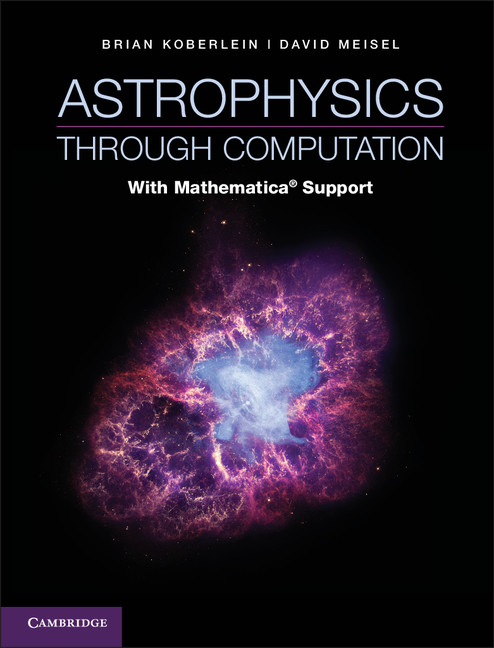
Astrophysics Through Computation
The Weather and Climate: Emergent Laws and Multifractal Cascades
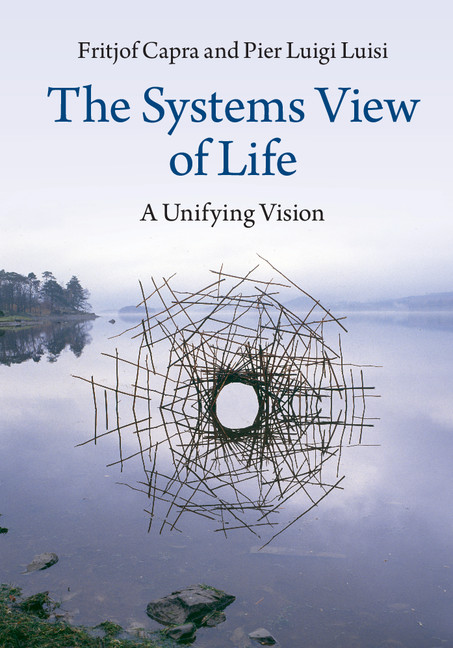
The Systems View of Life
To receive updates on Physics news from Cambridge University Press and Fifteen Eighty Four, please join our email list below. We will not disclose your email address to any third party