Rudolf Weigl, a Polish biologist who invented the first effective vaccine against typhus, called a practice of publishing many papers a ‘duck shit’: just as ducks leave a lot of traces while walking about in the yard, scientists hastily publish articles with partial results that are the product of undeveloped thought. This is one of the unfortunate outcomes of the evaluation game in today’s science, where researchers attempt to follow various evaluation rules and meet metrics-based expectations.
Read MoreMore than a century after Einstein formulated General Relativity (GR), black holes are firmly established as one of its most striking and inescapable consequences.
Read MoreAlbert Einstein developed the theory of relativity using ``thought experiments’’ to illustrate the consequences of a constant speed of light. Many measurements have validated Einstein’s work, but some thought experiments and applications of relativity have only become possible in reality with advances in technology.
Read MoreThe quantum world is governed by a large number of different energy or length scales, as clearly seen in the hydrogen atom, where an essentially point like electron is bound to a proton.
Read MoreLaw and Policy for the Quantum Age (out now as Open Access) is for readers interested in the political and business strategies underlying quantum sensing, computing, and communication. This work explains how these quantum technologies work, future national defense and legal landscapes for nations interested in strategic advantage, and paths to profit for companies. See […]
Read MoreSyukuro Manabe explains how mountains affect the Earth’s climate (1972 photo, courtesy of NOAA/GFDL)
Read MoreThe true power of classical computing was never fully realised until the emergence of the internet. The internet enables information to be a commodity whose market value drives technological advancement. Quantum computers operate according to entirely different principles in the way they process information, which in the future will enable forms of computation, which cannot be realised on conventional computers. This raises the immediate question “what if we start networking them together?”
Read More‘Conversations on quantum gravity’ is physicist Jay Armas’ new book on the ongoing search for a theory of everything. In the book, Armas talks to 37 researchers – including five Nobel laureates and two Fields medalists - who share the current debates, the impact of their own discoveries and those of others, and their motivations to pursue the biggest questions about the world around us.
Read MoreRudolf Weigl, a Polish biologist who invented the first effective vaccine against typhus, called a practice of publishing many papers a ‘duck shit’: just as ducks leave a lot of traces while walking about in the yard, scientists hastily publish articles with partial results that are the product of undeveloped thought. This is one of the unfortunate outcomes of the evaluation game in today’s science, where researchers attempt to follow various evaluation rules and meet metrics-based expectations.
Read MoreMore than a century after Einstein formulated General Relativity (GR), black holes are firmly established as one of its most striking and inescapable consequences.
Read MoreAlbert Einstein developed the theory of relativity using ``thought experiments’’ to illustrate the consequences of a constant speed of light. Many measurements have validated Einstein’s work, but some thought experiments and applications of relativity have only become possible in reality with advances in technology.
Read MoreThe quantum world is governed by a large number of different energy or length scales, as clearly seen in the hydrogen atom, where an essentially point like electron is bound to a proton.
Read MoreLaw and Policy for the Quantum Age (out now as Open Access) is for readers interested in the political and business strategies underlying quantum sensing, computing, and communication. This work explains how these quantum technologies work, future national defense and legal landscapes for nations interested in strategic advantage, and paths to profit for companies. See […]
Read MoreSyukuro Manabe explains how mountains affect the Earth’s climate (1972 photo, courtesy of NOAA/GFDL)
Read MoreThe true power of classical computing was never fully realised until the emergence of the internet. The internet enables information to be a commodity whose market value drives technological advancement. Quantum computers operate according to entirely different principles in the way they process information, which in the future will enable forms of computation, which cannot be realised on conventional computers. This raises the immediate question “what if we start networking them together?”
Read More‘Conversations on quantum gravity’ is physicist Jay Armas’ new book on the ongoing search for a theory of everything. In the book, Armas talks to 37 researchers – including five Nobel laureates and two Fields medalists - who share the current debates, the impact of their own discoveries and those of others, and their motivations to pursue the biggest questions about the world around us.
Read MoreKeep up with the latest from Cambridge University Press on our social media accounts.
Göteborgs Universitet, Sweden
Ministero dell’ Istruzione e del Merito, Bari, Italy
Linnaeus University
New Mexico State University
Nara Medical University
Max Planck Institute for Astronomy, Heidelberg
Pennsylvania State University
Rutgers University, New Jersey
University of Lincoln
Saint Mary\'s University, Nova Scotia
Cornell University, New York
Copenhagen University
The University of Tokyo
Jácome (Jay) Armas Editor of Conversations on Quantum Gravity
Joseph Braat co-author of Imaging Optics, 2019
Richard M. Martin author of Electronic Structure

David Merritt author of A Philosophical Approach to MOND
Simon Friederich, author of Multiverse Theories: A Philosophical PerspectiveRijksuniversiteit Groningen, The Netherlands
Todd Timberlake, author of Finding our Place in the Solar System, 2019
Rony Keppens, author of Magnetohydrodynamics of Laboratory and Astrophysical Plasmas 2019,
William J Nellis, Author of Ultracondensed Matter by Dynamic Compression, 2017
Gregory J. Gbur author of Mathematical Methods for Optical Physics and Engineering, 2011
Mitchell Begelman, author of Gravity\\\'s Fatal Attraction
N David Mermin, Author of \\\'Why Quark Rhymes with Pork\\\'
Introduction to Graphene-Based Nanomaterials
Horatiu Nastase, author of String Theory Methods for Condensed Matter Physics
Introduction to Graphene-Based Nanomaterials
Science and Human Experience
Thermal Physics, Energy and Entropy
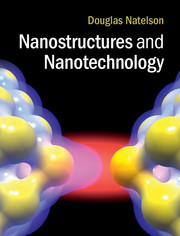
Nanostructures and Nanotechnology
Don S. Lemons, author of A Student\'s Guide to Dimensional Analysis, 2017 and A Student\'s Guide to Entropy, 2013
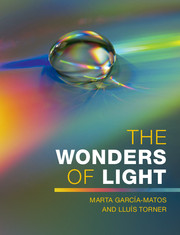
Marta García-Matos author of The Wonders of Light, 2015
Caterina A. M. La Porta author of The Physics of Cancer, 2017
Stefano Zapperi author of The Physics of Cancer
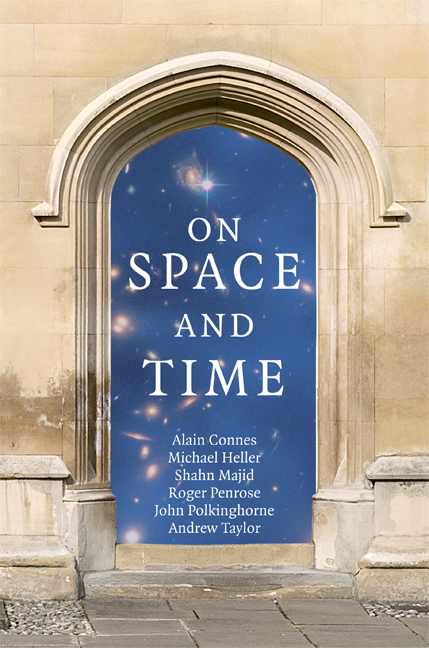
On Space and Time
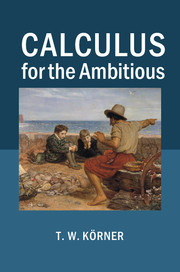
Calculus for the Ambitious
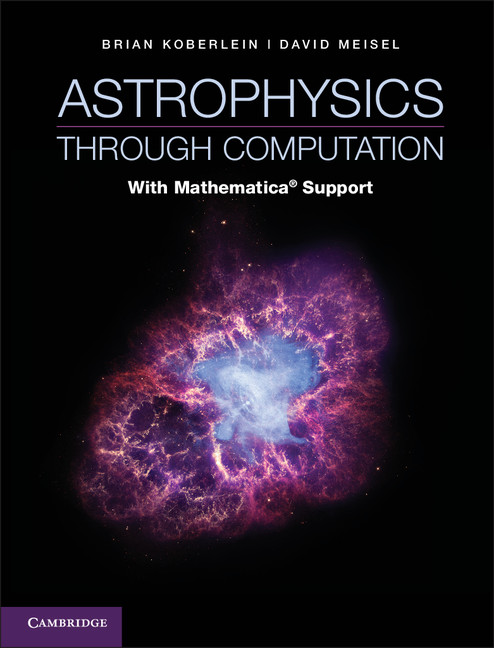
Astrophysics Through Computation
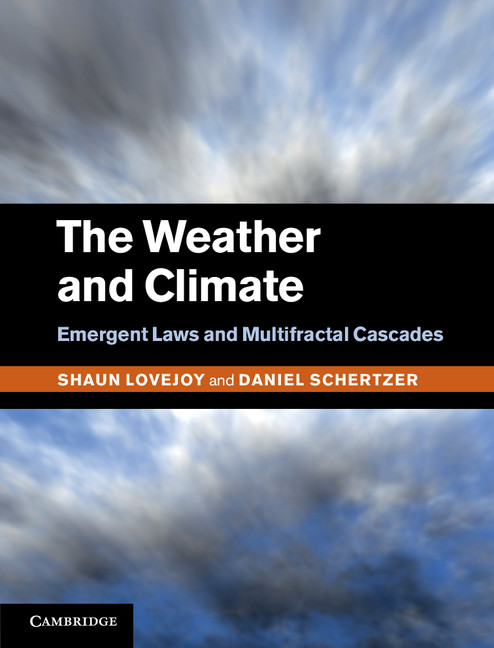
The Weather and Climate: Emergent Laws and Multifractal Cascades
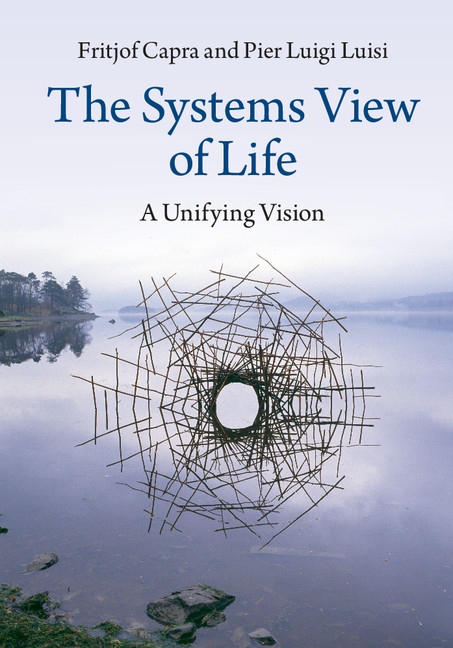
The Systems View of Life
To receive updates on Physics news from Cambridge University Press and Fifteen Eighty Four, please join our email list below. We will not disclose your email address to any third party