The first three editions of Measuring Behaviour were co-authored by Patrick Bateson, known as Pat to his family and friends, and his former graduate student Paul Martin. I had a very special relationship with Pat. Not only was he my father, but I have followed him into the same academic discipline, becoming the second Professor […]
Read MoreThe Covid-19 pandemic represents a profound challenge for all of mankind. A year after the first outbreak was discovered, deaths directly caused by the virus surpassed 2.5 million, and that number was almost surely an undercount. The discovery of several effective vaccines gave the world hope, but also led to conflict about who should get […]
Read MoreThe electoral victory of Donald Trump in the United States in 2016, Brexit in the same year, and particularly the emergence of right-wing populist movements in Europe (e.g., France, Germany, Austria, Hungary) and other parts of the world (e.g., India, Turkey, the Philippines) during the last few years have revived academic and public discussions about […]
Read MoreFeeling like we matter is one of the most defining features of our humanity. When that feeling is present, we thrive. When it is absent, we feel ignored and helpless. Threats to mattering diminish dignity and can cause destruction, as we have witnessed in school shootings over the last few decades. Mattering consists of feeling […]

Read MoreZoos and aquariums are popular public attractions, but what kinds of learning happen there? Can that learning translate into action for conservation? Zoos and aquariums across the world have contributed substantially to what experts and the public know about wildlife, animals’ biology and needs, and threats to species. At the same time, these cultural institutions […]

Read MoreWhat we are seeing Too much has been written about recent politics in the United States. As a result, there are wide and often contradictory views about how we should understand what has been going on and what is likely to happen within the several ‘out’ years from now. So perhaps it is time for […]
Read MoreWorldwide, we are becoming more tribal in our thinking, but we define our tribes differently than we did in the past. In the 21st century, we define our tribes in terms of shared beliefs rather than through shared genes. A person who shares our beliefs is one of “us”, someone who can be trusted. A […]
Read MoreHow should we go about trying to understand the behavior of people and other living organisms? One way is to look for its causes. This is the approach taken by most scientific psychologists and is the one taught in most courses on research methods in psychology. Using this approach, the causes of behavior are inferred […]
Read MoreThe first three editions of Measuring Behaviour were co-authored by Patrick Bateson, known as Pat to his family and friends, and his former graduate student Paul Martin. I had a very special relationship with Pat. Not only was he my father, but I have followed him into the same academic discipline, becoming the second Professor […]
Read MoreThe Covid-19 pandemic represents a profound challenge for all of mankind. A year after the first outbreak was discovered, deaths directly caused by the virus surpassed 2.5 million, and that number was almost surely an undercount. The discovery of several effective vaccines gave the world hope, but also led to conflict about who should get […]
Read MoreThe electoral victory of Donald Trump in the United States in 2016, Brexit in the same year, and particularly the emergence of right-wing populist movements in Europe (e.g., France, Germany, Austria, Hungary) and other parts of the world (e.g., India, Turkey, the Philippines) during the last few years have revived academic and public discussions about […]
Read MoreFeeling like we matter is one of the most defining features of our humanity. When that feeling is present, we thrive. When it is absent, we feel ignored and helpless. Threats to mattering diminish dignity and can cause destruction, as we have witnessed in school shootings over the last few decades. Mattering consists of feeling […]
Read MoreZoos and aquariums are popular public attractions, but what kinds of learning happen there? Can that learning translate into action for conservation? Zoos and aquariums across the world have contributed substantially to what experts and the public know about wildlife, animals’ biology and needs, and threats to species. At the same time, these cultural institutions […]
Read MoreWhat we are seeing Too much has been written about recent politics in the United States. As a result, there are wide and often contradictory views about how we should understand what has been going on and what is likely to happen within the several ‘out’ years from now. So perhaps it is time for […]
Read MoreWorldwide, we are becoming more tribal in our thinking, but we define our tribes differently than we did in the past. In the 21st century, we define our tribes in terms of shared beliefs rather than through shared genes. A person who shares our beliefs is one of “us”, someone who can be trusted. A […]
Read MoreHow should we go about trying to understand the behavior of people and other living organisms? One way is to look for its causes. This is the approach taken by most scientific psychologists and is the one taught in most courses on research methods in psychology. Using this approach, the causes of behavior are inferred […]
Read MoreKeep up with the latest from Cambridge University Press on our social media accounts.
Community Evaluation Solutions, Inc.
Carter is Charles Howard Candler Professor of Psychology and interim Dean at Oxford College of Emory University, and the author of Psychopathology and Buzz!.
University of California, Los Angeles
North Carolina State University
University of California, Los Angeles
Independent Pharmacy Consultant
Leicestershire Partnership NHS Trust
Hertfordshire Partnership University NHS Foundation Trust
University of Warwick
University of Wroclaw, Poland
University of Tokyo
University of Wollongong, New South Wales
University of Rochester, New York
University of Missouri, Columbia
Örebro University
University of Edinburgh
University of Hawaii
Marquette University
University of Georgia
Manhattanville College
University of Maryland, Baltimore
University of North Florida
Rijksuniversiteit Groningen, The Netherlands
Xavier University
El Paso Community College
London School of Economics and Political Science
Claremont McKenna College
George Mason University
Greater Manchester NHS Foundation Trust
University College London
St Bonaventure University, New York
Saint Mary\'s College, Indiana
University of Zurich
Aalborg University
The University of Queensland
James Cook University
University of Queensland
The Joy of Science
Elizabeth A. Daniels, Ph.D., is an Assistant Professor of Psychology at the University of Colorado, Colorado Springs.

Meghan M. Gillen, Ph.D., is an Associate Professor of Psychology at Pennsylvania State University, Abington.
Charlotte H. Markey, Ph.D., is a Psychology Professor and Director of the Health Sciences program at Rutgers University, New Jersey.
Order on the Edge of Chaos
The Joy of Science
The Reader\\\\\\\\\\\\\\\'s Brain
Constructive Controversy
Clinical Perspectives on Autobiographical Memory
Cognition: A Neuroscience Approach
The Psychology of Creative Writing
Psychology of the Digital Age
Colours and Colour Vision
Author of The Late Sigmund Freud
Philip T. Yanos, Ph.D., is Professor of Psychology at John Jay College, City University of New York.
Michael Filimowicz is a multi-disciplinary artist and researcher working at the overlapping boundaries of media forms.
Merim Bilalić is the author of The Neuroscience of Expertise
Stanley O. Gaines, Jr. (Brunel University London) is the author of Personality and Close Relationship Processes.

David R. Olsen is University Professor Emeritus at the University of Toronto and the author of The Mind on Paper.
Dr. Fiona Kate Barlow is a social psychologist specialising in the study of race relations.
R. Keith Sawyer is a co-editor of Reflections on the Learning Sciences
Michael A. Evans is a co-editor of Reflections on the Learning Sciences
Martin J. Packer is a co-editor of Reflections on the Learning Sciences
Cognitive Neuroscience of Memory
Statistics Using Stata
Social Development as Preference Management
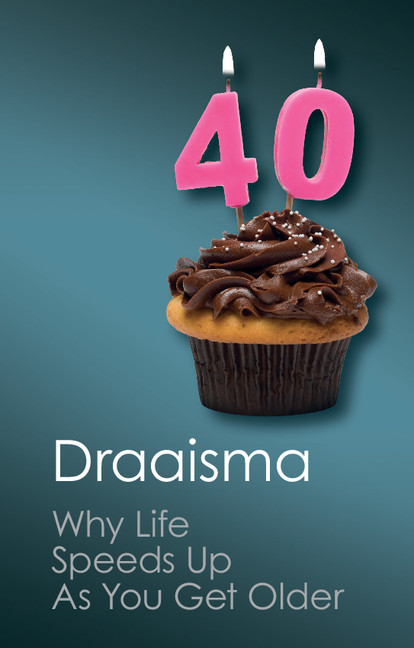
Why Life Speeds Up As You Get Older
The Normal Personality
Benign Bigotry
Animal Homosexuality
The Mind of Jihad
On Scandal
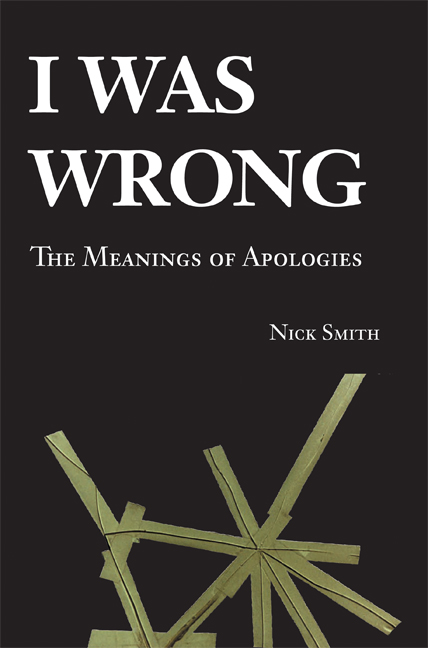
I Was Wrong
The Deepening Darkness
Patriarchal Religion, Sexuality, and Gender
Library marketing associate
Publicist
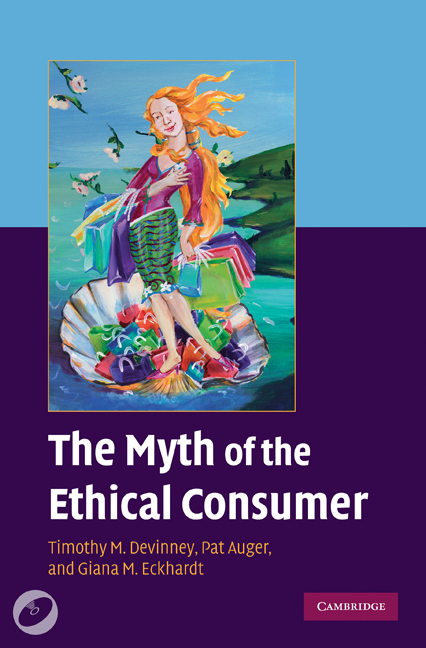
The Myth of the Ethical Consumer
Confronting Cyber-Bullying
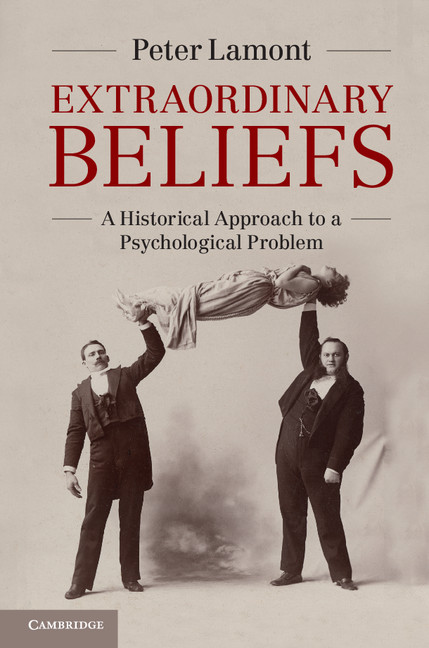
Extraordinary Beliefs
Inez De Florio author of Effective Teaching and Successful Learning.
Does Your Family Make You Smarter?
The Anthropology of Childhood
Early Social Interaction
Hoax Spring Eternal
Ethical Challenges in the Behavioral and Brain Sciences
Cybercrime: The Psychology of Online Offenders
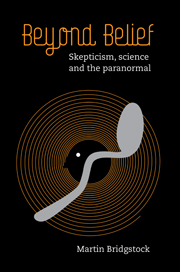
Beyond Belief
To receive updates on Psychology news from Cambridge University Press and Fifteen Eighty Four, please join our email list below. We will not disclose your email address to any third party