William Shakespeare was born just thirty years after the founding of Cambridge University Press, yet it was another three hundred years before the Press started printing his works. Since then, we have published his plays continuously in various forms. In January, the Cambridge editions of Shakespeare’s complete works – and much more besides – will […]
Read MoreThis book would probably not have been written if, as a postgraduate, I had not left Cambridge for my first job as assistant lecturer at the University of Geneva, and then, once I had met my (French) husband, settled in France. Living and working in three distinct, if overlapping, cultures (English, French, Swiss) and two, […]
Read MoreIn a lecture given in 1978 the Argentine writer Jorge Luis Borges observed that nations tend to choose authors to represent them that do not resemble their national character, citing, as a striking example, the discrepancy between a ‘hyperbolic’ Shakespeare and an England of ‘understatement’. His observation resonates with the central argument of my book, […]
Read MoreThe fraught atmosphere of surveillance and intimidation has long made twentieth-century Russian music a fascinating area of study. Music audiences, performers, and scholars alike have been engrossed by the all-too recent time when the state directly interfered in matters of music-making and composers lived in fear. The Soviet Union was larger than just Russia, of […]
Read More“It’s the network, stupid”, Maurice E. Bandmann (1872-1922) might have said, had he lived longer. Perhaps the greatest theatrical entrepreneur, nobody has ever heard of, Bandmann’s career is unique and unsung. Between 1895 and 1922 he created a theatrical circuit that extended from Gibraltar to Tokyo and included regular tours to the West Indies and […]
Read MoreIn October 2015 Ireland’s National Theatre announced its commemorative ‘Waking the Nation’ programme. The intention was to ‘interrogate rather than celebrate’ the 1916 Easter Rising, yet women were largely obscured from the programme: 90% of the plays were male authored. The marginalization of women theatre-makers and female narratives prompted an incendiary response in the form […]
Read MoreIn the ten years since I wrote the first edition of A Textbook of Cultural Economics, the cultural sector – the arts, heritage and cultural industries, jointly known as the creative industries – has been revolutionised by digitization and, as with other revolutions, things have changed in unimagined ways. Nowhere has this been more evident […]
Read MoreWell, arguably, we don’t! But the In Context series offered us an irresistible opportunity to look again, and look differently, at a figure whose life and music (for better or worse) continues to fascinate musicians and audiences. As music historians, we wanted to ask questions that went beyond the actual notes on the page. Brahms […]
Read MoreWilliam Shakespeare was born just thirty years after the founding of Cambridge University Press, yet it was another three hundred years before the Press started printing his works. Since then, we have published his plays continuously in various forms. In January, the Cambridge editions of Shakespeare’s complete works – and much more besides – will […]
Read MoreThis book would probably not have been written if, as a postgraduate, I had not left Cambridge for my first job as assistant lecturer at the University of Geneva, and then, once I had met my (French) husband, settled in France. Living and working in three distinct, if overlapping, cultures (English, French, Swiss) and two, […]
Read MoreIn a lecture given in 1978 the Argentine writer Jorge Luis Borges observed that nations tend to choose authors to represent them that do not resemble their national character, citing, as a striking example, the discrepancy between a ‘hyperbolic’ Shakespeare and an England of ‘understatement’. His observation resonates with the central argument of my book, […]
Read MoreThe fraught atmosphere of surveillance and intimidation has long made twentieth-century Russian music a fascinating area of study. Music audiences, performers, and scholars alike have been engrossed by the all-too recent time when the state directly interfered in matters of music-making and composers lived in fear. The Soviet Union was larger than just Russia, of […]
Read More“It’s the network, stupid”, Maurice E. Bandmann (1872-1922) might have said, had he lived longer. Perhaps the greatest theatrical entrepreneur, nobody has ever heard of, Bandmann’s career is unique and unsung. Between 1895 and 1922 he created a theatrical circuit that extended from Gibraltar to Tokyo and included regular tours to the West Indies and […]
Read MoreIn October 2015 Ireland’s National Theatre announced its commemorative ‘Waking the Nation’ programme. The intention was to ‘interrogate rather than celebrate’ the 1916 Easter Rising, yet women were largely obscured from the programme: 90% of the plays were male authored. The marginalization of women theatre-makers and female narratives prompted an incendiary response in the form […]
Read MoreIn the ten years since I wrote the first edition of A Textbook of Cultural Economics, the cultural sector – the arts, heritage and cultural industries, jointly known as the creative industries – has been revolutionised by digitization and, as with other revolutions, things have changed in unimagined ways. Nowhere has this been more evident […]
Read MoreWell, arguably, we don’t! But the In Context series offered us an irresistible opportunity to look again, and look differently, at a figure whose life and music (for better or worse) continues to fascinate musicians and audiences. As music historians, we wanted to ask questions that went beyond the actual notes on the page. Brahms […]
Read MoreKeep up with the latest from Cambridge University Press on our social media accounts.
Hélène Lecossois is Professor of Irish Literary Studies at Université de Lille, France. Specialising in Irish theatre and performance, Hélène is the author of Endgame de Samuel Beckett (2009), and of various essays in Beckett Today, Études irlandaises, Sillages critiques and the 2014 edited collection Ireland, Memory and Performing the Historical Imagination. She was 2014 recipient of the Moore Institute Fellowship (NUI Galway).
Manchester Metropolitan University
Holly Buttimore is a Humanities and Social Sciences Commissioning Editor for Academic Journals at Cambridge University Press
University of Chester
Heather Hirschfeld is a Professor of English at the University of Tennessee.
Associate Professor in English and Creative Writing, University of Reading
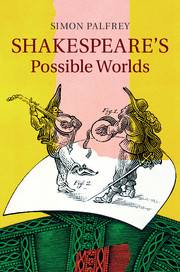
Shakespeare’s Possible Worlds
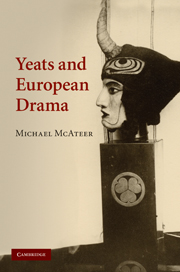
Yeats and European Drama
The History of the Erard Piano and Harp in Letters and Documents, 1785–1959
The Manual of Musical Instrument Conservation
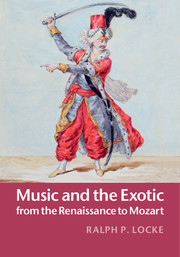
Music and the Exotic from the Renaissance to Mozart
The Cambridge Companion to Jewish Music
The Cambridge Introduction to Theatre and Literature of the Absurd
Michelangelo: The Artist, the Man, and His Times
Vocal Authority
A History of Singing
Opera
Publicist
Senior Inbound Marketing Executive
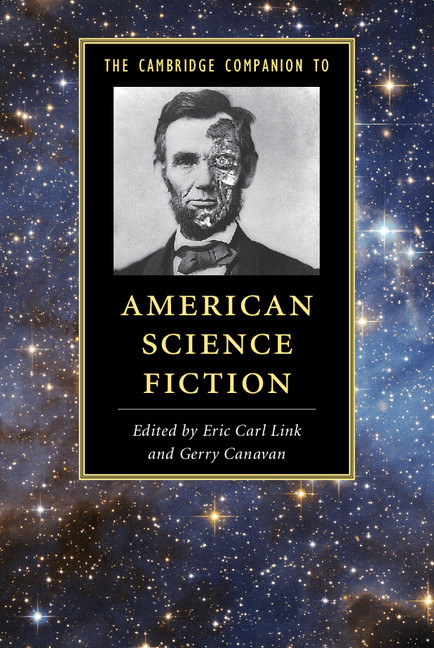
The Cambridge Companion to American Science Fiction
The Cambridge History of Magic and Witchcraft in the West
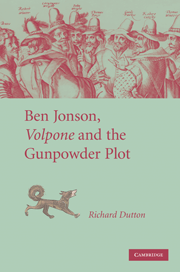
Ben Jonson, Volpone, and the Gunpowder Plot
Ovid and Hesiod
The Cambridge Wagner Encyclopedia
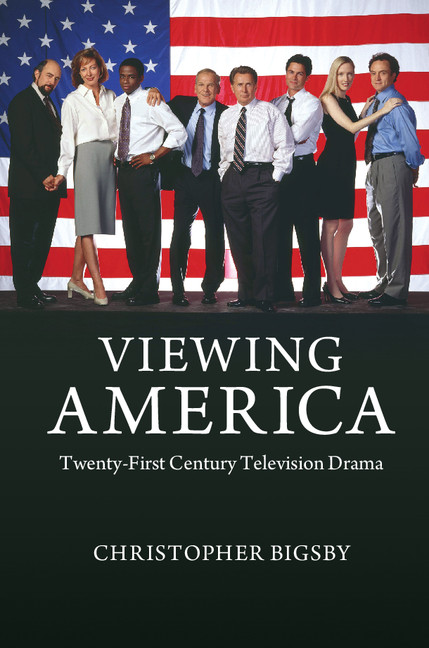
Viewing America
To receive updates on Music, Theatre & Art news from Cambridge University Press and Fifteen Eighty Four, please join our email list below. We will not disclose your email address to any third party