A few years ago, I saw my daughter perform in her school musical, Singing in the Rain. I had performed in many such shows in my youth, and watching her I vividly remembered my own experiences singing, dancing, and acting in roles that were meant for adults, performances that sometimes went well (I’m quite proud […]
Read MoreIt was fifty years ago, on 10 April 1970, that Paul McCartney announced the break-up of the Beatles. That the end of the Beatles came so soon after the end of the 1960s helped to cement the association between the decade and band. An optimistic perspective on the relationship between the 1960s and the Beatles […]
Read MoreImagine. It’s 1965, you’re at home in on Prenzlauer Berg, the Berlin Wall is visible from your window, and you’re having friends over to your flat. Someone brings the latest Thelonious Monk record, smuggled across the border from the West, and everyone gathers round in excitement. You could go to jail for this, you realize—after […]
Read MoreActing is an elusive art, because – unlike for example a painting, sculpture, poem or score – an actor’s performance cannot be held in the hand, and is not available to pin down for scientific analysis. Yet it is an art, like the art of playing the piano. In the language of the ancients, acting […]
Read MoreThe following text is excerpted from chapter 8 of The Beatles in Context (ed. by Kenneth Womack), ‘Beatlemania,’ by Melissa Davis. Beatlemania: biːt (ə) lˈmeɪnɪə/ From Gr (noun) mania (ma’-ni-a)mānēə meaning madness or frenzy. Extreme enthusiasm for the Beatles pop group, as manifested in the frenzied behaviour of their fans in the 1960s. Synonyms: madness, […]
Read MoreWhat can musical benefits tell us about the ecology of performance in eighteenth-century Britain? Why did musical benefits become such an integral part of a performer’s work in the eighteenth century? How similar were benefits for performers to those for charities? What did musical benefits look like across Britain, in comparison with those in London? […]
Read MoreOne afternoon at Osborne House on the Isle of Wight in the summer of 1896, Louise Margaret, Duchess of Connaught, took this photograph of her niece, Helena Victoria, swimming on her back. The photograph was pasted into an album of family photos—holiday snaps from the 1890s, a decade in which photography became much easier to […]
Read MoreWilliam Shakespeare was born just thirty years after the founding of Cambridge University Press, yet it was another three hundred years before the Press started printing his works. Since then, we have published his plays continuously in various forms. In January, the Cambridge editions of Shakespeare’s complete works – and much more besides – will […]
Read MoreA few years ago, I saw my daughter perform in her school musical, Singing in the Rain. I had performed in many such shows in my youth, and watching her I vividly remembered my own experiences singing, dancing, and acting in roles that were meant for adults, performances that sometimes went well (I’m quite proud […]
Read MoreIt was fifty years ago, on 10 April 1970, that Paul McCartney announced the break-up of the Beatles. That the end of the Beatles came so soon after the end of the 1960s helped to cement the association between the decade and band. An optimistic perspective on the relationship between the 1960s and the Beatles […]
Read MoreImagine. It’s 1965, you’re at home in on Prenzlauer Berg, the Berlin Wall is visible from your window, and you’re having friends over to your flat. Someone brings the latest Thelonious Monk record, smuggled across the border from the West, and everyone gathers round in excitement. You could go to jail for this, you realize—after […]
Read MoreActing is an elusive art, because – unlike for example a painting, sculpture, poem or score – an actor’s performance cannot be held in the hand, and is not available to pin down for scientific analysis. Yet it is an art, like the art of playing the piano. In the language of the ancients, acting […]
Read MoreThe following text is excerpted from chapter 8 of The Beatles in Context (ed. by Kenneth Womack), ‘Beatlemania,’ by Melissa Davis. Beatlemania: biːt (ə) lˈmeɪnɪə/ From Gr (noun) mania (ma’-ni-a)mānēə meaning madness or frenzy. Extreme enthusiasm for the Beatles pop group, as manifested in the frenzied behaviour of their fans in the 1960s. Synonyms: madness, […]
Read MoreWhat can musical benefits tell us about the ecology of performance in eighteenth-century Britain? Why did musical benefits become such an integral part of a performer’s work in the eighteenth century? How similar were benefits for performers to those for charities? What did musical benefits look like across Britain, in comparison with those in London? […]
Read MoreOne afternoon at Osborne House on the Isle of Wight in the summer of 1896, Louise Margaret, Duchess of Connaught, took this photograph of her niece, Helena Victoria, swimming on her back. The photograph was pasted into an album of family photos—holiday snaps from the 1890s, a decade in which photography became much easier to […]
Read MoreWilliam Shakespeare was born just thirty years after the founding of Cambridge University Press, yet it was another three hundred years before the Press started printing his works. Since then, we have published his plays continuously in various forms. In January, the Cambridge editions of Shakespeare’s complete works – and much more besides – will […]
Read MoreKeep up with the latest from Cambridge University Press on our social media accounts.
Hélène Lecossois is Professor of Irish Literary Studies at Université de Lille, France. Specialising in Irish theatre and performance, Hélène is the author of Endgame de Samuel Beckett (2009), and of various essays in Beckett Today, Études irlandaises, Sillages critiques and the 2014 edited collection Ireland, Memory and Performing the Historical Imagination. She was 2014 recipient of the Moore Institute Fellowship (NUI Galway).
Manchester Metropolitan University
Holly Buttimore is a Humanities and Social Sciences Commissioning Editor for Academic Journals at Cambridge University Press
University of Chester
Heather Hirschfeld is a Professor of English at the University of Tennessee.
Associate Professor in English and Creative Writing, University of Reading
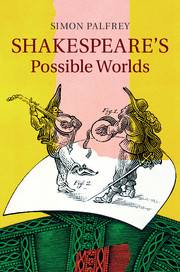
Shakespeare’s Possible Worlds
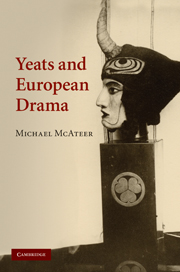
Yeats and European Drama
The History of the Erard Piano and Harp in Letters and Documents, 1785–1959
The Manual of Musical Instrument Conservation
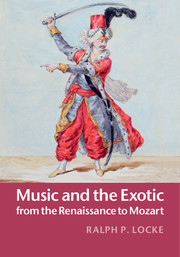
Music and the Exotic from the Renaissance to Mozart
The Cambridge Companion to Jewish Music
The Cambridge Introduction to Theatre and Literature of the Absurd
Michelangelo: The Artist, the Man, and His Times
Vocal Authority
A History of Singing
Opera
Publicist
Senior Inbound Marketing Executive
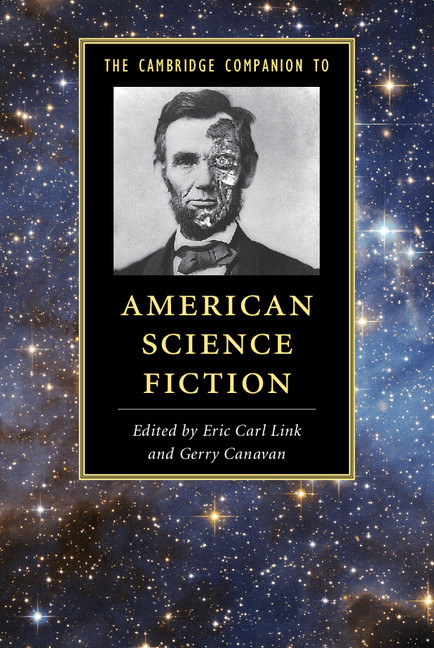
The Cambridge Companion to American Science Fiction
The Cambridge History of Magic and Witchcraft in the West
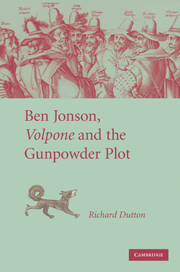
Ben Jonson, Volpone, and the Gunpowder Plot
Ovid and Hesiod
The Cambridge Wagner Encyclopedia
Viewing America
To receive updates on Music, Theatre & Art news from Cambridge University Press and Fifteen Eighty Four, please join our email list below. We will not disclose your email address to any third party