In the third of a series of articles, author John MacAuslan continues to explore how music speaks to people.
Read MoreIn the second in a four week series, author John MacAuslan, author of Schumann’s Music and E. T. A. Hoffmann’s Fiction, enjoys the work of Adolf von Menzel. Last week, he examined how Schumann’s Kreisleriana works. In 1838,Schumann wrote to a friend of his ‘fairly lonely path’, on which ‘a real companion in art is a […]
Read MoreOver the next four weeks, author John MacAuslan, author of Schumann’s Music and E. T. A. Hoffmann’s Fiction, will explore why music is important. One after another, Schumann wrote great piano works apparently connected to literature –Carnaval, Fantasiestücke, Kreisleriana, Nachtstücke. But how connected? I couldn’t believe the connection was primarily about programmes. Nor primarily about formal […]
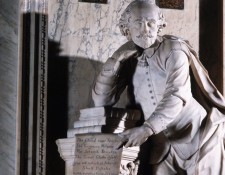
Read MoreThis weekend, 400 years after his death, Shakespeare was commemorated all over the world. This in itself is a testament to the legacy left by the playwrite, who is recognised and loved by all. Our Shakespeare authors have been providing us with some intruiging insights on what Shakespeare means to them, and the wider culture today […]
Read MoreIn their own idiosyncratic ways, academic Shakespeare journals are a way of charting the history of the analysis of Shakespeare’s legacy. Shakespeare Survey, the journal I edit for Cambridge University Press, uses a distinctly uncommon form for the title of an academic journal. There isn’t, as far as I know, a Wordsworth Survey or Chaucer […]
Read MoreMichelle M. Dowd looks at how Shakespeare tackled the everyday issue at the time, and how that adds to his legacy today.
Read MoreShakespeare’s works have provided fertile ground for reimagining the nature of the book, from illustration, to typography, to format, to binding, to other aspects of physical form. The various forms of books have shaped our experience of Shakespeare, and so, in turn, have Shakespeare’s works influenced the forms that books have taken. That mutual relationship […]
Read MoreFiona Ritchie explores how women connect with the works of Shakespeare and have used them to make their voices heard throughout the ages
Read MoreIn the third of a series of articles, author John MacAuslan continues to explore how music speaks to...
Read MoreIn the second in a four week series, author John MacAuslan, author of Schumann’s Music and E. T. A. Hoffmann’s Fiction, enjoys the work of Adolf von Menzel. Last week, he examined how Schumann’s Kreisleriana works. In 1838,Schumann wrote to a friend of his ‘fairly lonely path’, on which ‘a real companion in art is a […]
Read MoreOver the next four weeks, author John MacAuslan, author of Schumann’s Music and E. T. A. Hoffmann’s Fiction, will explore why music is important. One after another, Schumann wrote great piano works apparently connected to literature –Carnaval, Fantasiestücke, Kreisleriana, Nachtstücke. But how connected? I couldn’t believe the connection was primarily about programmes. Nor primarily about formal […]
Read MoreThis weekend, 400 years after his death, Shakespeare was commemorated all over the world. This in itself is a testament to the legacy left by the playwrite, who is recognised and loved by all. Our Shakespeare authors have been providing us with some intruiging insights on what Shakespeare means to them, and the wider culture today […]
Read MoreIn their own idiosyncratic ways, academic Shakespeare journals are a way of charting the history of the analysis of Shakespeare’s legacy. Shakespeare Survey, the journal I edit for Cambridge University Press, uses a distinctly uncommon form for the title of an academic journal. There isn’t, as far as I know, a Wordsworth Survey or Chaucer […]
Read MoreMichelle M. Dowd looks at how Shakespeare tackled the everyday issue at the time, and how that adds ...
Read MoreShakespeare’s works have provided fertile ground for reimagining the nature of the book, from illustration, to typography, to format, to binding, to other aspects of physical form. The various forms of books have shaped our experience of Shakespeare, and so, in turn, have Shakespeare’s works influenced the forms that books have taken. That mutual relationship […]
Read MoreFiona Ritchie explores how women connect with the works of Shakespeare and have used them to make t...
Read MoreKeep up with the latest from Cambridge University Press on our social media accounts.
Hélène Lecossois is Professor of Irish Literary Studies at Université de Lille, France. Specialising in Irish theatre and performance, Hélène is the author of Endgame de Samuel Beckett (2009), and of various essays in Beckett Today, Études irlandaises, Sillages critiques and the 2014 edited collection Ireland, Memory and Performing the Historical Imagination. She was 2014 recipient of the Moore Institute Fellowship (NUI Galway).
Manchester Metropolitan University
Holly Buttimore is a Humanities and Social Sciences Commissioning Editor for Academic Journals at Cambridge University Press
University of Chester
Heather Hirschfeld is a Professor of English at the University of Tennessee.
Associate Professor in English and Creative Writing, University of Reading
Williams College
Yeats and European Drama
The History of the Erard Piano and Harp in Letters and Documents, 1785–1959
The Manual of Musical Instrument Conservation
Music and the Exotic from the Renaissance to Mozart
The Cambridge Companion to Jewish Music
The Cambridge Introduction to Theatre and Literature of the Absurd
Michelangelo: The Artist, the Man, and His Times
Vocal Authority
A History of Singing
Opera
Publicist
Senior Inbound Marketing Executive
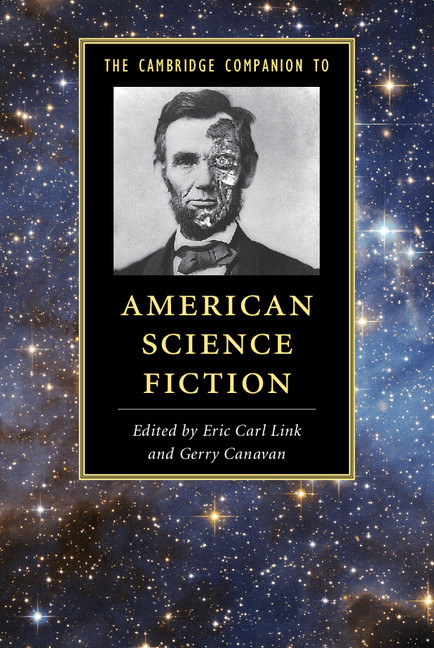
The Cambridge Companion to American Science Fiction
The Cambridge History of Magic and Witchcraft in the West
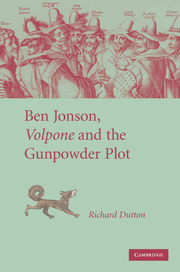
Ben Jonson, Volpone, and the Gunpowder Plot
Ovid and Hesiod
The Cambridge Wagner Encyclopedia
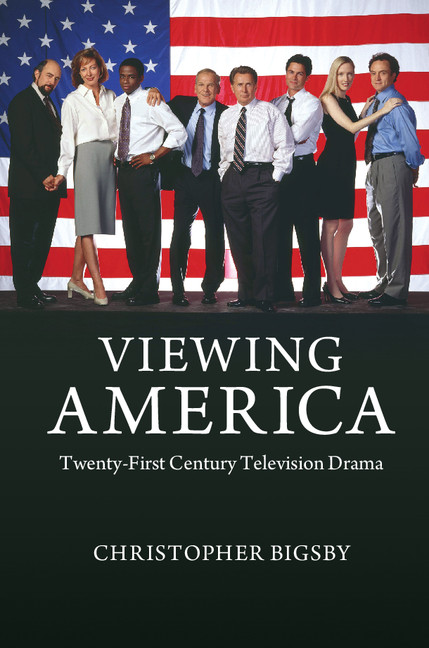
Viewing America
To receive updates on Music, Theatre & Art news from Cambridge University Press and Fifteen Eighty Four, please join our email list below. We will not disclose your email address to any third party