
Products and services


Data science is on the rise and infiltrating almost every field. Properly educated researchers and professionals with an extensive knowledge of how data analysis and statistics are married together will be essential. In an interview with The University of British Columbia, Okanagan, author and Professor John Braun explains what he enjoys about the statistical program […]
Read More
R.P. Burn details the major difficulties in writing Numbers and Functions and how he channelled his own experiences as a student learning the subject to compose this compelling text
Read More
In this, the second of three posts by T. W. Körner, author of Calculus for the Ambitious (2014) explores Joseph Fourier's ground-breaking work.
Read More
In this, the first of three posts, T. W. Körner, author of Calculus for the Ambitious (2014) sheds light on the life of Joseph Fourier - a mathematician and physicist who got caught-up in the French Revolution, and managed to help found modern Egyptology.
Read More
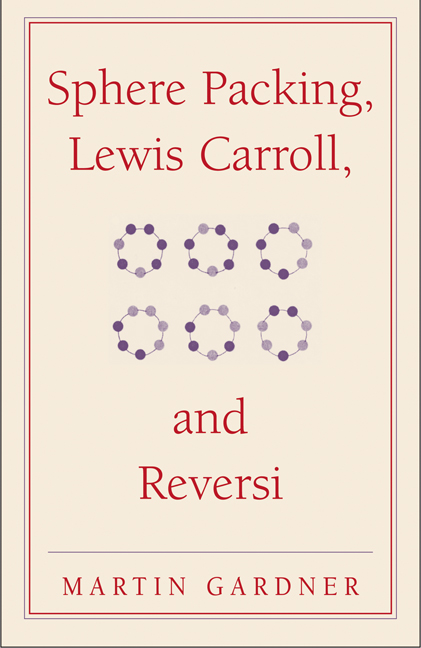
Explore the paradox of the unexpected hanging in this exclusive excerpt from Knots and Borromean Rings, Rep-Tiles, and Eight Queens, a new collection of Martin Gardner's writing on classic puzzles and games.
Read More
The celebrated philosopher Ian Hacking tackles the philosophy of mathematics in this new volume. Why Is There Philosophy of Mathematics At All? addresses key questions behind one of science's toughest subjects. Take a sneak peek here!
Read More
In Who's Bigger? Where Historical Figures Really Rank, computer scientists Steven Skiena and Charles Ward take an algorithmic approach to the question of who matters in the historical record. By analyzing scanned books and web pages like Wikipedia, they have a created a system for ranking the most—and least—significant people throughout history. Read an excerpt from their book below.
Read More
In this interview with Steven Skiena, the author of Who's Bigger?: Where Historical Figures Really Rank takes readers behind the scenes of his latest study in historical significance. Who belongs in the annals of history...and what kind of algorithms can computer scientists use to figure it out?
Read MoreKeep up with the latest from Cambridge University Press on our social media accounts.