In pre-pandemic times scientists’ skilled migration and mobility were described as major drivers of international collaboration among peer scientists overseas. However, since the start of the Covid-19 pandemic, the inevitable deflation of migration and mobility has become a clear indicator of an upcoming process of de-globalisation or ‘slowbalisation’ (Irwin, 2020, online). But in a global […]
Read MoreGavin Brookes and Paul Baker The UK has one of the highest rates of obesity in Europe. It is estimated that around 62% of the country’s population can be classed as overweight, while a further 25% can be diagnosed as living with obesity. Because of this, obesity has remained an eminently newsworthy topic for the […]

Read MoreDiversity is on everybody’s lips these days, along with equity and inclusion. These are indeed praiseworthy efforts to start righting the wrongs of the past. May they flourish! Diversity itself is diverse – it comes in a myriad of intersecting identities. One of many identities that we have is the one that our language gives […]
Read MoreThe Lake Chad region in Central Africa is home to a plethora of languages of different genetic affiliations, among them the about 200 so-called Chadic languages, named after the Lake. The best known of the latter is Hausa; with almost 100 million speakers it is the most widely spread lingua franca in West Africa. Linguists […]
Read MoreMuch of the advertising we see and hear attempts to portray a product or brand in a positive light. However, sometimes the most striking adverts appear when brands go against this positivity bias, and instead draw our attention to hard-hitting, serious topics in a shocking way (in a strategy known as ‘shockvertising’).
Read MoreDavid Gramling, author of The Invention of Multilingualism, answers the above question, and many more, following his book launch on 20 September. What similarities do you see between the languages you know? The most consequential similarity I see between German, Turkish, Spanish, French, and English is that they are ‘named languages’ whose elite, standardized forms […]
Read MoreIn the past, anti-immigration sentiment was often enshrined in government policy as a form of institutional racism. In the late nineteenth century, concern was growing in the Australian colonies about the level of “non-white” immigration to Australia. A political slogan at the time was “White Australia: Australia for the Australians.” When the colonies united in […]
Read MoreAs an applied linguist interested in science communication, an important specialised domain of language in society today, I have developed high perceptiveness of the richness and the power of the words that scientists skilfully and craftily use to describe observable facts, share them with their expert peers and persuasively align their readership’s views with their […]
Read MoreIn pre-pandemic times scientists’ skilled migration and mobility were described as major drivers of international collaboration among peer scientists overseas. However, since the start of the Covid-19 pandemic, the inevitable deflation of migration and mobility has become a clear indicator of an upcoming process of de-globalisation or ‘slowbalisation’ (Irwin, 2020, online). But in a global […]
Read MoreGavin Brookes and Paul Baker The UK has one of the highest rates of obesity in Europe. It is estimated that around 62% of the country’s population can be classed as overweight, while a further 25% can be diagnosed as living with obesity. Because of this, obesity has remained an eminently newsworthy topic for the […]
Read MoreDiversity is on everybody’s lips these days, along with equity and inclusion. These are indeed praiseworthy efforts to start righting the wrongs of the past. May they flourish! Diversity itself is diverse – it comes in a myriad of intersecting identities. One of many identities that we have is the one that our language gives […]
Read MoreThe Lake Chad region in Central Africa is home to a plethora of languages of different genetic affiliations, among them the about 200 so-called Chadic languages, named after the Lake. The best known of the latter is Hausa; with almost 100 million speakers it is the most widely spread lingua franca in West Africa. Linguists […]
Read MoreMuch of the advertising we see and hear attempts to portray a product or brand in a positive light. However, sometimes the most striking adverts appear when brands go against this positivity bias, and instead draw our attention to hard-hitting, serious topics in a shocking way (in a strategy known as ‘shockvertising’).
Read MoreDavid Gramling, author of The Invention of Multilingualism, answers the above question, and many more, following his book launch on 20 September. What similarities do you see between the languages you know? The most consequential similarity I see between German, Turkish, Spanish, French, and English is that they are ‘named languages’ whose elite, standardized forms […]
Read MoreIn the past, anti-immigration sentiment was often enshrined in government policy as a form of institutional racism. In the late nineteenth century, concern was growing in the Australian colonies about the level of “non-white” immigration to Australia. A political slogan at the time was “White Australia: Australia for the Australians.” When the colonies united in […]
Read MoreAs an applied linguist interested in science communication, an important specialised domain of language in society today, I have developed high perceptiveness of the richness and the power of the words that scientists skilfully and craftily use to describe observable facts, share them with their expert peers and persuasively align their readership’s views with their […]
Read MoreKeep up with the latest from Cambridge University Press on our social media accounts.
University of British Columbia, Vancouver
N David Mermin, Author of \\\'Why Quark Rhymes with Pork\\\'
Speaking Shakespeare Today
The Reader\\\\\\\\\\\\\\\'s Brain
Emotive Language in Argumentation
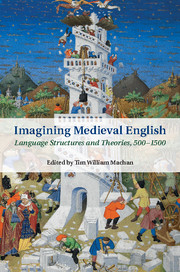
Imagining Medieval English
Language and the Law
David R. Olsen is University Professor Emeritus at the University of Toronto and the author of The Mind on Paper.

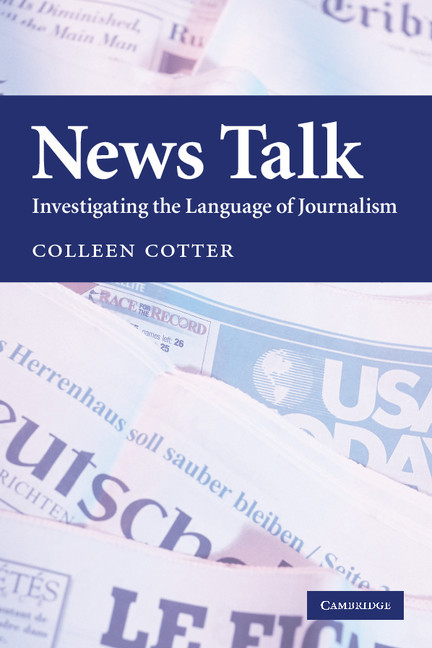
News Talk: Investigating the Language of Journalism
Words at Work and Play
Magistracy and the Historiography of the Roman Republic
The Cambridge Handbook of Stylistics
A Reference Grammar of French
Early Social Interaction
The Hammer of Witches
To receive updates on Language & Linguistics news from Cambridge University Press and Fifteen Eighty Four, please join our email list below. We will not disclose your email address to any third party