For a long time, linguists have thought of language as a tool for thinking. Under this view, how we use language for communication is not particularly interesting because it does not tell us anything about the ‘core’, ‘inherent’ properties of language. Nowadays, many language scientists argue that communication is an important factor that explains why […]
Read MoreA love letter to clichés Why did we write a monograph on clichés? On clichés, for heaven’s sake! Doesn’t everyone avoid them like the plague? Rolling their eyes whenever anyone runs one up the flagpole? Vowing to literally avoid them going forward? Not exactly. Clichés: these apparently hackneyed, over-used, tired, and often much maligned excuses […]
Read MoreWhy a textbook? For both of us, Discourse Syntax is our first textbook. We have both published critical monographs, research articles, and chapters for edited volumes, but, after two decades in the linguistics classroom, we felt it was time to harness our experience as linguists and teachers of linguistics and bring the two together in […]
Read MoreHow do we know that global temperatures are rising? Why is Pluto no longer considered to be a full-sized planet? Are modal verbs such as must, shall and may are on the decline in the English language? These are examples of some of the questions across different disciplines to which we need to provide systematic […]
Read MoreHa ha ha, no, in between the many examples of silence in writing (classic and other), in dialogues, in public exchanges as well as in intersubjective conversations, comes speech: words and paragraphs explaining the categorisation of the different silences, pointing to their identification and looking at their functions. In fact, silence, verbal or other, is […]
Read MoreAs we take stock nationally of the impact of the COVID-19 pandemic on the health and economy of the UK, we would do well to think about the many people who have not made a good recovery from the SARS-CoV-2 virus. The World Health Organization (2021) defines the “post COVID-19 condition” (or Long COVID) as […]
Read MoreMany sentences which contain non-finite elements (e.g. ‘John is easy to please’ and ‘Flying planes can be dangerous’) are tricky. As a student, you may find them ambiguous. As a teacher, you may try to explain them to your students but find it in vain. As a researcher, you may have quite opposite views of […]
Read MoreProfessor Rodney H. Jones, the co-author of Introducing Language and Society, talks to us about inspiration, challenges for students, and the ‘next big thing’ in sociolinguistics. What inspired you and Christiana Themistocleous to write a textbook on introductory sociolinguistics? Both of us have been involved in teaching sociolinguistics to first and second year undergraduates here […]
Read MoreFor a long time, linguists have thought of language as a tool for thinking. Under this view, how we use language for communication is not particularly interesting because it does not tell us anything about the ‘core’, ‘inherent’ properties of language. Nowadays, many language scientists argue that communication is an important factor that explains why […]
Read MoreA love letter to clichés Why did we write a monograph on clichés? On clichés, for heaven’s sake! Doesn’t everyone avoid them like the plague? Rolling their eyes whenever anyone runs one up the flagpole? Vowing to literally avoid them going forward? Not exactly. Clichés: these apparently hackneyed, over-used, tired, and often much maligned excuses […]
Read MoreWhy a textbook? For both of us, Discourse Syntax is our first textbook. We have both published critical monographs, research articles, and chapters for edited volumes, but, after two decades in the linguistics classroom, we felt it was time to harness our experience as linguists and teachers of linguistics and bring the two together in […]
Read MoreHow do we know that global temperatures are rising? Why is Pluto no longer considered to be a full-sized planet? Are modal verbs such as must, shall and may are on the decline in the English language? These are examples of some of the questions across different disciplines to which we need to provide systematic […]
Read MoreHa ha ha, no, in between the many examples of silence in writing (classic and other), in dialogues, in public exchanges as well as in intersubjective conversations, comes speech: words and paragraphs explaining the categorisation of the different silences, pointing to their identification and looking at their functions. In fact, silence, verbal or other, is […]
Read MoreAs we take stock nationally of the impact of the COVID-19 pandemic on the health and economy of the UK, we would do well to think about the many people who have not made a good recovery from the SARS-CoV-2 virus. The World Health Organization (2021) defines the “post COVID-19 condition” (or Long COVID) as […]
Read MoreMany sentences which contain non-finite elements (e.g. ‘John is easy to please’ and ‘Flying planes can be dangerous’) are tricky. As a student, you may find them ambiguous. As a teacher, you may try to explain them to your students but find it in vain. As a researcher, you may have quite opposite views of […]
Read MoreProfessor Rodney H. Jones, the co-author of Introducing Language and Society, talks to us about inspiration, challenges for students, and the ‘next big thing’ in sociolinguistics. What inspired you and Christiana Themistocleous to write a textbook on introductory sociolinguistics? Both of us have been involved in teaching sociolinguistics to first and second year undergraduates here […]
Read MoreKeep up with the latest from Cambridge University Press on our social media accounts.
University of British Columbia, Vancouver
N David Mermin, Author of \\\'Why Quark Rhymes with Pork\\\'
Speaking Shakespeare Today
The Reader\\\\\\\\\\\\\\\'s Brain
Emotive Language in Argumentation
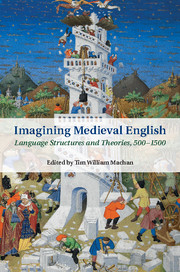
Imagining Medieval English
Language and the Law
David R. Olsen is University Professor Emeritus at the University of Toronto and the author of The Mind on Paper.

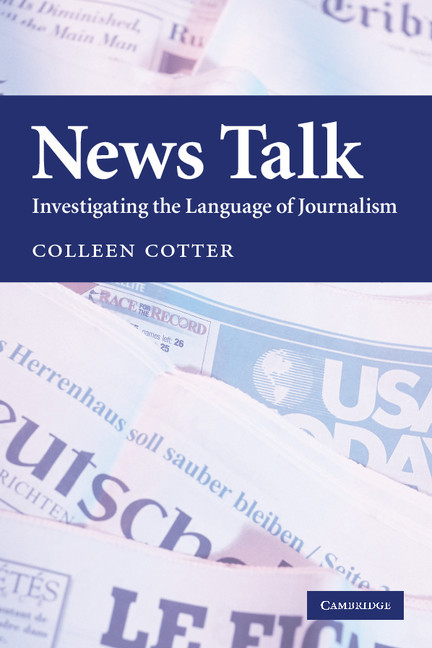
News Talk: Investigating the Language of Journalism
Words at Work and Play
Magistracy and the Historiography of the Roman Republic
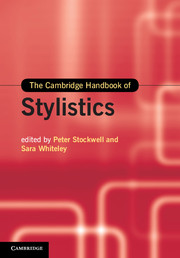
The Cambridge Handbook of Stylistics
A Reference Grammar of French
Early Social Interaction
The Hammer of Witches
To receive updates on Language & Linguistics news from Cambridge University Press and Fifteen Eighty Four, please join our email list below. We will not disclose your email address to any third party