English Medium Instruction (EMI) is revolutionising education systems worldwide. From universities in Asia to secondary schools in Europe, EMI is reshaping how knowledge is imparted and acquired. However, this global trend raises pressing questions: How do students fare academically in a second language? What strategies ensure effective content and language learning? Our book, Researching English […]
Read MoreHave you ever felt like an imposter in your own profession? As a non-native English-speaking teacher and researcher, I’ve spent years grappling with this feeling. It wasn’t until very recently that I realized how far I’d come. And more importantly, how much our field needs to change. This personal journey drove me to write my […]

Read MoreWhen viewers watched the first presidential debate between Kamala Harris and Donald Trump, they were astonished when the latter candidate made the claim that immigrants in Ohio are eating cats and dogs. Trump said, “In Springfield, they’re eating the dogs, the people that came in. They’re eating the cats. They’re eating the pets of the […]
Read MoreHuman beings, homo sapiens, are linguistic creatures. One of the things that make us particularly sapient is our ability to convert a seemingly never-ending stream of thoughts into coherent language, interpretable by other similarly equipped creatures. This phenomenon is many-dimensional. When our thoughts leave our lips or shape our hands they take on a form, […]

Read MoreSince emoji gained global diffusion in the early 2010s, emoji characters have coalesced into a self-contained language that people of different linguistic and cultural backgrounds use on a daily basis, in remarkably similar ways. This visual language has evolved into a cross-cultural literacy, migrating to many areas of social interaction, including in education and in […]

Read MoreA linguistic rift runs down the North Atlantic. On its American side linguistics seems to begin and end with phonology, syntax and semantics. On the European side, the picture is much more complex, as linguistics includes things like metalexicography, lexicology, language contact studies and such. There are, of course, exceptions, but such is the overall […]
Read MoreWhen I first started studying language policy, I thought I knew where it came from, how it worked, and why it mattered. In my view at the time, language policy was about national politicians trying to manage the language use of perceived outsiders. Then, ten years ago, I started researching what would become the book […]
Read MoreArthur C. Clarke famously stated that “any sufficiently advanced technology is indistinguishable from magic.” Most of us have experienced this law with respect to the latest iterations of large language models (LLMs) such as GPT-4. This perspective may lead to incorrect usage of LLMs, resulting in undesirable and dangerous effects such as privacy violations, proliferation […]
Read MoreEnglish Medium Instruction (EMI) is revolutionising education systems worldwide. From universities in Asia to secondary schools in Europe, EMI is reshaping how knowledge is imparted and acquired. However, this global trend raises pressing questions: How do students fare academically in a second language? What strategies ensure effective content and language learning? Our book, Researching English […]
Read MoreHave you ever felt like an imposter in your own profession? As a non-native English-speaking teacher and researcher, I’ve spent years grappling with this feeling. It wasn’t until very recently that I realized how far I’d come. And more importantly, how much our field needs to change. This personal journey drove me to write my […]
Read MoreWhen viewers watched the first presidential debate between Kamala Harris and Donald Trump, they were astonished when the latter candidate made the claim that immigrants in Ohio are eating cats and dogs. Trump said, “In Springfield, they’re eating the dogs, the people that came in. They’re eating the cats. They’re eating the pets of the […]
Read MoreHuman beings, homo sapiens, are linguistic creatures. One of the things that make us particularly sapient is our ability to convert a seemingly never-ending stream of thoughts into coherent language, interpretable by other similarly equipped creatures. This phenomenon is many-dimensional. When our thoughts leave our lips or shape our hands they take on a form, […]
Read MoreSince emoji gained global diffusion in the early 2010s, emoji characters have coalesced into a self-contained language that people of different linguistic and cultural backgrounds use on a daily basis, in remarkably similar ways. This visual language has evolved into a cross-cultural literacy, migrating to many areas of social interaction, including in education and in […]
Read MoreA linguistic rift runs down the North Atlantic. On its American side linguistics seems to begin and end with phonology, syntax and semantics. On the European side, the picture is much more complex, as linguistics includes things like metalexicography, lexicology, language contact studies and such. There are, of course, exceptions, but such is the overall […]
Read MoreWhen I first started studying language policy, I thought I knew where it came from, how it worked, and why it mattered. In my view at the time, language policy was about national politicians trying to manage the language use of perceived outsiders. Then, ten years ago, I started researching what would become the book […]
Read MoreArthur C. Clarke famously stated that “any sufficiently advanced technology is indistinguishable from magic.” Most of us have experienced this law with respect to the latest iterations of large language models (LLMs) such as GPT-4. This perspective may lead to incorrect usage of LLMs, resulting in undesirable and dangerous effects such as privacy violations, proliferation […]
Read MoreKeep up with the latest from Cambridge University Press on our social media accounts.
University of British Columbia, Vancouver
N David Mermin, Author of \\\'Why Quark Rhymes with Pork\\\'
Speaking Shakespeare Today
The Reader\\\\\\\\\\\\\\\'s Brain
Emotive Language in Argumentation
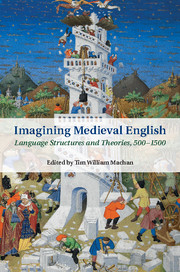
Imagining Medieval English
Language and the Law
David R. Olsen is University Professor Emeritus at the University of Toronto and the author of The Mind on Paper.

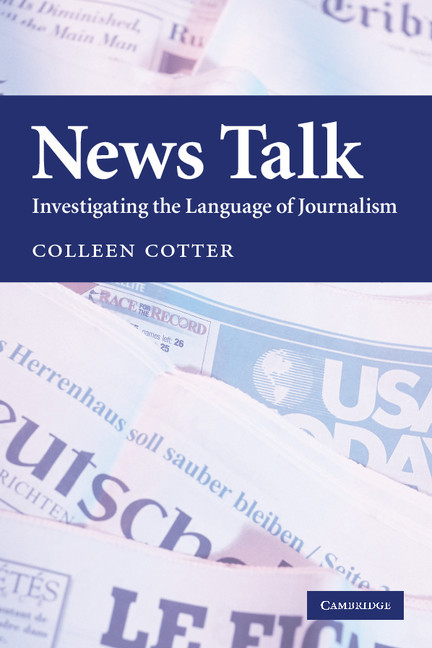
News Talk: Investigating the Language of Journalism
Words at Work and Play
Magistracy and the Historiography of the Roman Republic
The Cambridge Handbook of Stylistics
A Reference Grammar of French
Early Social Interaction
The Hammer of Witches
To receive updates on Language & Linguistics news from Cambridge University Press and Fifteen Eighty Four, please join our email list below. We will not disclose your email address to any third party