In this blog we will discuss the complexities surrounding the use of particular expressions that are somewhat ‘heavy’ from the point of view of language use. In interactional ritual theory, these expressions are referred to as RFIEs. Many RFIEs are intrinsically interrelated with speech acts and their use helps us to indicate that certain ritualistic […]
Read MoreOf the various speech acts used in the wake of COVID-19 and the corresponding need for social distancing, ‘Apologise’ is perhaps the most important. Since the enforcement of social distancing unavoidably leads to moral uproar, we often find ourselves apologising profusely for trying to safeguard our own health – an interesting paradox that can be […]
Read MoreWe asked the authors of some of our most popular textbooks to take part in a series of Facebook Live webinars about teaching remotely.
Read MoreUntil December 2019, I was in Nanjing, some five hundred kilometres from Wuhan where the first cases of the new lung disease were then discovered. When things unfolded in January, I initially felt a sense of having escaped a potentially fatal danger by a hair’s breadth; only to realize a bit later that this wasn’t […]
Read MoreIn late 2019 an outbreak of COVID-19 was detected in the city of Wuhan, China. Within weeks, the virus had spread across the country, becoming an epidemic. The disease spread rapidly across the globe and in March 2020, the World Health Organization (WHO) officially declared COVID-19 to be a pandemic. This is the first time […]
Read MoreBefore venturing into a fully-fledged linguistic analysis of ritual behaviour during this time of social distancing, one issue worth discussing is the typological concept of ‘rites of aggression’. The previous ‘Interactional Rituals’ blog entries might have given the reader the impression that interactional rituals are primarily about maintaining social harmony, and it is the violation […]
Read MoreOne reason why Covidiotism attracts so much attention and strong feeling is that social distancing and its violations are strongly related to what the renowned sociologist Erving Goffman has described as the phenomenon of ‘civil inattention’. In modern public spaces, particularly in urban settings, a key interactional ritual is to keep interaction to a minimum. […]
Read MoreBefore we venture into a detailed analysis of interactional rituals and distance keeping, an interesting phenomenon worth considering is ‘covidiotism’ and its relationship with interactional rituals. People react in different ways to social distancing, with some even creating their own interactional rituals to substitute those removed by social distancing. Many of these people have been […]
Read MoreIn this blog we will discuss the complexities surrounding the use of particular expressions that are somewhat ‘heavy’ from the point of view of language use. In interactional ritual theory, these expressions are referred to as RFIEs. Many RFIEs are intrinsically interrelated with speech acts and their use helps us to indicate that certain ritualistic […]
Read MoreOf the various speech acts used in the wake of COVID-19 and the corresponding need for social distancing, ‘Apologise’ is perhaps the most important. Since the enforcement of social distancing unavoidably leads to moral uproar, we often find ourselves apologising profusely for trying to safeguard our own health – an interesting paradox that can be […]
Read MoreWe asked the authors of some of our most popular textbooks to take part in a series of Facebook Live webinars about teaching remotely.
Read MoreUntil December 2019, I was in Nanjing, some five hundred kilometres from Wuhan where the first cases of the new lung disease were then discovered. When things unfolded in January, I initially felt a sense of having escaped a potentially fatal danger by a hair’s breadth; only to realize a bit later that this wasn’t […]
Read MoreIn late 2019 an outbreak of COVID-19 was detected in the city of Wuhan, China. Within weeks, the virus had spread across the country, becoming an epidemic. The disease spread rapidly across the globe and in March 2020, the World Health Organization (WHO) officially declared COVID-19 to be a pandemic. This is the first time […]
Read MoreBefore venturing into a fully-fledged linguistic analysis of ritual behaviour during this time of social distancing, one issue worth discussing is the typological concept of ‘rites of aggression’. The previous ‘Interactional Rituals’ blog entries might have given the reader the impression that interactional rituals are primarily about maintaining social harmony, and it is the violation […]
Read MoreOne reason why Covidiotism attracts so much attention and strong feeling is that social distancing and its violations are strongly related to what the renowned sociologist Erving Goffman has described as the phenomenon of ‘civil inattention’. In modern public spaces, particularly in urban settings, a key interactional ritual is to keep interaction to a minimum. […]
Read MoreBefore we venture into a detailed analysis of interactional rituals and distance keeping, an interesting phenomenon worth considering is ‘covidiotism’ and its relationship with interactional rituals. People react in different ways to social distancing, with some even creating their own interactional rituals to substitute those removed by social distancing. Many of these people have been […]
Read MoreKeep up with the latest from Cambridge University Press on our social media accounts.
University of British Columbia, Vancouver
N David Mermin, Author of \\\'Why Quark Rhymes with Pork\\\'
Speaking Shakespeare Today
The Reader\\\\\\\\\\\\\\\'s Brain
Emotive Language in Argumentation
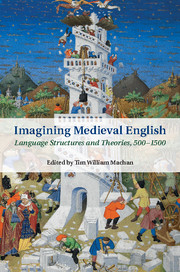
Imagining Medieval English
Language and the Law
David R. Olsen is University Professor Emeritus at the University of Toronto and the author of The Mind on Paper.

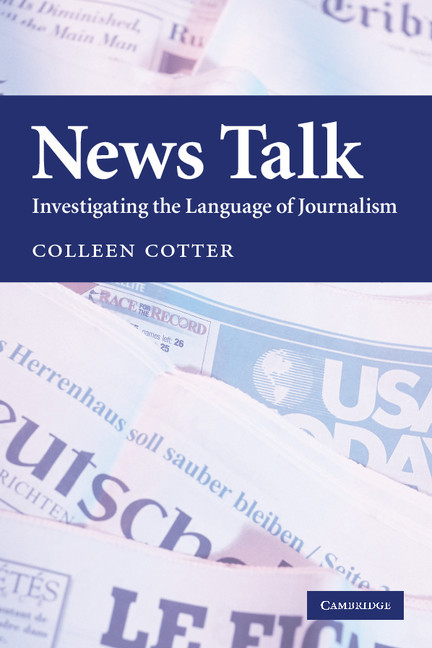
News Talk: Investigating the Language of Journalism
Words at Work and Play
Magistracy and the Historiography of the Roman Republic
The Cambridge Handbook of Stylistics
A Reference Grammar of French
Early Social Interaction
The Hammer of Witches
To receive updates on Language & Linguistics news from Cambridge University Press and Fifteen Eighty Four, please join our email list below. We will not disclose your email address to any third party