Joshua A.T. Fairfield, author of Runaway Technology, on hate speech, disinformation, and technology,
Read MoreIn response to the global COVID-19 pandemic, the Australian government has closed its borders, but welcomes home Australian citizens. However, it’s not as simple as boarding a plane and flying home. Due to restrictions placed on international passenger arrivals into the country, tens of thousands of Australians are still stuck overseas. Australians stranded in other […]
Read MoreWe are still in the maelstrom that is the Covid-19 pandemic and are likely to remain so for some time to come. The loss of life and economic hardship are apparent to all and are shocking to even seasoned observers. However, the pandemic may yet exact some of its greatest damage on the many thousands […]
Read MorePermit as a speech act addresses a future action to be undertaken by the addressee in his own interests, which almost always appears to concur with a Request for a Permit. In the context of social distancing, we often receive Requests for a Permit, such as when tactful others ask for our permission to venture […]
Read MoreIn the following, we discuss the speech act type ‘Invite’. This speech act expresses that the speaker wishes her addressee to know that she is in favour of a future action to be performed by the other, which she believes may involve costs to herself and benefits to the addressee. She also believes however that […]
Read MoreIn this blog we discuss the speech act ‘suggest’. This speech act involves the situation where a speaker is communicating that he/she is as much in favour of the addressee performing a future action as in the latter’s own interests. This speech act category is closely related to the speech act ‘request’, but in the […]
Read MoreOf the various speech acts used in the wake of COVID-19 and the corresponding need for social distancing, ‘Apologise’ is perhaps the most important. Since the enforcement of social distancing unavoidably leads to moral uproar, we often find ourselves apologising profusely for trying to safeguard our own health – an interesting paradox that can be […]
Read MoreThe Euphemism Treadmill is common in the areas of language related to race and ethnicity, disease, and disability. What is this phenomenon? A euphemism is a word substituted for one that is considered unpleasant or embarrassing, which can be motivated by a desire to not offend. However, sometimes these good intentions can backfire. The so-called […]
Read MoreJoshua A.T. Fairfield, author of Runaway Technology, on hate speech, disinformation, and technology,
Read MoreIn response to the global COVID-19 pandemic, the Australian government has closed its borders, but welcomes home Australian citizens. However, it’s not as simple as boarding a plane and flying home. Due to restrictions placed on international passenger arrivals into the country, tens of thousands of Australians are still stuck overseas. Australians stranded in other […]
Read MoreWe are still in the maelstrom that is the Covid-19 pandemic and are likely to remain so for some time to come. The loss of life and economic hardship are apparent to all and are shocking to even seasoned observers. However, the pandemic may yet exact some of its greatest damage on the many thousands […]
Read MorePermit as a speech act addresses a future action to be undertaken by the addressee in his own interests, which almost always appears to concur with a Request for a Permit. In the context of social distancing, we often receive Requests for a Permit, such as when tactful others ask for our permission to venture […]
Read MoreIn the following, we discuss the speech act type ‘Invite’. This speech act expresses that the speaker wishes her addressee to know that she is in favour of a future action to be performed by the other, which she believes may involve costs to herself and benefits to the addressee. She also believes however that […]
Read MoreIn this blog we discuss the speech act ‘suggest’. This speech act involves the situation where a speaker is communicating that he/she is as much in favour of the addressee performing a future action as in the latter’s own interests. This speech act category is closely related to the speech act ‘request’, but in the […]
Read MoreOf the various speech acts used in the wake of COVID-19 and the corresponding need for social distancing, ‘Apologise’ is perhaps the most important. Since the enforcement of social distancing unavoidably leads to moral uproar, we often find ourselves apologising profusely for trying to safeguard our own health – an interesting paradox that can be […]
Read MoreThe Euphemism Treadmill is common in the areas of language related to race and ethnicity, disease, and disability. What is this phenomenon? A euphemism is a word substituted for one that is considered unpleasant or embarrassing, which can be motivated by a desire to not offend. However, sometimes these good intentions can backfire. The so-called […]
Read MoreKeep up with the latest from Cambridge University Press on our social media accounts.
University of British Columbia, Vancouver
N David Mermin, Author of \\\'Why Quark Rhymes with Pork\\\'
Speaking Shakespeare Today
The Reader\\\\\\\\\\\\\\\'s Brain
Emotive Language in Argumentation
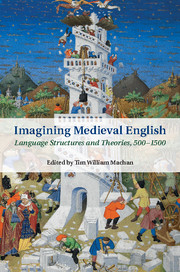
Imagining Medieval English
Language and the Law
David R. Olsen is University Professor Emeritus at the University of Toronto and the author of The Mind on Paper.

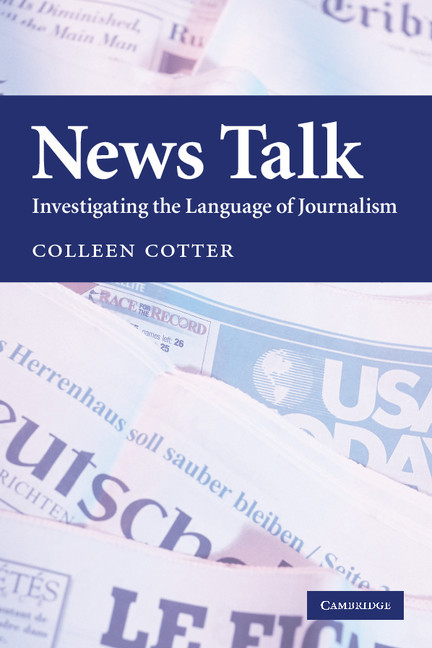
News Talk: Investigating the Language of Journalism
Words at Work and Play
Magistracy and the Historiography of the Roman Republic
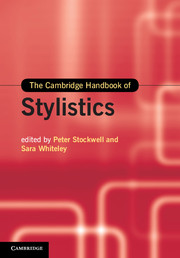
The Cambridge Handbook of Stylistics
A Reference Grammar of French
Early Social Interaction
The Hammer of Witches
To receive updates on Language & Linguistics news from Cambridge University Press and Fifteen Eighty Four, please join our email list below. We will not disclose your email address to any third party