Products and services


Spanning the entire history of the city of Rome from Iron Age village to modern metropolis, this is the first book to take the long view of the Eternal City as an urban organism. Beatrice Rehl, editor of Rome: An Urban History from Antiquity to the Present, tells us more...
Read More
An introduction from Commisioning Editor Michael Sharp The ancient Greek and Roman worlds were defined by their cities. Ancient Greece actually comprised a large collection of cities, some of which founded offshoots across the Eastern and Western Mediterranean and into the Black Sea region, and it was in these cities that the foundations of Western […]
Read More
Zimbabwe’s Migrants and South Africa’s Border Farms: The Roots of Impermanence began with my interest in people’s experiences of uprootedness and settlement. At the time, the Zimbabwean-South African border was receiving a lot of press attention about ‘floods’ of migrants fleeing the Zimbabwean Crisis. I wanted to understand first-hand this displacement from migrants’ own points […]
Read More
From the moment I first saw the enigmatic Scottish carved stone balls, I was intrigued. Although many purposes had been suggested for their purpose during the Neolithic, none had included the possibility that they were memory devices. Yet their size, designs and archaeological contexts matched the pattern of such objects that I had found in […]
Read More
How often do we discourage our children from handling dangerous objects--things like matches and knives? Are we protecting them, or failing to let them learn valuable lessons about the world we live in? David F. Lancy, the author of The Anthropology of Childhood, breaks down these questions from an anthropological stance.
Read More
James G. Carrier, the co-editor of Anthropologies of Class, explores the impact of studying class.
Read More
In this adaptation of Ciraj Rassool's chapter "Human Remains, the Disciplines of the Dead, and the South African Memorial Complex" from The Politics of Heritage in Africa, go behind the scenes of anthropological work in Southern Africa.
Read More
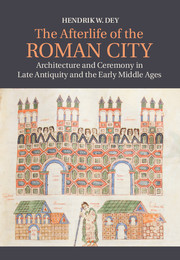
Hendrik W. Day, the author of The Afterlife of the Roman City, takes readers through the maze of Roman cities to explore how the way a state is ruled shapes its architecture: from ancient Constantinople to today's Pyongyang.
Read MoreKeep up with the latest from Cambridge University Press on our social media accounts.