
Products and services

Most readers recognize E. M. Forster as the early twentieth-century writer who wrote about India; some remember his socially relevant and thematically wide-ranging Edwardian novels and short stories,...
Four years ago, when I began to write From Crust to Core, A chronicle of deep carbon science, the astrophysicist in me looked forward to documenting the story of how Earth’s carbon originated long ago...
Myanmar’s transition after a new civilianized government emerged in 2011 came to excite investors and development practitioners from across the world. Economic capital Yangon circa 2014 was a town where...
Writing a book about John Steinbeck has many twists and turns, but something I never expected was to go viral in the process. I was interviewed by Dalya Alberge for The Guardian/The Observer about my...
These are not the days when most educators would be inclined to turn to a writer with the profile of Wallace Stevens (1879-1955). A Eurocentric white male upper-middle-class poet, academically installed...
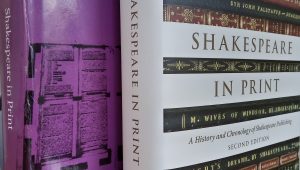
My study of the history of Shakespeare publishing and editing, Shakespeare in Print, first appeared in 2003. In recent years, it has come to feel that the book was in need of significant updating and...
So said former CIA Director R. James Woolsey to the House Armed Services Committee in 1999, channeling what had become a consensus about Iraq in the U.S. foreign policy establishment by the end of the...
What did it mean to be a prince in the Middle Ages? During the Hundred Years’ War (c. 1337–1453), the kingdom of France contained a number of powerful duchies and counties, such as Brittany in the...
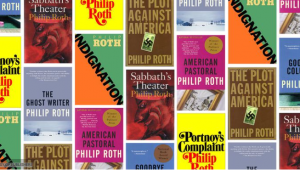
“Sheer Playfulness and Deadly Seriousness are my closest friends,” Philip Roth once famously said of his own work. The enduring appeal of this assertion derives in part from the fact that it so accurately...
How did Canadian fiction, essentially a late-nineteenth-century/early-twentieth-century creation, come to be a major avenue of world fiction in little more than one hundred years? More...
After years of struggling to complete a book on scientific revolutions and the development of scientific knowledge, in 1962, Thomas Kuhn published The Structure of Scientific Revolutions. Three years...
The following is a Press Release prepared by Lindau Nobel Laureate Meetings for Nobel Life: Conversations with 24 Nobel Laureates on their life stories, advice for future generations and what remains to be discovered by Stefano Sandrone
Keep up with the latest from Cambridge University Press on our social media accounts.