Products and services

In Eating and Ethics in Shakespeare’s England , a new kind of ethics is at stake—the ethics of the way we eat. Whom we eat with, how we serve, and the way we behave at the table dominates literary history.
Giorgio Riello, the author of Cotton: The Fabric That Made the Modern World, discusses the history of the invaluable fiber, from its origins in India and China to its feverish spread around the globe.
In this two-part post, the author of the award-winning Ethnic Patriotism and the East African Revival reflects on the emergence of the field of African studies and Cambridge University Press' role in advancing the discipline.
Mauro F. Guillén and Emilio Ontiveros, co-authors of Global Turning Points: Meeting the Challenges for Business in the 21st Century (2012), talk about the financial situation and its challenges in 2014.
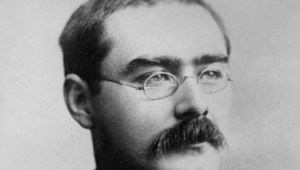
Take a look at one of Rudyard Kipling's verses from the brand new edition of his poetry, 100 Poems.
Clouds come in a bewildering variety of sizes and shapes. While they may all be fractal, some would require 3D shapes such as spheroids or ellipsoids to contain them while others – flat, elongated...
With this forthcoming addition to our astronomy list, the authors take you on a journey to our Sun, revealing the compelling science behind our Nearest Star and what it reveals about our Universe.
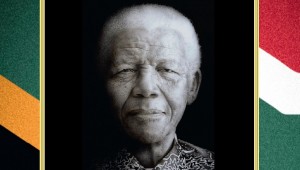
Nelson Mandela committed himself to a compelling political cause, suffered a long prison sentence, and led his violent and divided country to a peaceful democratic transition. Cambridge honors his legacy in our newest Cambridge Companion. Take a sneak peek at the introduction below.
We have a theme this week—to celebrate the new year, check out an excerpt from 100 Poems by Rudyard Kipling. Are you sticking to your New Year's resolutions? Kipling had a little trouble with his...
Happy New Year! Are you resolving to read more in 2014? Learn more? Explore new fields? Cambridge University Press can help! Check out a few of the exciting new titles we're looking forward to this year—delving into everything from criminal justice to American literature to Einstein.
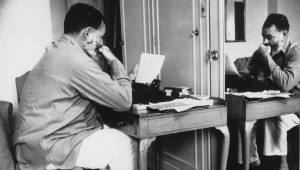
With Volume 2 ending in 1925, what would've been Hemingway's New Year's resolutions?
In Who's Bigger? Where Historical Figures Really Rank, computer scientists Steven Skiena and Charles Ward take an algorithmic approach to the question of who matters in the historical record. By analyzing scanned books and web pages like Wikipedia, they have a created a system for ranking the most—and least—significant people throughout history. Read an excerpt from their book below.
Keep up with the latest from Cambridge University Press on our social media accounts.