
Products and services

Alfred Rieber, author of The Struggle for the Eurasian Borderlands, explains why Ukraine's history as a contested borderland continues to shape its politics today.
For the last 450 years, Shakespeare's plays and poems have inspired hundreds of adaptations across all mediums. Even more so, his language pervades popular culture and continues to influence the literature we read and publish today. The following eight books are great examples of works that take their titles and themes from Shakespeare, keeping the legacy of his classic works alive for a new generation of readers.
The following post is a full transcript of the opening address given by our Chief Executive Peter Phillips, to the 16th Fiesole Collection Development Retreat on 11th April 2014.
If you’re hanging out in the Western Hemisphere around 1am early Tuesday, April 15th, look up! There will be a total lunar eclipse next week, which means that the Earth will pass between the Sun...
Katie Scarff, Rights Sales Manager here at Cambridge University Press, reveals which books have been the most popular at the 2014 London Book Fair, and how this year's Market Focus of Korea, has brought interest from Korean publishers.
PR Manager Adam Tuckwell, blogs from our stand on a busy Day Two of the 2014 London Book Fair.
It's Day One of the three-day 2014 London Book Fair, where we are showcasing the latest products and innovations from across Academic, Education and Cambridge English at Cambridge University Press.
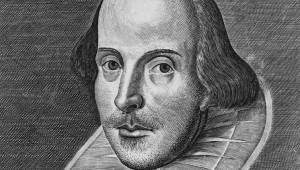
William Shakespeare turns 450 this April! To celebrate four and a half centuries of his works and legacy, we will be sharing exclusive Cambridge Shakespeare content throughout the entire month. We kick off the celebration with an excerpt from the updated 2nd edition of Shakespeare as Literary Dramatist, the landmark work of Shakespearean scholarship from leading international expert Lukas Erne.
Robert McLeman, the author of Climate and Human Migration, explains how our changing climate will affect the way we live—specifically by influencing migration patterns around the globe.
In an interview by Durham University, Professor Julian (Joe) Elliott, author of The Dyslexia Debate, unravels the problems with a diagnosis of “dyslexia.” Elliott argues that the unscientific...
Graeme Finlay, the author of Human Evolution: Genes, Genealogies and Phylogenies, describes the complex ways in which cells—and thus entire species—are related to one another.
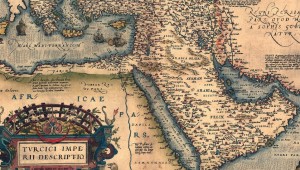
As the battle over Crimea rages, Alfred Rieber recounts the long history of conflict and shifting borders in eastern Europe that forms the foundation of his book, The Struggle for the Eurasian Borderlands.
Keep up with the latest from Cambridge University Press on our social media accounts.