
Products and services

John Suler, the author of Psychology of the Digital Age: Humans Become Electric, on how we might respond to the way our lives have become tangled up in the digital world.
At one point in my book Reconstructing Sociology, I ask readers to consider a question that goes back to Isaiah Berlin. I would like to start by posing it now also to you: Which of the following is the...
Ernest Hemingway is cemented in American legend, but behind his terse fiction and complicated personal life lurks an enigmatic man. The publication of his letters offers lovers of his work the chance...
Mario Diani, the author of The Cement of Civil Society, answers questions about his book and how to understand social movements and civil society.
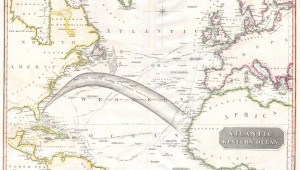
Robert DuPlessis, the author of The Material Atlantic, answers questions about the textile industry in the early modern period, the rise of Atlantic trade, and the birth of fashion--they're all connected!
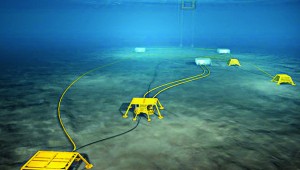
Quietly, as yet watched only by a few, a storm is brewing. Seabed mining – the recovery of minerals from the floor of the deep ocean – is passing from the realm of fantasy to that of fact. The International...
Jerry Evensky, the author of Adam Smith's Wealth of Nations, clarifies how to read Smith's work not simply as economics, but as a wider piece of social science.
We know you’ve been waiting for it…Volume 3 of The Letters of Ernest Hemingway is almost here! From meeting publishers in New York to sportfishing in Cuba to watching Pamplona’s Running...
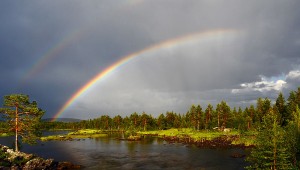
My forthcoming book on Colours and Colour Vision concerns many different aspects of this subject matter: how colours arise, how one might see and experience them, and how they have been used and talked...
Gerald J. Beyer, an associate professor of Christian Ethics at Villanova University and contributor to Horizons: The Journal of the College Theology Society explores the impact of Pope Francis' visit to the US.
John Suler, author of Psychology of the Digital Age: Humans Become Electric (2016), takes us on a cathartic journey through cyberspace to his 'man cave'.
Philadelphia’s year-long preparations for Pope Francis’ visit to the city for the 2015 World Meeting of Families (WMOF) bore fruit when the pope, weary but still joyfully greeting all he saw, arrived...
Keep up with the latest from Cambridge University Press on our social media accounts.