Products and services

Valentin Bellassen, author of Accounting for Carbon: Monitoring, Reporting and Verifying Emissions in the Climate Economy (2015), explores the requirements for the MRV of countries’ emissions and considers how this can be successfully extended to cover emerging and developing countries.
Yellowlees Douglas, author of The Reader's Brain: How Neuroscience Can Make You a Better Writer (2015), explores how the teaching of writing is leaving some people ill-prepared for the workplace.
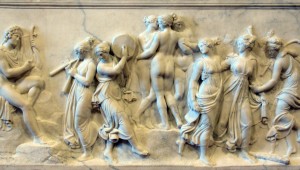
Early on in Hesiod’s Works and Days, the first didactic poem of Classical antiquity, we find in succession two versions of human history. The first is a retelling of the havoc resulting for mankind from...
Simon Palfrey, the author of Shakespeare’s Possible Worlds, breaks down the barriers of Shakespeare's complicated play world and the language holding it together.
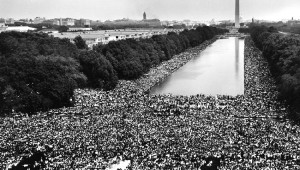
This month marks the 50th anniversary of the galley exhibition Works in Black and White, a key moment in the Black Arts Movement of the tumultuous 1960s. Julie Buckner Armstrong, the editor of The Cambridge Companion to American Civil Rights Literature, explores the role of art and literature in the fight for civil rights and the transformative power of language.
In February 2014 we were approached and asked if we would prepare a new edition of J.C. Holt’s landmark book on Magna Carta, first published to accompany the seven hundred and fiftieth anniversary of...
Yellowlees Douglas, the author of The Reader's Brain: How Neuroscience Can Make You a Better Writer, offers six helpful insights into how you can become a better writer by understanding a bit about how our brains work.
W.B. Yeats is widely recognised as one of the greatest poets of the twentieth century. It has even been suggested that he was the greatest poet in Europe since Virgil. His reputation as a dramatist has...
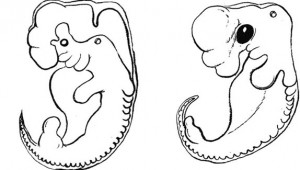
In his fifth post, Wallace Arthur, author of Evolving Animals (2014) explores 'evolutionary pattern' and how it impacts on 'our place' in the understanding of evolution.
James Melton, co-editor of Magna Carta and Its Modern Legacy, explains why we should not just celebrate the birth of Magna Carta, but also its death.
Enjoying Wallace Arthur's posts on evolution? You're in luck. Here the author of Evolving Animals (2014) puts together a creative analogy for understanding natural selection.
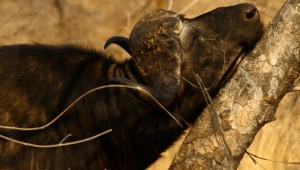
Mario Melletti, author of Ecology, Evolution and Behaviour of Wild Cattle (2014), explains why wild cattle are in need of greater conservation and management.
Keep up with the latest from Cambridge University Press on our social media accounts.




![W B Yeats aged 58, photo By National Library of Ireland on The Commons (W.B. Yeats Uploaded by russavia) [see page for license], via Wikimedia Commons](https://cambridgeblog.org/wp-content/uploads/2015/06/w-b-yeats-via-wikicommons-300x170.jpg)