Products and services

In the final part of our cyberpsychology roundtable discussion, our 4 authors look forward to reveal what they think the future holds for the internet and the impact it will have on our society.
Dr Hussein A. Amery, author of Arab Water Security: Threats and Opportunities in the Gulf States (2015) explores the hydrological benefits of low oil prices.
Relying on expert judgement is a risky but necessary business, requiring the right tools ... and the right experts.
Paul Wallace, author of The Euro Experiment (2015), takes a wide analytical look at Europe's economic crisis.
In the fifth of our cyberpsychology roundtable discussions, the authors decide on what they feel is the singular most important issue online.
John H. Goldthorpe, author of Sociology as a Population Science (2016) explores Sociology's place in the world.
John L. Brooke, the author of Climate Change and the Course of Global History (2014), examines the global issues at stake as we battle a warming climate and introduces an excerpt from his book.
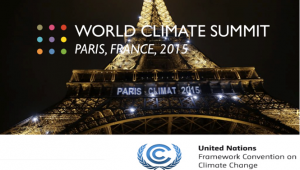
Frank Incropera, author of Climate Change: A Wicked Problem (2015), explores the role of the 2015 Conference of Parties at Paris.
Barry S. C. Leadbeater, author of The Choanoflagellates: Evolution, Biology and Ecology (2015) provides some interesting insights into the world of Choanoflagellates!
In the 4th part of our cyberpsychology roundtable discussions we asked our 4 authors what role has the internet had to play in modern day social relationships and what does the future hold for generations that are growing up online?
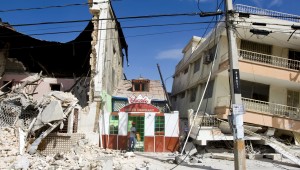
The author of Earthquake Time Bombs answers our questions about earthquake preparedness, regions at risk, and why the alarm needs to be raised.
Stephen Macekura, the author of Of Limits and Growth, considers the challenges facing the World Climate Summit this December. You can also read an excerpt from his book below.
Keep up with the latest from Cambridge University Press on our social media accounts.