
Products and services

The authors of Why Leaders Fight show that – within the constraints of domestic political institutions and the international system – who ends up in office plays a critical role in determining when and why countries go to war.
Arnold Glass, author of Cognition: A Neuroscience Approach (2016), introduces us to the most ominous graph of all time.
Five experts discuss emotions in a six-part virtual roundtable discussion.
We talk to Daniel Blue, author of a major new biography of German philosopher, Friedrich Nietzsche, that radically reconceives Nietzsche's youth and reveals the importance of autobiography and environment to his early development.
Samara Klar and Yanna Krupnikov, authors of Independent Politics (2016), examine what it means to be an independent political party.
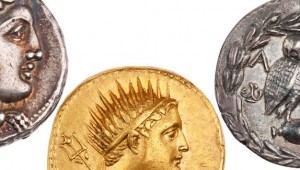
Explore our timeline of coinage from the Ancient World, as we mark the launch of our new series in collaboration with the American Numismatic Society
Arnold Glass, author of Cognition: A Neuroscience Approach (2016), explores the role of mazes in psychology and cognitive development.
Jürg Steiner, author of The Foundations of Deliberative Democracy (2012), examines lessons learnt from the recent Swiss Referendum.
We talk to Roy Perrett, visiting Professor of Indian Philosophy at Ashoka University about his new book, An Introduction to Indian Philosophy.
Paul Gowder gives a comprehensive new theory of the political and legal ideal known as “the rule of law”: what it means and why it matters.
The recent shootings of unarmed blacks have been labeled by some as “21st -century lynchings.” Karlos K. Hill examines the meaning behind this characterization, whether it’s inflammatory, and why the discussion matters. Hill is author of the forthcoming Beyond the Rope: The Impact of Lynching on Black Culture and Memory.
Anyone who has taken care of a newborn can understand treating them at little more than a digestive system. Most newborns are either placid babies or colicky babies. Placid babies eat and sleep. Colicky...
Keep up with the latest from Cambridge University Press on our social media accounts.