
Products and services

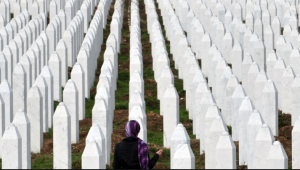
Robert J. Donia, the author of Radovan Karadžič: Architect of the Bosnian Genocide, reflects on the forthcoming judgment in the trial of Karadžič, which will occur this week.
After reading a passage for the first time, asking answering questions about the passage produces better memory for it than reading the passage repeatedly. This is called the testing effect. Experimental...
We talk to author Timothy Hinton about his new book, The Original Positioni in which he explores one of the most influential thought experiments of the twentieth century.
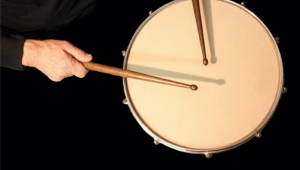
Russell Hartenberger, the editor of The Cambridge Companion to Percussion, explores the great significance of percussion in music in the 21st Century.
Last week, we asked the experts to explain some of the major recent developments in the field of emotions and psychology. This week, we ask: What role does the brain play in understanding emotions? Participants: Rolf...
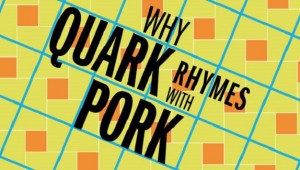
We go Into the Intro of David Mermin's Why Quark Rhymes with Pork (2016), a hilarious and insightful account from a world renowned physicist.
The authors of Why Leaders Fight show that – within the constraints of domestic political institutions and the international system – who ends up in office plays a critical role in determining when and why countries go to war.
Arnold Glass, author of Cognition: A Neuroscience Approach (2016), introduces us to the most ominous graph of all time.
Five experts discuss emotions in a six-part virtual roundtable discussion.
We talk to Daniel Blue, author of a major new biography of German philosopher, Friedrich Nietzsche, that radically reconceives Nietzsche's youth and reveals the importance of autobiography and environment to his early development.
Samara Klar and Yanna Krupnikov, authors of Independent Politics (2016), examine what it means to be an independent political party.
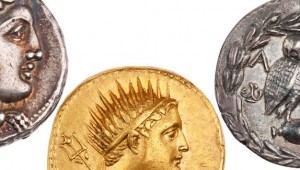
Explore our timeline of coinage from the Ancient World, as we mark the launch of our new series in collaboration with the American Numismatic Society
Keep up with the latest from Cambridge University Press on our social media accounts.