
Products and services

Éric Montpetit, author of In Defense of Pluralism: Policy Disagreement and its Media Coverage (2016), takes a look at how the media handles political stories.
Tim William Machan, editor of Imagining Medieval English - Language Structures and Theories 500-1500 (2016) explores the significance of the phrase 'language and literature'.
John Suler, author of Digital Age: Humans Become Electric (2015), explains why he remains a fan of cyberspace.
My interest in choanoflagellates came about by accident. In 1970 I spent a month in Norway attempting to collect coccolithophorids (calcified phytoplankton) which are usually present in coastal waters...
In the final part of our cyberpsychology roundtable discussion, our 4 authors look forward to reveal what they think the future holds for the internet and the impact it will have on our society.
Dr Hussein A. Amery, author of Arab Water Security: Threats and Opportunities in the Gulf States (2015) explores the hydrological benefits of low oil prices.
Relying on expert judgement is a risky but necessary business, requiring the right tools ... and the right experts.
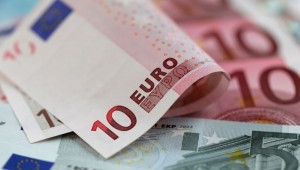
Paul Wallace, author of The Euro Experiment (2015), takes a wide analytical look at Europe's economic crisis.
In the fifth of our cyberpsychology roundtable discussions, the authors decide on what they feel is the singular most important issue online.
John H. Goldthorpe, author of Sociology as a Population Science (2016) explores Sociology's place in the world.
John L. Brooke, the author of Climate Change and the Course of Global History (2014), examines the global issues at stake as we battle a warming climate and introduces an excerpt from his book.
Frank Incropera, author of Climate Change: A Wicked Problem (2015), explores the role of the 2015 Conference of Parties at Paris.
Keep up with the latest from Cambridge University Press on our social media accounts.