
Products and services

In a just-published research piece, a group of scholars from Harvard and University College of London posed a significant challenge to the supposed benefits of “fact-based” reasoning.[1] The way...
Oded Berger-Tal, Author of 'Conservation Behavior', tells us about the impact conservation behavior can have to develop practical tools to safeguard against biodiversity extinction.
Kirsten McKenzie explores a radical new account of the legal, constitutional and administrative transformations that unfolded during the British colonial order of the 1820s.
Kathryn M. Stanchi, co-editor of Feminist Judgments: Rewritten Opinions of the United States Supreme Court (2016), reflects on the passing of Phyllis Schlafly and the history of the Equal Rights Amendment.
This week marks the 350th anniversary of the Great Fire of London. Here, author William Cavert casts new light on the possible causes of the disaster.
For more than three millennia, Jewish history has been marked by dramatic events. Whether ancient or medieval occurrences, such as the Exodus from Egypt and the expulsion from Spain, or modern events,...
When Andre Geim and Konstantin Novoselov were preparing their first report on graphene back in 2004 [1], few would have imagined the impact that their paper would have today. Indeed, the story of graphene...
In this blog post Rory Loughnane, editor of The Memory Arts in Renaissance England, explores the importance of studying the Art of Memory.
Stuart Sillars, author of Shakespeare and the Visual Imagination, examines how concepts in visual art are portrayed in Shakespeare’s plays and poetry, from the Reclining Venus in A Midsummer Night’s Dream to the emblematic depiction of Lavinia in Titus Andronicus.
You can also find out more about Stuart Sillars’ books on his collection page.
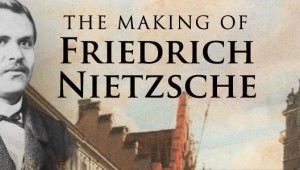
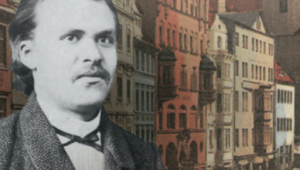
When I began my biography of Nietzsche’s youth, The Making of Friedrich Nietzsche, I expected eventually to dislike my subject. Biographers frequently start by admiring their protagonists, then become...
Many commentators were stunned when, in his acceptance speech at the Republican national convention, Donald Trump insisted that “I alone” can fix the “crisis’ that besets the United States. Things...
1861 This photograph, taken for Confirmation, was probably the first portrait of himself that Nietzsche had ever seen. Fundamentally pleased with it, he nonetheless acknowledged its homelier aspects:...
Keep up with the latest from Cambridge University Press on our social media accounts.