
Products and services

Eugene Morton uses his favorite four-legged friend to explore whether or not animals can have empathy.
So congratulations to Samuele Draghi from Milan whose photograph (below) impressed Nicolas the most. Samuelle wins £100 worth of Cambridge astronomy books. Nicolas said: “This image makes the best...
Luigi Lugiato author of Nonlinear Optical Systems [with Franco Prati and Massimo Brambilla], 2015, discusses his equation which provides a paradigm for pattern formation in nonlinear optical systems
Daniel Kernell author of Colours and Colour Vision gives us an insight into normal vs. deviant colour vision.
What is the status of the teaching profession around the world? Do teachers in Europe, Asia and Africa see themselves as American teachers do? Are their rewards the same; their complaints the same? And...
The shock vote in the UK to leave the European Union took place just weeks before I completed final edits on my new book The Laws of Globalization and Business Applications. And the month after it was...
Are you saying intelligence test scores are the most important thing about a person? No. No person can be reduced meaningfully to a test score. I am saying that, like it or not, the differences among...
Happy New Year! Before we start afresh with new interesting blogs and content, we take a moment to reflect on a bumper year of blogging in 2016.
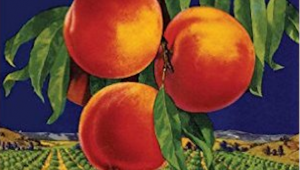
One of the things that surprised me as I conducted research for The Georgia Peach is how unsouthern Georgia peaches are. Don’t get me wrong: Prunus persica has grown in southern soil that southerners...
Luigi Lugiato, author of Nonlinear Optical Systems , 2015 discusses the equation he formulated with Renè Lefever to provide a paradigm for pattern formation in nonlinear optical systems
Cambridge University Press recently published my book The Law of Collaborative Defence Procurement in the European Union. Now many people ask me: “Your book is about defence procurement, right? So why...
Blog post written by Scott Geller, Editor and Co-Author Some have suggested B. F. Skinner was a dreamer, authoring the book Walden II about a utopian society in which everyone lives ideal interdependent...
Keep up with the latest from Cambridge University Press on our social media accounts.