
Products and services

Anna Marmodoro, author of Causation and Creation in Late Antiquity (2015), asks how did the world begin and where did evil evolve from?
Computer generated forecasts play an important role in our daily lives, for example, predicting weather or economies. Forecasts combine computational models of relevant dynamical processes with measured...
Measure and integration theory is an indispensable tool in mathematical analysis, probability theory, mathematical statistics and in many applications such as mathematical finance and actuarial studies....
Everyone who writes about programming languages seeks to impose order on the chaos of extant languages. A common strategy is to borrow Thomas Kuhn’s concept of a scientific paradigm, itself a not uncontroversial...
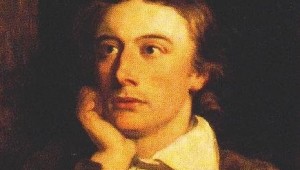
Let’s imagine, having read four sonnets published in the radical weekly, The Examiner, by young poet John Keats, seeing the announcement of John Keats’s first volume Poems (published 3 March 1817),...
Vǫluspá (The Seeress’s Prophecy) cycles through the memories and prognostications of an unnamed female prophetess who has witnessed the whole history of a legendary world, and culminates in a baleful...
Timothy H. Dixon author of Curbing Catastrophe is a Professor of Geosciences at the University of South Florida. In his new article he considers the future threat of over-population, the predictions that could have been and presents ideas for an optimistic move forward.
Siniša Malešević, author of The Rise of Organised Brutality, explores how organised violence is on the rise and why it has increased throughout the course of human history.
The recent death of Derek Walcott, the most famous postcolonial poet, has been an enormous loss to poetry lovers around the world. The elegiac ending to his long poem Omeros came to mind: “I sang of...
Over the last two decades, the computational social choice research community has grown from a handful of enthusiasts to hundreds of researchers, who have painted a beautiful picture of the interaction...
I wrote Yeats and Modern Poetry because I think that W.B. Yeats (1865-1939) did more than any other poet to create something we recognise as ‘modern poetry’. Without Yeats, there might not be a ‘poetry...
I recently contributed a short entry for Fueling Culture: 101 Words for Energy and Environment (2017) called “Future.” In it I outline the task of thinking the future in light of the crisis of capitalism...
Keep up with the latest from Cambridge University Press on our social media accounts.