Products and services

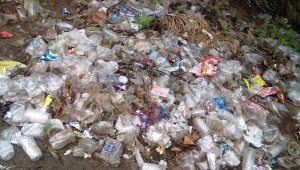
Adapted from Morality and the Environmental Crisis We cannot heal our relation to nature—and even perhaps include nature into a new and vibrant “ecological” democracy—with methods we have used...
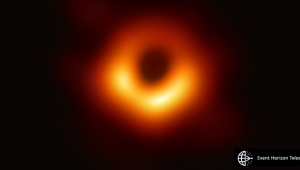
Scientists have obtained the first image of a black hole, using Event Horizon Telescope observations of the center of the galaxy M87… This long-sought image provides the strongest evidence to date...
Ignacio Sánchez-Cuenca, author of 'The Historical Roots of Political Violence', on the causes of 20th century revolutionary terrorism.
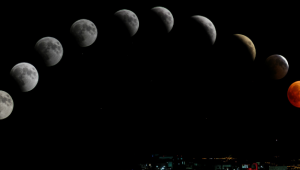
For most of us, a month is a page on a calendar, a set of 30, 31, 28, or, in rare cases, 29 days. But for an astronomer a month is a period of time associated with a cycle of the moon. It turns out that...
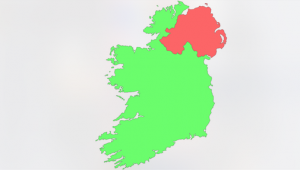
The partition of Ireland between the years 1918 and 1925 was arguably the most significant event in modern Irish history. From the ‘Troubles’ to Brexit, the division of the island into two antithetical...
As an American, I can’t help but read the slow-motion drama that is Brexit through the lens of the 2016 Trump election. Each is a referendum on a half-century of internationalist and neoliberal policies...
The number of environmental cases brought before international courts (ICs) is rising. How deal these courts with environmental laws, how well do they protect environmental rights and to what extent do they enhance or hinder the protection of the environment?
Must law pass a moral test in order to be valid? Most legal theorists today answer this question in the negative. The dominant tradition in contemporary legal philosophy, known as legal positivism, maintains...
Natural law theories maintain that there are certain goods and principles that are uniquely conducive to human flourishing. Historically, the content of natural law has often been depicted as timeless...
The Desert Fathers were the earliest Christian monks. They are the foundation stone of a movement that so developed over the centuries that it eventually wholly took over the Western Church and almost...
Simon Black, Author of, Species Conservation; Lessons from Islands, explains how our challenge is to understand how we can co-exist with nature by addressing two drivers of change. First, we need the positive efforts of the few people who have necessary technical skills to transform wild ecosystems. Second, we need to divert the negative impact of the millions of us human consumers (who create the problem in the first place) and reverse our psychological separation from the natural world.
Jamie A. Copsey, Author of Species Conservation, tells us how he thinks the world needs more positive perspectives on the future we want to shape, and then we can really start thinking about how we get there.
Keep up with the latest from Cambridge University Press on our social media accounts.