
Products and services

Like most Americans, I encountered Sylvia Plath’s poetry before that of her husband, Ted Hughes, and I approached his work with some reluctance – as only seemed natural, considering his customary...
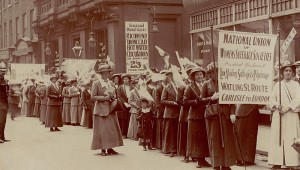
On Saturday 18th June 1910, the Women’s Social and Political Union staged one of its largest and most spectacular demonstrations. The Great Procession through the streets of central London was carefully...
In our world, judicial independence is perennially contested. Threats from the political branch pose obstacles to judges’ ability to perform their constitutional duties. Marie Seong-Hak Kim talks about her title, Constitutional Transition and the Travail of Judges, and how this affects the freedom & liberty of the Korean people.
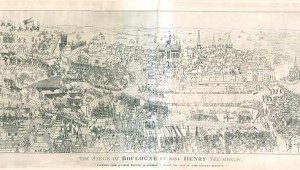
In the summer of 1544, Henry VIII invaded France with 36,000 soldiers – the largest army sent overseas by an English ruler until the reign of William III (1689-1702) – and captured the town of Boulogne...
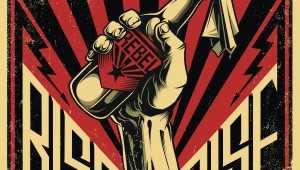
There are two main ways of approaching the study of revolution in the contemporary world – and they are both wrong. On the one hand, revolutions are everywhere: on the streets of Kobane, Caracas, and...
Gather everything that we humans, religious and nonreligious, have ever done to satisfy ourselves about transcendent things under this label: the religion project. Then ask yourself whether the effort...
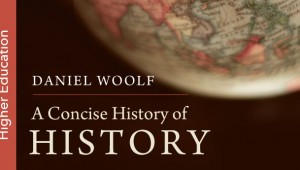
In this post, Professor Daniel Woolf, author of A Concise History of History: Global Historiography from Antiquity to the Present cuts to the core of the debates around the internet and its pros and cons...
Debates over party structure and party organization have been long-running throughout American political history. Starting with Andrew Jackson and his reforms of the party system, later joined by the Progressive...
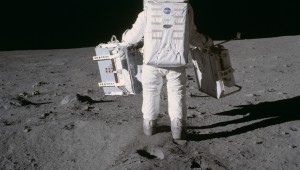
In this memorable photograph (courtesy of NASA), we see astronaut Buzz Aldrin holding in his right hand a sophisticated mirror: the Laser Ranging Retro-Reflector (LR3). This mirror has now been...
When Attalus III died, Aristonicus seized the throne and called himself Eumenes III. Slow to claim their rights under Attalus’ will, the Romans moved in, years later, and―at the second try―defeated...
In a much-discussed recent article for Critical Inquiry, Michael W. Clune identifies contemporary literary culture’s most pressing challenge: that of the market. The dominant ideology of the past four...
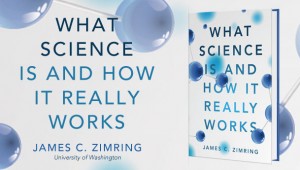
James Zimring discusses the struggle of how to evaluate the claims of science in a world that demands an ever more rigorous consideration of how much confidence to put in such claims. Each of us is taught what science claims to be the case, but to what extent are we taught the basis for such claims – the strengths and pitfalls of science itself?
Keep up with the latest from Cambridge University Press on our social media accounts.