Products and services

Hope M. Harrison at the Berlin Wall, November 11, 1989.
In a lecture given in 1978 the Argentine writer Jorge Luis Borges observed that nations tend to choose authors to represent them that do not resemble their national character, citing, as a striking example,...
Amy and I wrote Subsistence and Society: New Directions in Economic Archaeology, because the time was right to rethink the topic for two key reasons. Firstly, palaeoeconomics and environmental archaeology,...
The production of textiles is a very ancient human endeavour. In pre-industrial settings, it was a complex and time-consuming craft that must have engaged a large part of the population. The product was...
The passion to serve! Endowing and praising indigenous youth with the quality of service, with a predisposition to hospitality and care – is it truly appreciation of a culture, its people and a way...
The fraught atmosphere of surveillance and intimidation has long made twentieth-century Russian music a fascinating area of study. Music audiences, performers, and scholars alike have been engrossed by...
“It’s the network, stupid”, Maurice E. Bandmann (1872-1922) might have said, had he lived longer. Perhaps the greatest theatrical entrepreneur, nobody has ever heard of, Bandmann’s career is unique...
Authors, Carol Frieze and Jeria L. Quesenberry debunk five common myths on the Gender Gap in Computing
Last month, the Australian government was the target of what commentators called an “unprecedented…broadside” at the United Nations’ Human Rights Council in Geneva. Responding to Australia’s...
The quality of corporate governance, ie the effectiveness of institutions that contain agency costs, is a key component of asset allocation. In countries characterized by concentrated ownership, minority...
Is ownership of property obsolete? And what will our world look like without ownership? Consumers are gradually losing interest in owning personal property. Marie Kondo, an organizing guru turned into...
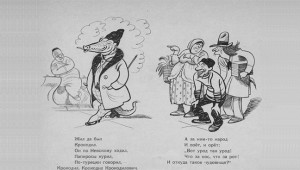
Great children’s stories embody the spirit of nations. How else would they become classics? Kornei Chukovsky’s Krokodil, Soviet Russia’s first children’s story, appeared when Russian culture was...
Keep up with the latest from Cambridge University Press on our social media accounts.