

Products and services

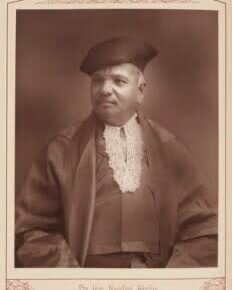
Trial by jury in criminal cases existed in some parts of India between 1862-1973. This long had been true of trials in the original high courts of the Presidency towns, but in 1862 it was extended to some district sessions courts in the mofussil, or countryside. Some might not call just over a century a very short life, but in terms of the history of the institution it was a mere flicker. In India, the jury trial’s curious history is a reflection of the pronounced ambivalence held by both British rulers and Indian politicians and legal professionals towards the participation of ordinary people in the justice system.
When trial by jury first was introduced beyond the the original jurisdiction of the high courts, it was deemed an experiment and part of the ´civilizing mission’ of the country’s imperial governors. Only judicial districts thought to have a sufficient number of people possessed of wealth, status and education merited this innovation. Thus, in the Bengal Presidency, trial by jury at first was restricted to only eight of thirty-six judicial districts, in the Madras Presidency to six of twenty-one, and in the Bombay Presidency only to one of twenty-three.
At that time, the jury was viewed as a means to more effectively repress crime because its verdicts did not depend solely upon arcane rules of procedure and evidence. Within several decades, however, its effectiveness in this regard was being questioned both by British rulers and Indian judges and lawyers. Some claimed that Indian jurors refused to convict defendants whose convictions might entail the death penalty. Others argued that jurors were incapable of following complex instructions from the judges or dealing with complicated evidence. Still others argued that jurors were open to corruption and verdicts were being ‘sold on the streets.’
Certainly, not all people, either British or Indian, opposed trial by jury, but as the nationalist movement evolved during the early twentieth century, more and more leaders, even Gandhi, turned against it. Symbolic of this trend was the notoriety of the 1959 murder trial of Naval Commander K. M. Nanavati in which the Commander was declared innocent by a jury despite overwhelming evidence to the contrary, including a confession. This trial has come down to us as ‘the last jury trial in India.’
That statement is patently false. Jury trials continued to take place during the 1960s and early ‘70s, especially in Bengal where it was guarded jealously by the high court. Still, the significance of the Nanavati trial lay in its symbolic representation of the failures of the entire institution. Jurors, the lesson appeared to be, were ‘not the right people’ to aid in the administration of justice.
Trial by jury would limp along in a few districts until 1973 when it was omitted silently from the revised Code of Criminal Procedure. By this time, however, the fate of trial by jury no longer was a matter of delivering justice. Instead, it had become a cipher of the extent to which the common people were ready to participate in a new democratic society. The verdict was not reassuring.

James Jaffe is Professor Emeritus at the University of Wisconsin and Fellow of the Royal Historical Society. He is the author of several books on British and Anglo-Indian history, ...
View profile >Keep up with the latest from Cambridge University Press on our social media accounts.



Latest Comments
Have your say!