

Products and services

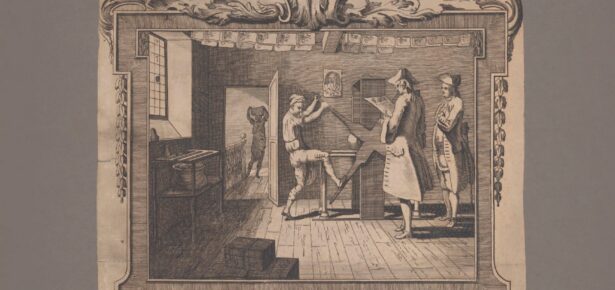
Edmund Curll has gone down as the bad boy of British publishing, and it would be an affectation to disagree with this verdict. Even people with no special interest in book history or the eighteenth century may have come across him, called out as an unscrupulous operator who produced risqué volumes and pirated the works of established writers. True as far as it goes, but there’s more to be said. It’s no accident that he has continued to fascinate literary scholars, even though he drives bibliographers to despair by his sneaky practices for compiling and marketing his wares.
How then does the reputation of Curll (1683-1747) stand up today? No one denies that his list contained many low-level publications with hardly any literary or historical value. He was notorious for raiding the garbage cans of authors, and he did issue some items of soft pornography, such as a mildly titillating piece about the sexual habits of nuns (safely translated from French, so there was no writer whom the authorities could get hold of). These led to his prosecution in the King’s Bench Court of London, but although he was found guilty of this offence, it didn’t mark the very first conviction for an obscene libel. It was another charge, involving sedition, that landed him in the pillory at Charing Cross. Curll spent time in various gaols when he went too far in breaching the restrictive censorship of the day, and was forced to beg on his knees for pardon in the House of Lords. But he soon got over things like that, and his biggest triumph came after years of cocking a snook at the establishment, when he was acquitted in the Lords on a motion proposed by aristocratic friends of the poet Alexander Pope.
Earlier studies have concentrated on the seamy side of his career and his colourful personality. This new book reinstates Curll as the professional, exploring the things that ended up on the pages of his volumes, with coverage of the tricks of his trade such as ambiguous details on the title-page; his place in the burgeoning world of Grub Street and his involvement with other publishers, as well as with the civic life of the City of London; the methods employed in his instant biographies of celebrities who had lately died; and his use of anonymous and pseudonymous writers. The text offers fresh insight on his famous quarrels with authors (Jonathan Swift and Daniel Defoe, among others, in addition to Pope). It contains new information on his life, including background, family and marriages, which were not available to previous biographers.
Edmund Curll at Work breaks untrodden ground in moving beyond the myths to delve into the nitty-gritty of his professional life. It should stimulate further debate, expanding the reconsideration of Curll’s place in book history that has gone on in recent years.
If you want to know more, there is a lively bio by Ralph Straus, The Unspeakable Curll (1927). More up to date are items of my own, Edmund Curll, Bookseller (2007), with Paul Baines; and The Poet and the Publisher: The Case of Pope versus Curll (2021).
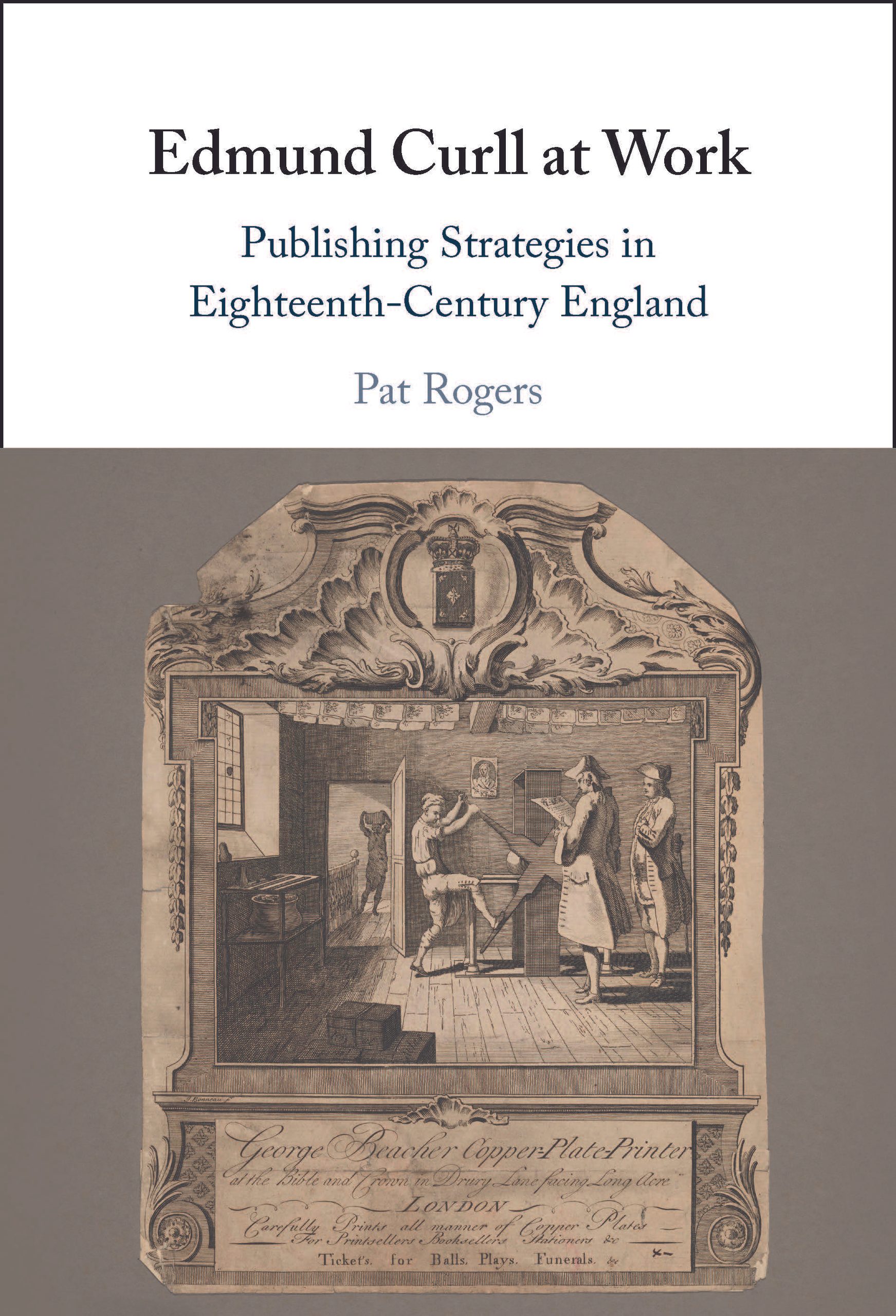
Edmund Curll at Work by Pat Rogers

Pat Rogers is Distinguished University Professor Emeritus, formerly Eminent Scholar, and DeBartolo Chair in the Liberal Arts at the University of South Florida. He is the author of...
View profile >Keep up with the latest from Cambridge University Press on our social media accounts.



Latest Comments
Have your say!